
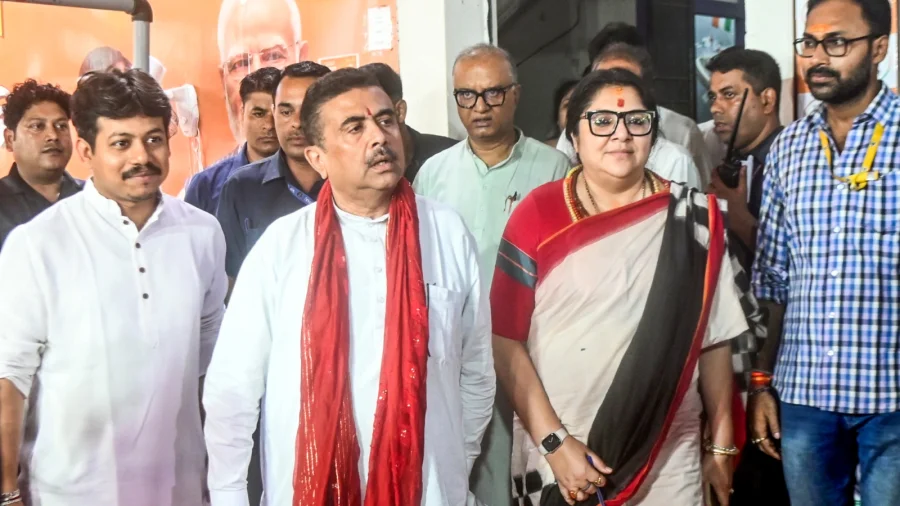
A fresh political flashpoint has emerged in West Bengal. Suvendu Adhikari, the state's Leader of Opposition, has alleged that the government is planning laws against religious conversion and land sale — remarks made in the aftermath of the Uniform Civil Code debate. There is, as yet, no official confirmation from the state government.
What Adhikari said about Bengal's planned laws
Adhikari's claim, as reported, links the proposed legislation to the period "after UCC". The allegation suggests the state may be preparing legislative moves on two highly sensitive subjects — religious conversion and land transactions.
No draft law, bill text, or government statement has been made public to support the claim. This remains, at this stage, a political assertion by the Opposition leader.
Why the allegation matters in Bengal's political climate
Religious conversion and land sale are among the most sensitive policy areas in India. Any law touching conversion affects personal faith. Any law on land sale affects property rights, farmers and real estate.
An Opposition leader accusing the ruling party of planning such laws is a serious charge — particularly in a state where the BJP and Trinamool Congress are locked in a bitter political confrontation.
The UCC backdrop: how the context shapes the claim
Uttarakhand has implemented the Uniform Civil Code, making UCC a defining national debate. West Bengal's ruling party has publicly opposed the UCC.
In this charged context, Adhikari's claim — that Bengal is planning its own laws on conversion and land — adds a new and unexpected layer to an already heated political argument.
Who would be affected if such laws actually came
If the allegation were to become policy, the groups most likely to feel the impact are religious minorities, inter-faith families, land owners and property buyers.
Anti-conversion laws in other states typically require prior permission and formal notification before a change of religion. Land sale restrictions affect everything from agricultural holdings to urban real estate. But none of this is confirmed for Bengal.
No official response yet from the state government
This is an allegation, not an announcement. State authorities have not publicly confirmed or denied the claim, according to available reports.
Until an official statement or a bill draft surfaces, the claim must be treated as political assertion — not as settled policy.
Reading the politics: what the claim likely signals
The timing stands out. The claim comes after the UCC push — a subject championed by the central government and the BJP, and opposed by Chief Minister Mamata Banerjee's administration.
By alleging that the state is planning its own laws, Adhikari could be positioning the Opposition as a check on the government's legislative agenda. That interpretation, however, remains speculation unless supported by further statements or evidence.
Confirmed facts vs what remains unclear
What is confirmed: Adhikari made the claim, as reported. What is also confirmed: the UCC debate is active at the national level.
What remains unclear: whether any such laws exist, are being drafted, or were purely rhetorical. No bill, no gazette notification, and no government statement backs the claim at this moment.
Risks and balanced view
If the claim is true, it would mark a major policy shift with deep legal and social consequences. If it is false, it risks spreading misinformation and deepening communal distrust.
Both possibilities remain open. The burden of proof lies with the claimant — and the responsibility for clarity lies with the government.
The wider national pattern
Several Indian states already have anti-conversion laws with varying degrees of strictness. Land sale restrictions exist in different forms across the country, especially in tribal and border belts.
Bengal's political landscape has also seen repeated clashes between the ruling party and the Opposition over minority outreach and religious issues. This claim, if pursued, would fit into that broader national pattern.
What readers should watch for now
Watch for three things: an official response from the West Bengal government, any bill introduction in the Assembly, and Adhikari's follow-up statements with supporting evidence.
Until then, treat the claim as one side of a political dispute — not a confirmed policy direction.
What could happen next
The Opposition may press the government to clarify its position inside the Assembly. The ruling party could dismiss the claim outright — or be forced to respond if the issue gains public traction.
Any actual legal drafting would take months and require Assembly approval. All of that is speculative until a concrete step is taken.
Our Take
In Indian politics, allegations of this kind travel faster than clarifications. The responsible position is simple: verify before believing.
This story matters not because a law has been introduced — but because a senior Opposition leader has publicly claimed one is coming. That alone makes it newsworthy. What matters next is evidence.
Frequently Asked Questions
Did Suvendu Adhikari claim Bengal is planning laws on conversion and land sale?
Yes. As per the reported headline, Adhikari alleged that after UCC, the West Bengal government is planning laws against religious conversion and land sale. No official document has been released to support the claim so far.
Has the West Bengal government confirmed any such law?
No. There has been no official confirmation or denial from the state government yet. Until an official response or bill draft appears, the claim should be treated as an allegation.



