
Summary
Skyroot Aerospace, a leading private space company in India, has officially sent the hardware for its Vikram-1 rocket to the launch site at Sriharikota. This move marks a major step toward the country’s first orbital flight by a private firm. The hardware left the company’s facility in Hyderabad and is now on its way to the Satish Dhawan Space Centre. This mission is designed to prove that private companies can successfully place satellites into Earth's orbit.
Main Impact
The transport of this hardware is a turning point for the Indian space industry. For decades, only the government-run Indian Space Research Organisation (ISRO) had the power to launch rockets into space. By moving closer to an orbital launch, Skyroot is showing that private businesses can now handle complex space missions. This change is expected to make satellite launches more affordable and more frequent, helping India grab a larger share of the global space market.
Key Details
What Happened
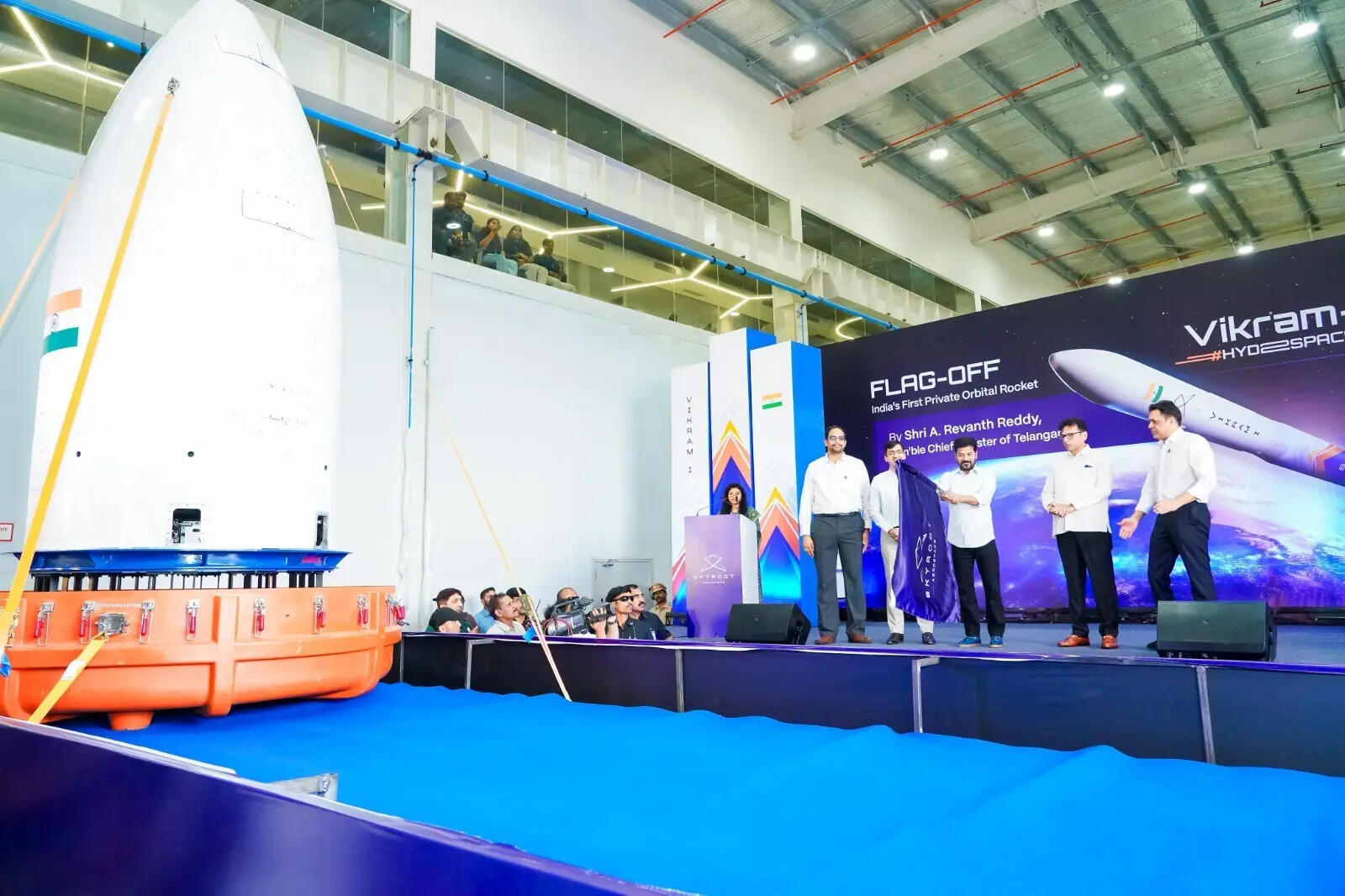
The "flag-off" ceremony took place at Skyroot’s high-tech factory in Hyderabad. During this event, the main parts of the Vikram-1 rocket were loaded onto specialized transport vehicles. These parts are now traveling by road to the launch pad in Sriharikota. Once they arrive, engineers will begin the final process of putting the rocket together and testing every system to ensure it is ready for flight. This follows years of planning, building, and testing individual components like engines and fuel tanks.
Important Numbers and Facts
Vikram-1 is a multi-stage rocket, which means it drops parts of itself as it climbs higher into the sky to stay light. It is designed to carry payloads of up to 300 kilograms into a low orbit around the Earth. The rocket is built using advanced carbon-fiber materials, which are much lighter and stronger than traditional metals. One of its most impressive features is the use of 3D-printed liquid engines. These engines are used for the final part of the journey to ensure the satellites are placed in exactly the right spot in space.
Background and Context
In the past, space was a field only for large nations with massive budgets. However, the demand for small satellites has grown rapidly. These small satellites are used for things like high-speed internet, tracking the weather, and taking photos of the Earth for farming and city planning. Large rockets are often too big and expensive for these small tools. Skyroot created the Vikram series of rockets specifically to fill this gap. In 2022, the company made history by launching Vikram-S, which was a smaller rocket that went into space but did not stay in orbit. Vikram-1 is the next version, built to stay in orbit and deliver working satellites.
Public or Industry Reaction
Experts in the space industry are watching this development closely. Many see this as India’s version of the early days of SpaceX. The Indian government has been very supportive of this move. Through an agency called IN-SPACe, the government has opened up its launch pads and testing facilities to private companies. Industry leaders believe that if Skyroot succeeds, it will encourage more investors to put money into Indian space startups. This could lead to a new era where India becomes a global hub for low-cost, reliable space travel.
What This Means Going Forward
The arrival of the hardware at Sriharikota is not the final step, but it is the start of the most critical phase. Over the next few weeks, the team will perform "integration" tests. This means they will connect all the pieces and make sure the software can talk to the hardware. If these tests go well, a launch date will be announced. A successful flight would prove that Skyroot’s technology works in the harsh environment of space. It would also allow the company to start taking orders from international customers who want to send their satellites into orbit quickly.
Final Take
The journey of the Vikram-1 hardware from a factory to the launch pad is more than just a logistics task. It represents the growing strength of private engineering in India. By using modern methods like 3D printing and carbon-fiber construction, Skyroot is showing that the future of space is not just about big government projects, but also about fast-moving private innovation. The upcoming launch will be a defining moment for the country’s role in the modern space race.
Frequently Asked Questions
What is Vikram-1?
Vikram-1 is a rocket developed by the private company Skyroot Aerospace. It is designed to carry small satellites into an orbit around the Earth.
Why is this launch important?
It is important because it would be the first time a private Indian company sends a rocket into orbit. This opens up the space industry to more competition and lower costs.
Where will the rocket be launched from?
The rocket will be launched from the Satish Dhawan Space Centre in Sriharikota, which is the same place where the Indian government launches its own missions.



