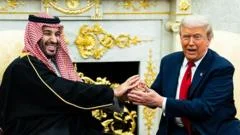
The United States has signed a landmark nuclear cooperation agreement with Saudi Arabia, a move that the US Department of Energy says will give American firms "great access" to the kingdom's civilian nuclear energy programme. The deal, described as "peaceful" by officials, marks a significant deepening of energy ties between the two nations.
What the US-Saudi Nuclear Deal Actually Says
The agreement, formally a nuclear cooperation agreement, was signed by the US Department of Energy. It is designed to facilitate the transfer of nuclear technology and expertise from the United States to Saudi Arabia for peaceful, civilian purposes. The key provision, as highlighted by the Department, is that it opens the door for American companies to participate in Saudi Arabia's growing nuclear energy sector.
Why This Deal Matters for American Companies
For US firms, this is a major commercial opportunity. Saudi Arabia has ambitious plans to build multiple nuclear reactors as part of its Vision 2030 economic diversification strategy. Until now, the kingdom's nuclear programme was largely closed to American bidders due to the absence of a formal 123 Agreement — the legal framework required for US nuclear exports. This deal changes that, potentially unlocking billions of dollars in contracts for US engineering, construction, and technology firms.
The Context Behind the Agreement
Negotiations for a US-Saudi nuclear deal have been ongoing for years, often stalled by concerns over non-proliferation. Saudi Arabia has long sought a civilian nuclear programme, but the US has been wary of the kingdom's refusal to sign the Additional Protocol, which allows for more intrusive international inspections. This agreement appears to have navigated those concerns, at least for now, by emphasising the "peaceful" nature of the cooperation.
Who Is Affected by This Development
The deal directly impacts American energy companies, Saudi energy planners, and the broader global nuclear industry. For Saudi citizens, it promises a new source of clean energy and job creation in the nuclear sector. For US workers, it could mean new export-driven jobs in nuclear engineering and manufacturing. Geopolitically, it strengthens the US-Saudi alliance at a time when China and Russia are also competing for influence in the Middle East's energy markets.
Official Response from the US Department of Energy
The US Department of Energy confirmed the signing in a statement, describing it as a "peaceful co-operation agreement." Officials emphasised that the deal is strictly for civilian energy purposes and includes safeguards to prevent the diversion of nuclear materials to military use. The Department did not immediately provide details on the specific companies that would benefit or the timeline for project implementation.
What This Deal Means for Global Nuclear Energy
The agreement is significant beyond just US-Saudi relations. It signals that the United States is reasserting itself as a leader in the global nuclear energy market, particularly in the Middle East. With countries like the UAE already operating US-built reactors, and Saudi Arabia now joining the fold, the region is becoming a key battleground for nuclear technology providers. This deal also puts pressure on competitors like Russia's Rosatom and China's state-owned nuclear firms, who have been aggressively courting Middle Eastern clients.
Confirmed Facts vs What Remains Unclear
Confirmed: The US Department of Energy has signed a peaceful nuclear cooperation agreement with Saudi Arabia. US firms will have "great access" to the Saudi civilian nuclear programme.
Unclear: The exact terms of the agreement, including whether Saudi Arabia has agreed to the Additional Protocol or any non-proliferation conditions, have not been disclosed. The specific US companies that will benefit, the value of potential contracts, and the timeline for reactor construction also remain unknown. It is also unclear whether the deal includes provisions for uranium enrichment or reprocessing — a sensitive issue that has previously stalled negotiations.
Risks and Balanced View
While the deal is a diplomatic and commercial win for the US, it is not without risks. Non-proliferation experts have long warned that any nuclear deal with Saudi Arabia carries the risk of the kingdom developing a nuclear weapons capability, especially given its rivalry with Iran. Critics argue that without strict inspections and a ban on enrichment, the deal could fuel a nuclear arms race in the Middle East. Supporters, however, point to the "peaceful" language in the agreement and argue that engaging Saudi Arabia is better than leaving the field open to less transparent suppliers like Russia or China.
Wider Trend: The Global Race for Nuclear Influence
This deal is part of a broader trend of nuclear energy expansion in the Middle East. The UAE's Barakah plant is already operational, and Saudi Arabia, Egypt, and Turkey are all pursuing nuclear projects. The US is competing with Russia, China, South Korea, and France for these contracts. This agreement signals that Washington is willing to invest diplomatic capital to secure a foothold in the region's nuclear future.
Practical Guidance for Industry Watchers
For investors and industry analysts, this deal is a signal to watch US nuclear engineering and construction firms closely. Companies like Westinghouse, Bechtel, and GE Hitachi could be potential beneficiaries. For policymakers, the focus should be on ensuring that the deal includes robust non-proliferation safeguards. For the general public, the key takeaway is that US-Saudi energy cooperation is deepening, with potential implications for energy prices, geopolitical stability, and climate goals.
Future Outlook
The next steps will involve the US and Saudi governments finalising the specific commercial agreements and regulatory approvals needed for US firms to begin work. The deal could also face scrutiny in the US Congress, which has the authority to review nuclear cooperation agreements. If implemented smoothly, Saudi Arabia could have its first US-built reactor operational within a decade. However, any sign of Saudi interest in enrichment or reprocessing could reignite political opposition in Washington.
Our Take
This is a strategically important deal that balances commercial opportunity with geopolitical risk. For the US, it secures a major role in Saudi Arabia's energy transition and counters Chinese and Russian influence. For Saudi Arabia, it provides access to advanced US technology and strengthens its alliance with Washington. The real test will be in the implementation — whether the deal can deliver clean energy without undermining global non-proliferation norms. For now, it is a win for diplomacy and American industry, but the details will determine its long-term legacy.
Frequently Asked Questions
What is the US-Saudi nuclear deal?
It is a peaceful nuclear cooperation agreement signed by the US Department of Energy that gives American companies access to Saudi Arabia's civilian nuclear energy programme.
Why is this deal important for US companies?
It opens the door for US firms to bid on Saudi nuclear reactor projects, potentially worth billions of dollars, in a market previously dominated by competitors like Russia and China.
Does the deal allow Saudi Arabia to enrich uranium?
The exact terms have not been disclosed. The deal is described as "peaceful," but whether it includes enrichment or reprocessing rights remains unclear and is a key concern for non-proliferation experts.
How does this affect the Middle East's nuclear landscape?
It strengthens US influence in the region's nuclear energy sector and could encourage other countries to pursue similar deals with Washington, while also raising concerns about a potential nuclear arms race with Iran.