
Summary
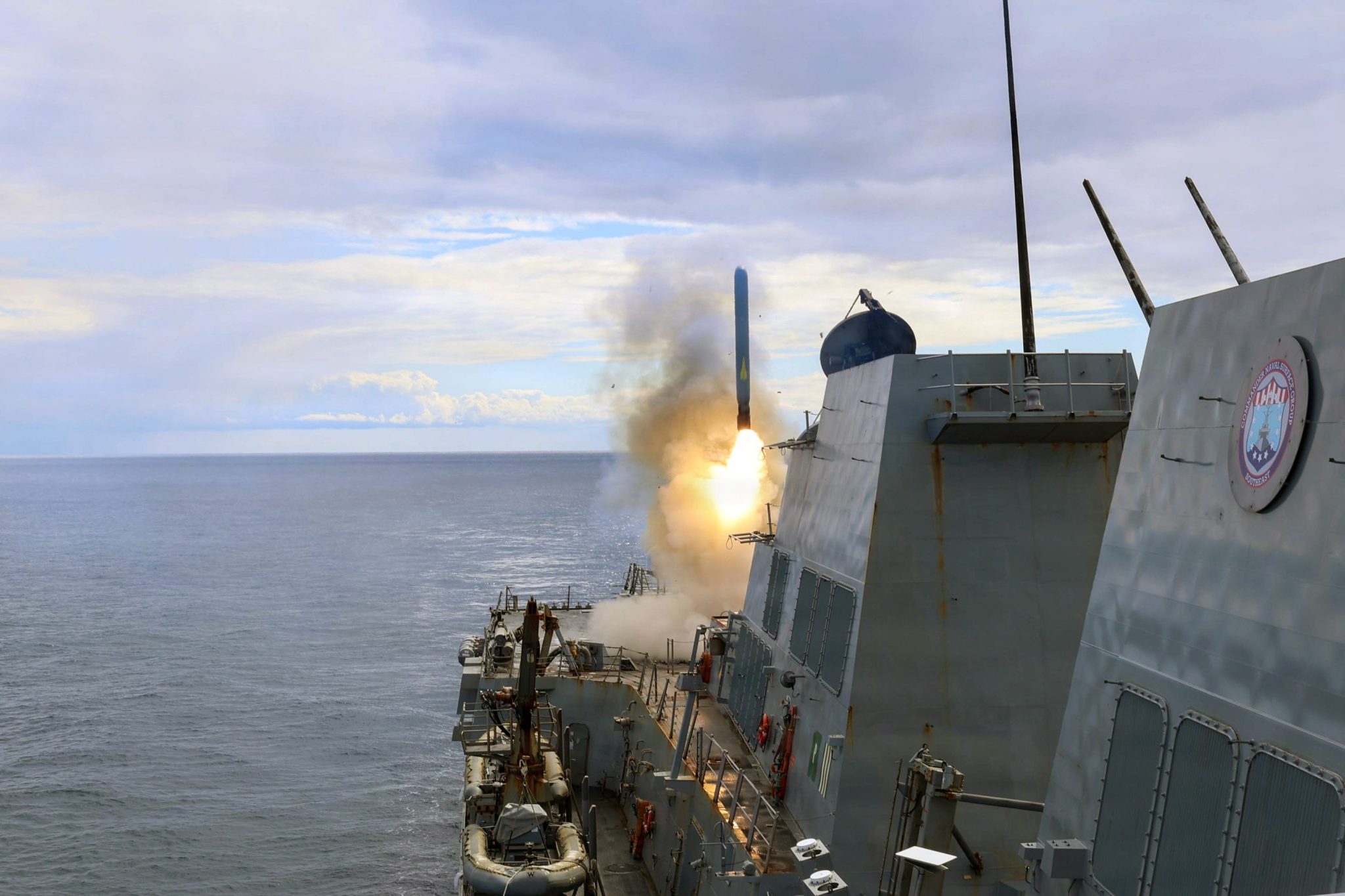
The United States Navy recently conducted a bold mission in the Strait of Hormuz to challenge Iran’s control over the vital waterway. Two U.S. destroyers moved through the strait to begin clearing mines and establishing a safe path for commercial ships. This move comes during a fragile two-week ceasefire while officials from both countries meet for talks in Pakistan. The mission signals that the U.S. military is preparing to permanently reduce Iran's ability to block global oil shipments.
Main Impact
This naval operation is the first of its kind since the conflict began six weeks ago. By entering the strait without coordinating with Iran, the U.S. is asserting its right to keep international waters open. The main goal is to stop Iran from using the waterway as a "toll booth" where they charge ships millions of dollars to pass. If the U.S. successfully clears the mines and protects the area, it could stabilize global oil prices and prevent Iran from having too much power over the world economy.
Key Details
What Happened
On Saturday, two U.S. Navy destroyers sailed through the Strait of Hormuz into the Persian Gulf and then back out into the Arabian Sea. According to U.S. Central Command, the ships were there to start a mine-clearing mission. They used advanced underwater drones to find and remove explosives that could sink large ships. While the U.S. says the mission was about "freedom of navigation," Iran viewed the move as a direct violation of the current ceasefire. Reports suggest that Iran launched a drone toward the U.S. ships, which may have caused a brief standoff before the ships completed their task.
Important Numbers and Facts
The Strait of Hormuz is one of the most important places in the world for trade. Before the war, about 20% of the world’s oil passed through this narrow gap. Since the conflict started, Iran has effectively closed the route to most traffic. Currently, Iran is reportedly charging a fee of $2 million for each ship that wants to pass through. On the same day as the Navy mission, three large oil tankers successfully moved through the strait, which is the highest number of ships seen in a single day since the shutdown began.
Background and Context
The Strait of Hormuz is a very narrow stretch of water that connects the Persian Gulf to the rest of the world's oceans. Because it is so narrow, it is easy for a military to block it using mines, small fast boats, and drones. For decades, this has been a major point of tension between the U.S. and Iran. If the strait stays closed, the price of gasoline and energy goes up everywhere in the world. President Donald Trump recently paused military actions for two weeks to see if a deal could be reached in Pakistan, but the U.S. military is not waiting around. They are using this time to weaken Iran's defenses in the water.
Public or Industry Reaction
Energy experts and military analysts believe the U.S. is getting ready for a second round of intense fighting if the talks fail. Bob McNally, a former White House energy advisor, explained that the U.S. is currently "whacking moles." This means they are slowly destroying Iran’s tools for blocking the water, such as missile launchers and small attack boats. Meanwhile, neighboring countries in the Gulf are worried. These nations rely on selling oil and gas to survive, and they do not want Iran to have total control over their only exit to the sea. Wall Street experts have also warned that if Iran keeps control of the strait, it could hurt the strength of the U.S. dollar in global trade.
What This Means Going Forward
The U.S. is significantly increasing its military presence in the region. A third aircraft carrier is on its way, along with thousands of Marines and paratroopers. More long-range missiles are also being moved into the Middle East. The goal is to make Iran’s threats "manageable." If the U.S. can prove that ships can travel safely with military escorts, insurance companies will be more willing to cover the tankers. This would take away Iran's biggest piece of leverage in the ceasefire talks. The next few weeks will be critical as the U.S. tries to balance diplomatic talks with military pressure.
Final Take
The U.S. Navy’s move into the Strait of Hormuz shows that the military is shifting from a defensive position to an active one. By clearing mines and ignoring Iran’s demands, the U.S. is signaling that it will not accept a "new normal" where Iran controls global energy routes. Whether this leads to a peaceful reopening of the strait or a larger military conflict depends on how Iran responds to the loss of its grip on the waterway.
Frequently Asked Questions
Why is the Strait of Hormuz so important?
It is a key chokepoint for global trade. About one-fifth of the world's oil supply moves through this narrow waterway, making it essential for global energy stability.
What is a mine-clearing mission?
It is a military operation where ships and underwater drones search for and destroy sea mines. These mines are hidden explosives placed in the water to damage or sink passing vessels.
Is there currently a war between the U.S. and Iran?
The two countries have been in a state of conflict for six weeks, though a temporary two-week ceasefire was recently put in place to allow for diplomatic talks in Pakistan.



