
Summary
Tensions between the United States and Iran reached a dangerous new level this weekend as the Strait of Hormuz turned into a combat zone. The U.S. military is now preparing to board and seize ships linked to Iran in international waters to enforce a strict blockade. This move aims to cut off Iran’s oil money and pressure the government into a new deal. As a result, global ship traffic has slowed, making the current world energy crisis even worse.
Main Impact
The decision to board ships marks a major shift in how the U.S. is handling the conflict. Previously, the Navy mostly watched the waters near the Middle East. Now, the Pentagon is expanding its reach to include any ship in the world that carries Iranian oil or provides support to the Iranian regime. This includes the "dark fleet," which consists of ships that try to hide their identity to bypass trade rules. By physically taking control of these vessels, the U.S. is trying to completely stop Iran’s ability to sell oil and buy weapons.
Key Details
What Happened
On Saturday, the situation in the Persian Gulf became very unstable. The Islamic Revolutionary Guard Corps (IRGC) issued a stern warning that they would destroy any ship trying to cross the Strait of Hormuz. This threat followed reports of several ships being attacked by small boats and missiles. While U.S. leaders previously said the waterway was open, Iran now insists it will remain closed until the U.S. ends its naval blockade. In response, the U.S. has increased its military presence and is ready to use force to stop Iranian trade.
Important Numbers and Facts
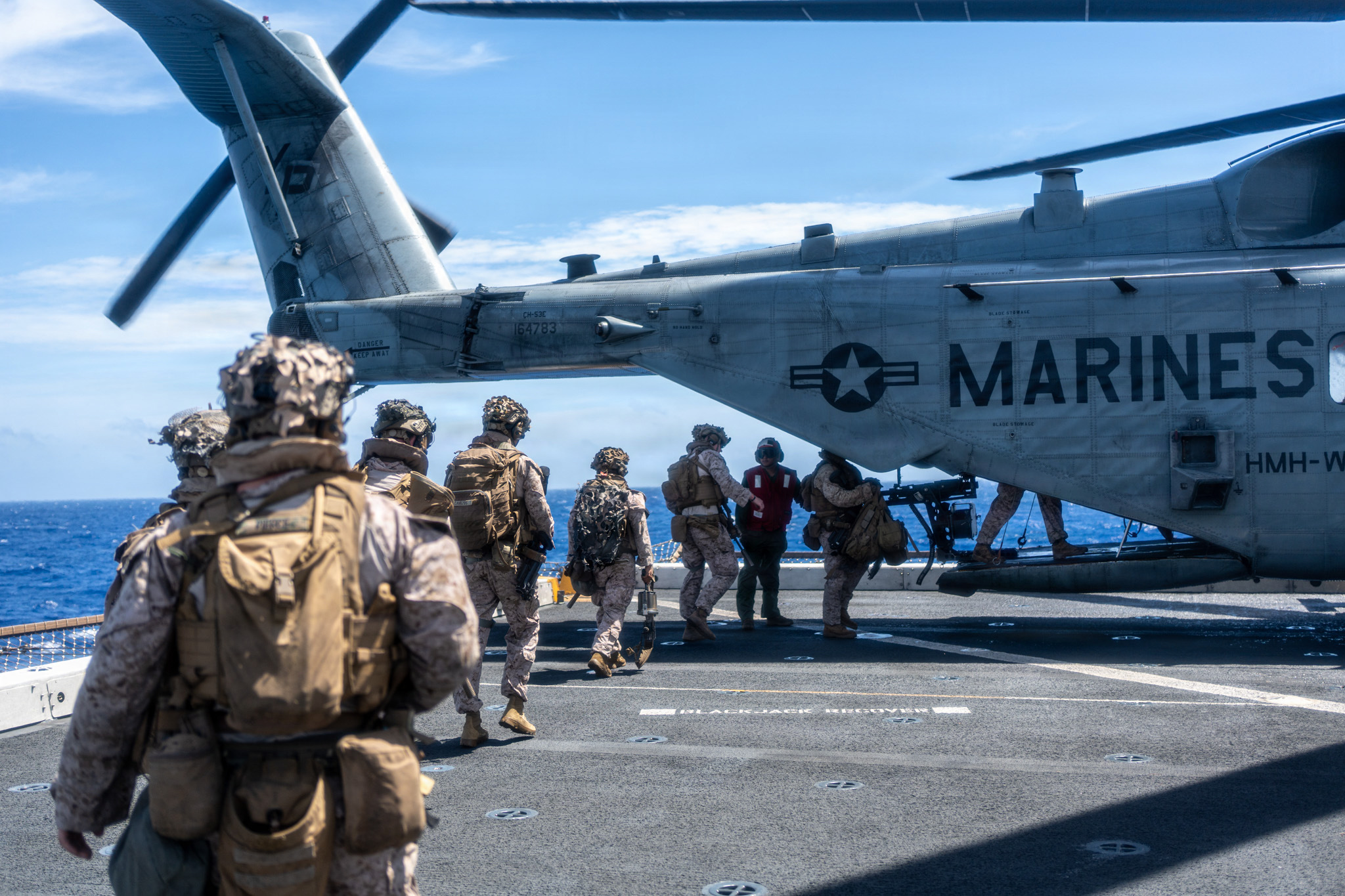
The U.S. military is using large groups of soldiers called Marine Expeditionary Units (MEUs) for these operations. Each MEU has between 2,200 and 2,500 Marines and three large assault ships. The 31st MEU is already in the Middle East, while the 11th MEU is currently moving through the Indo-Pacific region to help with the crackdown. Shipping data shows that at least five tankers linked to Iran have already changed their routes to avoid being caught by the U.S. Navy. So far, no ships have been able to successfully break through the blockade in the Middle East.
Background and Context
The Strait of Hormuz is one of the most important places in the world for the economy. It is a narrow path of water that connects oil producers in the Middle East to the rest of the world. A large portion of the world's oil passes through this small area every day. When the strait is blocked or becomes a war zone, the price of gas and energy goes up for everyone. The U.S. is using this blockade as a tool to force Iran to agree to a peace deal, but Iran is fighting back by trying to close the waterway entirely.
Public or Industry Reaction
The shipping industry is on high alert as the risk of losing ships or cargo grows. Experts from Lloyd’s List Intelligence have noted that many tankers are now trying to hide or change their destinations to stay away from U.S. Navy ships. There is a lot of concern among global leaders that this naval crackdown could lead to a direct war. While the U.S. says the blockade is being enforced fairly against all nations, many fear that the constant threat of attacks in the Gulf will keep energy prices high for a long time.
What This Means Going Forward
The U.S. Marines are currently training for "maritime raids," which are high-risk missions where they board a ship while it is moving. These operations are dangerous because Iran has many ways to defend itself, including drones, mines, and fast-attack boats. Navy officials have even called the Strait of Hormuz a "kill box" because it is so easy to attack ships there. If the U.S. decides to put troops on nearby islands to keep the water open, those soldiers would be at risk from Iranian missiles. The next few weeks will be critical as the U.S. begins to physically seize more ships around the world.
Final Take
The U.S. is taking a very bold step by deciding to board and seize ships in international waters. This strategy is designed to starve the Iranian economy of the money it needs to operate. While this might eventually lead to a new deal, it also brings the world closer to a major military conflict at sea. The global economy will likely feel the pain of this standoff through higher energy costs and disrupted trade routes for months to come.
Frequently Asked Questions
Why is the U.S. boarding Iranian ships?
The U.S. is boarding these ships to stop Iran from selling oil and moving weapons. This is part of a larger plan to pressure the Iranian government into signing a new peace agreement.
What is the "dark fleet"?
The dark fleet refers to a group of commercial ships that turn off their tracking systems and use secret methods to move Iranian oil. They do this to avoid being caught by international sanctions and blockades.
Is the Strait of Hormuz still open for travel?
Currently, the strait is very dangerous and mostly closed to normal traffic. Iran has threatened to destroy any ship that enters, and the U.S. Navy is stopping ships from going to or coming from Iranian ports.



