Summary
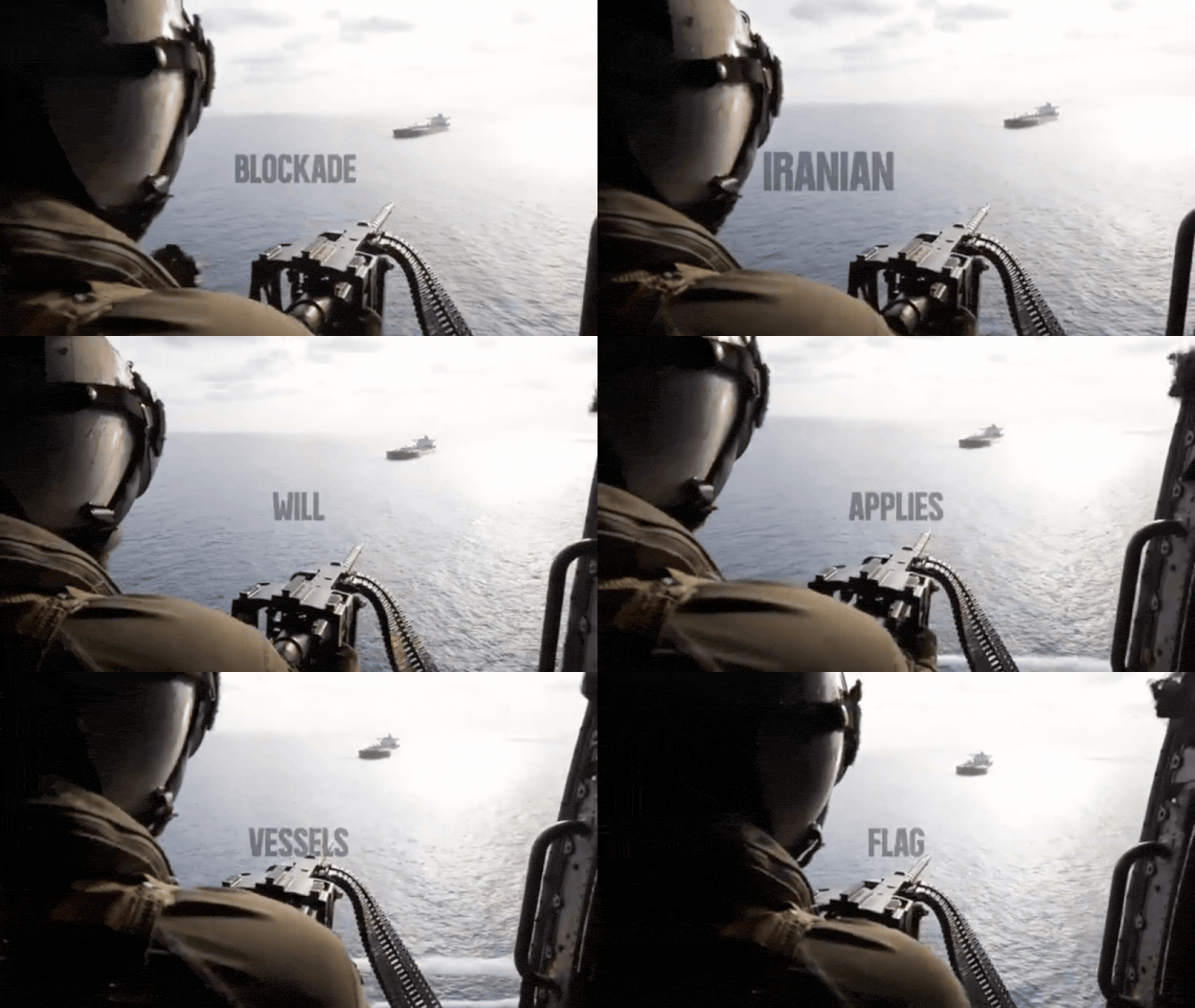
The United States military has released footage showing a helicopter gunner issuing a stern warning to a cargo ship near Iranian waters. This event is part of an ongoing maritime blockade aimed at controlling traffic in a highly sensitive region. So far, reports indicate that 27 different vessels have been forced to turn back after entering restricted zones. These actions highlight the growing tension between the U.S. and Iran as both nations move to secure their interests in the Strait of Hormuz.
Main Impact
The most immediate impact of this blockade is the disruption of international shipping routes. By stopping and turning away cargo ships, the U.S. forces are sending a clear message about their control over specific maritime boundaries. This situation makes it much harder for goods to move freely through one of the world's busiest waterways. For the global economy, this could lead to delays in delivery times and an increase in the cost of shipping goods, as companies may need to find longer, safer paths for their vessels.
Key Details
What Happened
A video recently made public by U.S. forces shows a helicopter crew patrolling the waters near an Iranian port. In the footage, a gunner is heard speaking over a radio to a cargo vessel that had entered a restricted area. The gunner warned the ship's crew that any attempt to continue forward or "run" would lead to serious consequences. The ship eventually complied and changed its course. This interaction is just one example of how military forces are now actively policing the sea to prevent unauthorized entry into certain zones.
Important Numbers and Facts
According to official reports, a total of 27 vessels have been intercepted and sent back since these new restrictions began. The area in question is located near the Strait of Hormuz, a narrow passage that connects the Persian Gulf with the Gulf of Oman. This waterway is vital because a large portion of the world's oil supply passes through it every day. The U.S. has increased its naval and air presence in the region to enforce these rules, citing security concerns and the need to protect international trade from potential threats.
Background and Context
To understand why this is happening, it is important to look at the relationship between the U.S. and Iran. For many years, these two countries have had disagreements over trade, security, and political influence in the Middle East. The Strait of Hormuz has often been a flashpoint for these tensions. Because the strait is so narrow, it is easy for a military force to block or monitor who goes in and out. Recently, both the U.S. and Iran have set up their own sets of rules for ships in the area. This has created a confusing and dangerous environment for commercial sailors who are just trying to do their jobs. When one country sets a restricted zone, the other often responds with its own show of force.
Public or Industry Reaction
The shipping industry has expressed deep concern over these developments. Groups that represent ship owners and sailors have pointed out that these blockades put innocent workers at risk. Many companies are now paying much higher insurance rates to send their ships through this region. Some international leaders have called for both sides to use caution and avoid any actions that could lead to a full-scale conflict. While some see the U.S. actions as necessary for security, others worry that aggressive warnings from helicopter gunners could lead to a misunderstanding that starts a fight.
What This Means Going Forward
Moving forward, the situation remains very unstable. If the U.S. continues to turn back ships, Iran may decide to take similar actions against vessels from Western nations. This "tit-for-tat" behavior could lead to a complete shutdown of the strait, which would be a disaster for global energy markets. We can expect to see more military patrols and perhaps more videos of these encounters as both sides try to win the "information war." For now, shipping companies will likely continue to avoid the restricted zones, even if it means taking much longer routes to reach their destinations. Diplomatic talks are needed to settle these maritime disputes, but currently, both sides seem more focused on showing military strength.
Final Take
The sight of a helicopter gunner warning a cargo ship is a vivid reminder of how quickly trade routes can turn into military zones. While the goal of the blockade is to maintain order and security, the reality is a more complicated web of risk for the global shipping industry. As long as the U.S. and Iran remain at odds, the waters near the Strait of Hormuz will stay one of the most dangerous places in the world for commercial travel. The safe passage of goods depends on clear rules and peace, both of which are currently in short supply in this region.
Frequently Asked Questions
Why are ships being turned back near Iran?
Ships are being turned back because U.S. forces are enforcing a maritime blockade in restricted zones. These zones have been set up due to rising security tensions and the need to monitor traffic in a sensitive area.
How many ships have been affected so far?
Reports indicate that at least 27 vessels have been forced to return or change their course after attempting to enter restricted waters near Iranian ports.
Where is this happening?
These events are taking place in and around the Strait of Hormuz, a critical waterway that connects the Persian Gulf to the rest of the world's oceans.