Summary
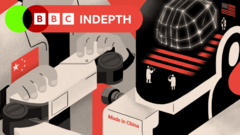
The global race for artificial intelligence (AI) has divided into two main paths, with the United States and China each leading in different areas. The United States currently holds the top spot for developing creative AI tools and the powerful computer chips needed to run them. Meanwhile, China is making massive progress in using AI for practical tasks, manufacturing, and public systems. Both nations are working hard to ensure they do not fall behind, as the winner of this tech race will likely lead the global economy for decades to come.
Main Impact
This competition between the two largest economies is speeding up how fast technology changes our lives. Because both countries see AI as a tool for national strength, they are spending billions of dollars on research and development. This push is creating a split in the tech world. One side focuses on software that can think and write like humans, while the other focuses on hardware and systems that make factories and cities run more efficiently. The result is a world where technology is advancing faster than laws can keep up.
Key Details
What Happened
For the past few years, the United States has been the clear leader in "Generative AI." This is the kind of technology used to build chatbots like ChatGPT or tools that create art from text. American companies have access to the best engineers and the most advanced hardware. However, China has taken a different approach. Instead of just focusing on chatbots, China has integrated AI into its physical world. They use it for facial recognition, self-driving cars, and automated shipping ports. This means that while the US has the "smartest" software, China might have the most "useful" AI in daily operations.
Important Numbers and Facts
The scale of this competition is massive. Reports show that China often files more AI patents than any other country, showing a high level of activity in new inventions. On the other hand, the US still attracts the most private investment money for AI startups. A major part of this battle involves computer chips. The US government has put rules in place to stop the most advanced chips from being sold to China. These chips are necessary to train the largest AI models. In response, China is spending over $100 billion to build its own chip industry so it does not have to rely on Western technology.
Background and Context
To understand why this matters, you have to look at how electricity changed the world a hundred years ago. AI is expected to do the same thing today. It will change how we grow food, how we fight wars, and how we treat diseases. If one country gets a huge lead, they could control the global market for almost every product. The US wants to keep its lead to protect its economy and its way of life. China wants to lead so it can become the world's top superpower and prove that its system of government works better for modern technology.
Public or Industry Reaction
Business leaders and experts are divided on who will eventually win. Some say the US lead in high-end chips gives it an unbeatable advantage. They argue that without the best hardware, China cannot build the most powerful AI. However, others point out that China has more data. Because China has a huge population and fewer rules about privacy, their AI systems have more information to learn from. Many tech experts are also worried that this competition will lead to "tech nationalism," where countries stop sharing ideas and the world becomes more divided.
What This Means Going Forward
The next phase of this race will likely be about energy and data. AI models require a massive amount of electricity to run. The country that can produce cheap, clean energy will have a big advantage in keeping their AI systems running. We may also see a shift in how AI is built. If China cannot get the best chips, they might find new ways to write software that works better on slower chips. This could lead to a breakthrough that the US didn't expect. Both countries are also looking at how to regulate AI to make sure it doesn't cause harm, but they are doing so in very different ways.
Final Take
The competition for AI dominance is not a simple sprint to a finish line. It is a long-term struggle that involves science, money, and politics. While the US currently leads in creativity and high-tech hardware, China’s ability to use AI in the real world is a powerful force. The lead could change hands many times as new problems, like energy shortages or data limits, appear. In the end, the winner will be the nation that can best balance fast innovation with safety and practical use.
Frequently Asked Questions
Which country is currently winning the AI race?
It depends on how you measure it. The US leads in advanced software and high-end chips, while China leads in practical applications and the number of AI patents filed.
Why are computer chips so important for AI?
AI requires a lot of "thinking power" to process data. Advanced chips allow computers to do these calculations very quickly. Without them, building powerful AI takes much longer.
How does this competition affect regular people?
This race leads to faster improvements in technology, such as better medical tools and smarter phones. However, it also creates tension between countries and raises concerns about how our data is used.