
Summary
Scientists have discovered that the universe is growing much faster than they previously thought. New measurements from powerful telescopes show a significant gap between our predictions and the actual speed of cosmic expansion. This discovery suggests that our current understanding of physics might be missing a major piece of the puzzle. Researchers are now working hard to explain why the universe is speeding up and what this means for the future of space.
Main Impact
The primary impact of this discovery is that it challenges the "Standard Model" of cosmology. For decades, scientists used a specific set of rules to explain how the universe began and how it changes over time. However, these rules do not match the new data. This mismatch, often called a "tension" in the scientific community, means that either our math is wrong or there is a mysterious force in space that we have not yet identified. If the universe continues to expand at this higher speed, it could change everything we know about the life cycle of galaxies and stars.
Key Details
What Happened
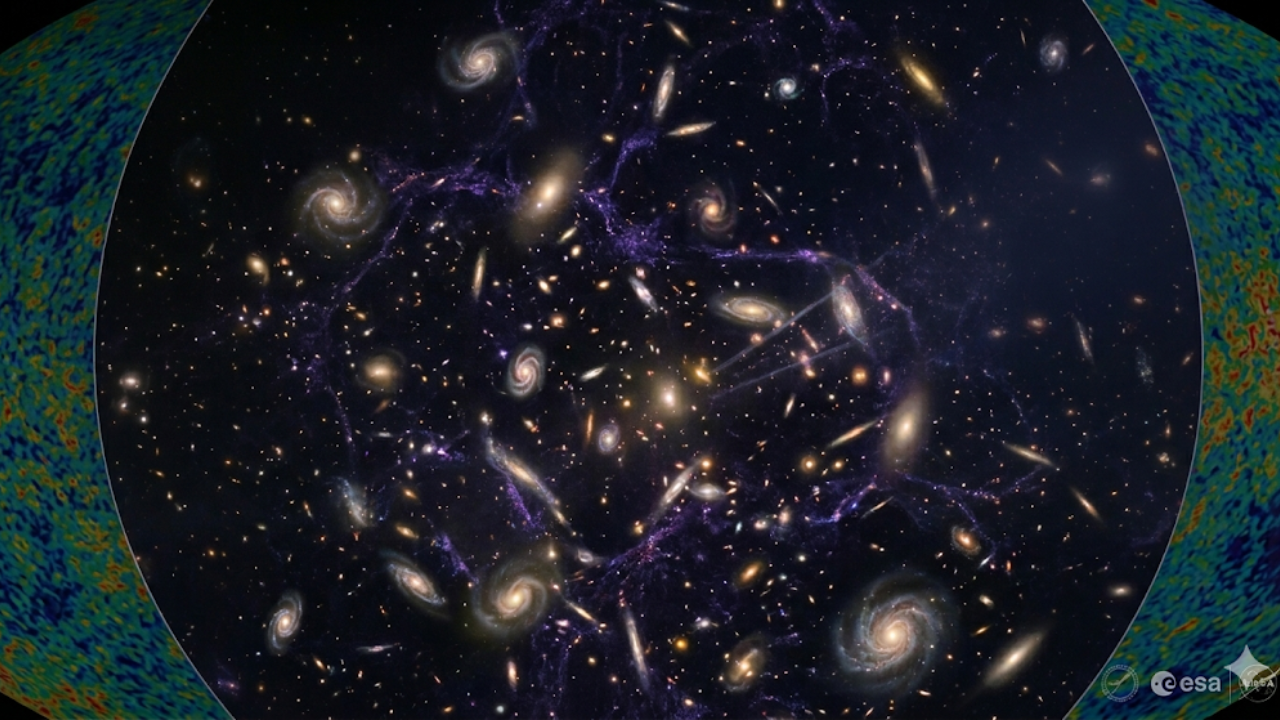
Astronomers have been using advanced tools like the James Webb Space Telescope and ground-based observatories to track how fast distant galaxies are moving away from us. They found that the further away a galaxy is, the faster it seems to be retreating. While scientists always knew the universe was expanding, they expected the rate to be slower based on data from the early universe. The new findings show a clear disagreement between the "old" light from the Big Bang and the "new" light from nearby stars.
Important Numbers and Facts
The speed of this expansion is measured by something called the Hubble Constant. Measurements of the early universe suggested a rate of about 67 kilometers per second for every megaparsec of distance. However, new observations of the modern universe show a rate closer to 73 or 74 kilometers per second. This 10% difference might seem small, but in the world of physics, it is a massive gap that cannot be explained by simple mistakes. This data has been checked multiple times, and the results remain the same, proving that the problem is real.
Background and Context
To understand why this matters, we have to look back at how the universe works. After the Big Bang, gravity was expected to slow down the expansion of space by pulling matter together. However, in the late 1990s, scientists found that the expansion was actually speeding up. They named the cause of this "Dark Energy." Dark Energy is an invisible force that makes up about 68% of the universe. It acts like the opposite of gravity, pushing things apart. The current problem is that Dark Energy seems to be even more powerful or more complex than anyone predicted.
Public or Industry Reaction
The scientific community is currently divided on how to fix this problem. Some researchers believe that the instruments used to measure distance might have tiny errors that add up over time. Others are more excited, suggesting that we are on the verge of a "New Physics." This would mean rewriting textbooks to include new types of particles or forces that we cannot see yet. Space agencies around the world are now prioritizing new missions to study Dark Energy more closely, hoping to find a clear answer to this cosmic mystery.
What This Means Going Forward
In the coming years, new projects like the Vera C. Rubin Observatory and the Euclid space mission will provide even more data. These tools will map billions of galaxies to see if the expansion speed has changed at different points in history. If the gap in data remains, scientists may have to accept that Einstein’s theories of gravity need an update. For the average person, this doesn't change daily life, but it changes our understanding of the "Big Freeze." This is a theory that the universe will eventually become so spread out and cold that no new stars can form.
Final Take
The fact that the universe is expanding faster than expected shows how much we still have to learn about the world beyond our planet. While it creates a difficult problem for scientists to solve, it also opens the door to incredible new discoveries. We are living in a time where our basic ideas about reality are being tested, and the answers could change our view of the stars forever. The mystery of the speeding universe is not just a math problem; it is a sign that the cosmos is far more active and complex than we ever imagined.
Frequently Asked Questions
What is the Hubble Constant?
The Hubble Constant is a number that describes how fast the universe is expanding. It tells scientists the rate at which galaxies are moving away from each other based on their distance from Earth.
What is Dark Energy?
Dark Energy is a mysterious force that fills space and causes the expansion of the universe to speed up. Scientists do not know exactly what it is, but they know it makes up most of the universe.
Why are the new measurements a problem?
The new measurements are a problem because they do not match the predictions made using data from the early universe. This disagreement suggests that our current laws of physics might be incomplete or incorrect.

