Summary
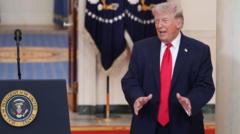
President Trump recently spoke to the nation to address the growing conflict with Iran. His main goal was to lower the fear of an immediate war after Iran launched missiles at military bases used by the United States. While the president confirmed that no Americans were harmed, his speech left many important questions without answers. The address focused on using economic power instead of military force, but it did not explain the long-term plan for peace in the region.
Main Impact
The immediate impact of the president’s speech was a sense of relief across global markets and among the public. By choosing not to launch a military strike in return, the United States signaled that it is not looking for a full-scale war. This move stopped the cycle of violence from getting worse for the time being. However, the decision to use more sanctions instead of talking to Iranian leaders means the tension is still very high. The underlying problems that caused the fight remain, and the path to a permanent solution is still unclear.
Key Details
What Happened
The situation began to peak after the United States killed a high-ranking Iranian general in a drone strike. Iran responded by firing more than a dozen ballistic missiles at two airbases in Iraq where U.S. troops are stationed. Many people feared this would lead to a massive war. In his televised address, President Trump told the world that Iran appeared to be standing down. He said that the early warning systems worked well and that the damage to the bases was minimal. Instead of ordering more bombs, he announced that the U.S. would place new and powerful economic sanctions on the Iranian government.
Important Numbers and Facts
Several key facts stood out during this event. First, there were zero casualties among U.S. and Iraqi forces during the missile strikes. This was a major factor in the president's decision to avoid a military response. Second, the president mentioned that the U.S. is now the top producer of oil and gas in the world, meaning it does not need Middle Eastern oil as much as it used to. Finally, the president called on other world powers, including the United Kingdom, France, Germany, China, and Russia, to break away from the old nuclear deal and work on a new agreement with Iran.
Background and Context
To understand why this matters, we have to look at the history between the two countries. For years, the U.S. and Iran have been in a "cold war" of sorts. In 2015, several countries signed a deal to stop Iran from making nuclear weapons in exchange for lifting sanctions. President Trump pulled the U.S. out of that deal in 2018, saying it was a bad agreement. Since then, he has used a "maximum pressure" strategy. This means using heavy sanctions to hurt Iran's economy so they will agree to a stricter deal. Iran has responded by attacking oil tankers and shooting down drones, leading up to the recent missile strikes.
Public or Industry Reaction
The reaction to the president's speech was mixed. Many supporters praised him for showing strength while also avoiding a new war in the Middle East. They believe the sanctions will eventually force Iran to change its ways. On the other hand, critics and some military experts are worried. They pointed out that the president did not say how he would stop Iran from continuing its nuclear program now that the old deal is falling apart. There is also concern from leaders in Iraq, who are caught in the middle of the fight and have asked U.S. troops to leave their country. The president did not mention the future of U.S. troops in Iraq at all during his speech.
What This Means Going Forward
Going forward, the conflict is moving from the battlefield to the bank. The U.S. will continue to squeeze Iran's economy, hoping to make the government there desperate enough to negotiate. However, this carries risks. If the Iranian people suffer too much, it could lead to more anger against the West. There is also the danger of "proxy wars," where Iran uses other groups to attack U.S. interests in different countries. The world will be watching to see if the two sides can find a way to talk or if this is just a short break before the next big crisis.
Final Take
President Trump succeeded in calming the immediate fear of a major war, which is a positive step for global safety. However, by leaving out details on how to handle Iran's nuclear goals and the presence of U.S. troops in the region, he has only delayed the hard conversations. A strategy based only on sanctions might stop missiles today, but it does not guarantee a peaceful future. True stability will require more than just economic pressure; it will require a clear and consistent plan that everyone can understand.
Frequently Asked Questions
Why did Iran attack the U.S. bases?
Iran attacked the bases as a direct response to the U.S. killing one of their top military leaders, Qasem Soleimani, in a drone strike a few days earlier.
What are economic sanctions?
Sanctions are penalties used by one country against another. In this case, the U.S. is blocking Iran from selling products like oil and using international banks, which makes it very hard for the country to make money.
Is the U.S. going to war with Iran?
At this moment, both sides have stepped back from direct military fighting. While the situation is still tense, the focus has shifted to economic and political pressure rather than active combat.