Summary
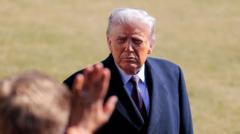
President Trump has expressed strong dissatisfaction with Iran following the most recent discussions regarding its nuclear program. The President stated that he is unhappy with the current position held by Iranian leaders after the latest round of talks. While the situation remains tense, he clarified that a final decision on whether to take military action has not yet been made. This development marks a significant moment in the ongoing effort to manage nuclear ambitions in the Middle East.
Main Impact
The immediate impact of the President's comments is a rise in global political tension. When the United States signals that it is "not thrilled" with diplomatic progress, it often leads to uncertainty in international markets and among neighboring countries. This statement suggests that the gap between the two nations remains wide, despite recent attempts to find common ground. For the global community, this means the risk of a military confrontation remains a possibility, which could affect everything from oil prices to regional security agreements.
Key Details
What Happened
The latest update comes after a series of high-level meetings aimed at addressing Iran's nuclear activities. These talks were intended to see if Iran would agree to stricter limits on its ability to process nuclear material. However, the feedback from the White House suggests that the Iranian government did not offer the concessions the United States was looking for. President Trump spoke to the media to share his reaction, making it clear that the results were far from what he expected or desired.
Important Numbers and Facts
While specific details of the private talks are often kept secret, several key facts define the current situation. The United States has previously pulled out of the 2015 nuclear deal, which was known as the JCPOA. Since then, Iran has reportedly increased its levels of uranium enrichment. Current reports suggest that Iran has moved closer to the levels needed for a weapon, though they claim their program is for peaceful energy only. The U.S. has maintained heavy economic sanctions on Iran for several years, hoping to pressure them into a new, more restrictive agreement.
Background and Context
To understand why this matters, it is important to look at the history between the two countries. For decades, the United States and its allies have been worried that Iran might develop a nuclear bomb. A nuclear-armed Iran could change the balance of power in the Middle East and lead to an arms race in the region. In 2015, several world powers signed a deal with Iran to limit its nuclear work in exchange for lifting economic punishments. However, the Trump administration later argued that the deal was too weak and did not cover other issues, like Iran's missile program.
Because the U.S. left that deal, Iran began to ignore the rules of the agreement. This has led to a cycle of tension where both sides are waiting for the other to make the first move toward a new solution. The latest talks were an attempt to break this cycle, but the President's reaction shows that the two sides are still very far apart.
Public or Industry Reaction
The reaction to the President's statement has been mixed. Some political leaders in Washington believe that a tough stance is the only way to get Iran to change its behavior. They argue that showing weakness would only encourage Iran to continue its nuclear path. On the other hand, some international allies, particularly in Europe, are worried that the talk of military action could lead to a war that no one wants. They prefer to keep the doors open for more talking, even if the progress is slow.
In the financial world, energy experts are watching the situation closely. Any sign of conflict in the Middle East usually causes the price of oil to go up. This is because much of the world's oil travels through waters near Iran. If those routes are blocked or threatened, it could cause economic problems around the world.
What This Means Going Forward
Moving forward, the focus will be on whether the U.S. decides to increase sanctions or move toward a military option. The President's comment that he has "not yet decided" on an attack leaves a lot of room for speculation. It suggests that there is still a small window for diplomacy, but that window is closing. If Iran does not change its stance soon, the U.S. may look for other ways to stop their nuclear progress.
We can expect to see more meetings with U.S. allies to discuss the next steps. There may also be more pressure from the United Nations to allow inspectors into Iranian facilities. The goal for the U.S. remains a deal that is "longer and stronger" than the previous one, but getting Iran to agree to those terms will be a difficult task.
Final Take
The situation with Iran is at a critical point. President Trump's open dissatisfaction shows that the current path of diplomacy is not working as intended. While military action is not a certainty, it is clearly being considered as a serious option. The coming weeks will be vital in determining if a peaceful solution can still be found or if the relationship will move toward a more dangerous phase.
Frequently Asked Questions
Why is the U.S. unhappy with the nuclear talks?
The U.S. feels that Iran is not making enough promises to stop its nuclear program. The government wants a deal that ensures Iran can never build a nuclear weapon.
Is a war with Iran going to happen?
President Trump said he has not decided on an attack yet. While the threat is there, both sides are still communicating, which means a peaceful outcome is still possible.
How do these talks affect the average person?
Tensions in this region can cause oil and gas prices to rise. It also affects global security, as a conflict could involve many different countries and impact international trade.