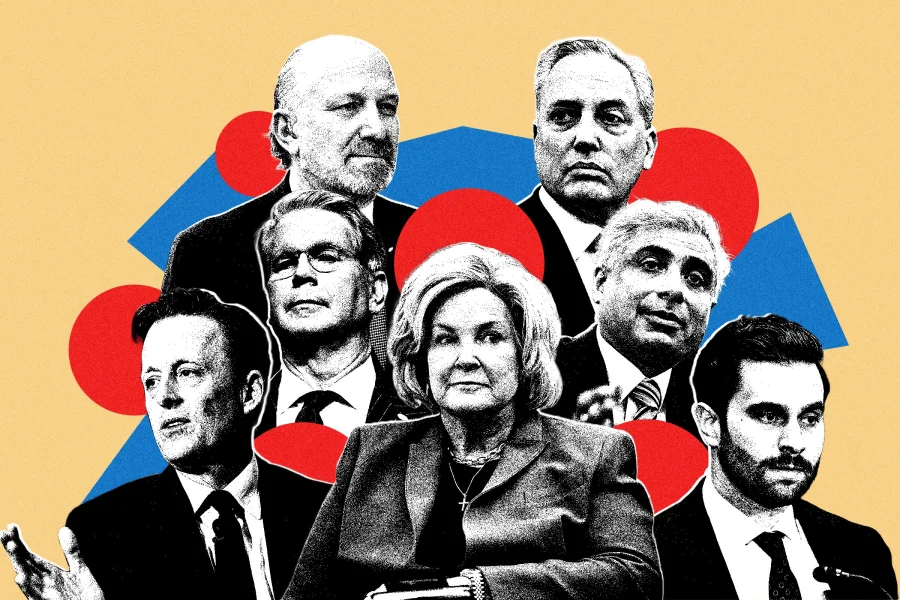
It’s not a simple left-right divide. It’s not a tech-vs-regulation standoff. When it comes to shaping America’s artificial intelligence policy under President Donald Trump, the decision-making table is crowded with at least 10 distinct voices — all pulling in different directions.
That’s the frank assessment delivered by a senior administration official to WIRED, offering a rare, unfiltered look inside the White House’s AI brain trust. “It’s not an argument with two sides, it’s an argument with 10 sides,” the official said.
The Anatomy of a Fractured AI Advisory Network
According to the WIRED report, Trump’s inner circle on AI is far from a monolithic group. National security hawks, business-friendly deregulators, economic nationalists, privacy advocates, and pure research scientists are all jostling for influence.
No single faction has yet gained the upper hand. The official described a constant, messy negotiation where each side brings its own assumptions about risk, opportunity, and the role of government.
Why a 10-Sided Argument Matters for Everyday Americans
When AI policy stalls or zigzags, the impact is felt beyond Washington. Companies face regulatory uncertainty, workers wonder if automation will accelerate unchecked, and civil liberties groups worry about surveillance and bias.
A divided brain trust means no coherent message — and no predictable rules. For industries deploying AI in healthcare, finance, or defence, the lack of consensus can slow investment and innovation.
Historical Context: From Bipartisan Caution to Frantic Debate
Previous administrations approached AI with a relatively unified sense of urgency — establishing principles, funding research, and signing executive orders. Trump’s early tenure saw a similar push, but the WIRED leak reveals that internal coherence has since fractured.
The widening circle of advisors, from Big Tech lobbyists to military contractors, has created a free-for-all rather than a streamlined panel.
Who Is Affected: An Entire Ecosystem at Odds
Silicon Valley executives want minimal regulation. Labour unions push for worker protections. The Pentagon demands rapid integration for defence. Privacy advocates warn against unchecked data collection. Each of these groups has a seat at the table — or at least a loud voice in the hallway.
The senior official hinted that some factions are so entrenched that compromise may take years.
What WIRED’s Source Tells Us — and What They Didn’t
WIRED’s unnamed source did not disclose which side currently has the president’s ear. The official also refused to name the specific personalities involved, citing internal confidentiality. What is clear: Trump himself is reportedly engaged, but deeply influenced by whoever speaks to him last.
This fluid, transactional style of governance makes AI policy highly volatile — capable of reversing course on a single phone call.
Confirmed Facts vs What Remains Unclear
Confirmed: A senior administration official described the AI policy process as a 10-sided argument. WIRED stands by the reporting.
Unclear: Which factions exist, who leads each, and whether any formal structure coordinates them. All speculation about personalities and specific agenda items is currently unverified.
Wider Trend: How Factional Gridlock Is Paralyzing US Tech Policy
This AI brain trust chaos reflects a broader pattern in Trump-era technology governance. On issues from data privacy to 5G, competing interests have produced stalemate or contradictory signals. The AI case may be the most extreme example, given the technology’s high stakes and cross-cutting implications.
Practical Guidance for Stakeholders
For investors and business leaders: hedge your bets. Do not assume any single regulatory outcome. For tech companies: engage with multiple factions, not just one. For civil society: amplify your voice — the battle is still open. For the public: stay informed, as policy shifts will reshape everything from job markets to surveillance norms.
What Comes Next: Three Possible Scenarios
Analysts watching the situation point to three broad outcomes: (1) national security hawks consolidate control, leading to a military-first AI push; (2) a deregulatory faction wins, spurring rapid industry growth with minimal oversight; or (3) permanent gridlock, forcing Congress to step in with broad legislation.
None of these paths is preordained, but the 10-sided argument suggests no quick resolution.
Our Take
The WIRED scoop pulls back the curtain on a White House that presents an image of decisive action while operating in what insiders admit is near-chaos. The “10 sides” comment is not just an anecdote — it’s a structural warning. AI policy cannot be effectively designed in a room where everyone talks and nobody coordinates. Until a clear leader emerges, expect mixed messages, delayed decisions, and missed opportunities. For the rest of the world, America’s AI direction remains anybody’s guess.
Frequently Asked Questions
What is Donald Trump’s AI brain trust?
It refers to the informal network of advisors and stakeholders inside the Trump administration who shape US artificial intelligence policy. According to WIRED, that network is deeply divided, with at least 10 competing factions.
Why is AI policy so fragmented under Trump?
The fragmentation stems from the involvement of many groups with conflicting priorities: national security, industry, labour, civil liberties, and economic nationalism all vie for influence, and no single group has dominated so far.
What does “argument with 10 sides” mean?
A senior White House official used that phrase to describe the policy debate — there is no simple liberal vs conservative split; instead, dozens of viewpoints compete, making consensus extremely difficult.
How can I stay updated on US AI policy changes?
Follow reputable outlets like WIRED, the New York Times, and the Washington Post for insider reporting. Official announcements come from the White House Office of Science and Technology Policy (OSTP) and executive orders.