
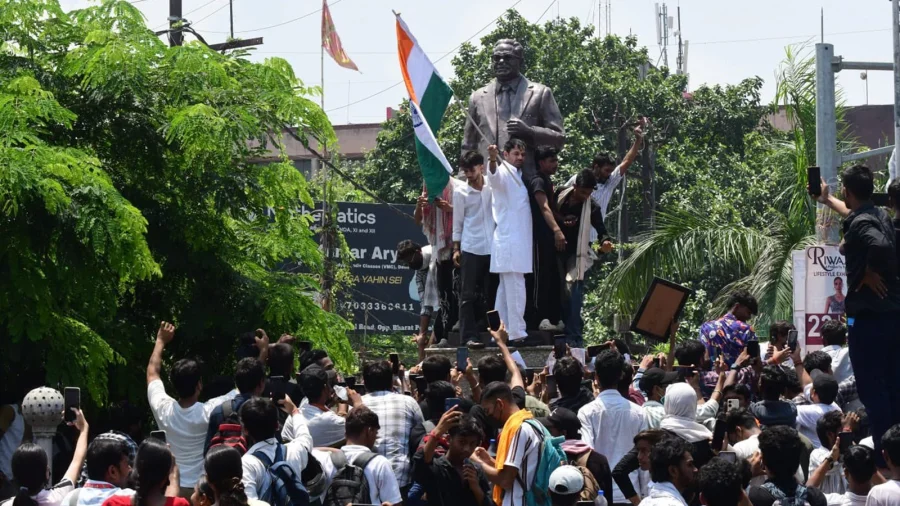
Patna: The political temperature in Bihar rose sharply on Tuesday after RJD leader and former minister Tej Pratap Yadav was arrested during a protest against alleged NEET exam irregularities. A local court later remanded him to 14-day judicial custody, setting the stage for a legal battle that could stretch for weeks.
Why the Arrest Over a NEET Protest Matters
Tej Pratap, son of RJD chief Lalu Prasad Yadav, was leading a rally in Patna to demand a probe into reported malpractices in the NEET medical entrance exam. His arrest underlines the deepening fault line between the ruling NDA and the opposition RJD over the issue of exam transparency. For thousands of NEET aspirants in Bihar, the protest — and the arrest — has become a symbol of their own frustrations.
What Happened at the Patna Protest
According to police sources, the protest turned into an unauthorized gathering near the Bihar Secretariat. Officials said the rally had not received prior permission, leading to the arrest of around a dozen supporters. Tej Pratap was taken into custody along with several party workers and later produced before a magistrate. The court ordered judicial custody until further hearing.
How the Situation Unfolded: A Brief Timeline
The protest began earlier in the day with a march from the RJD office. Within hours, police intervened, citing law and order concerns. By late afternoon, Tej Pratap was in police lock-up. By evening, the court had passed the 14-day remand order. The sequence mirrors similar incidents in the state where political protests have led to arrests.
Who Is Affected by This Arrest
Immediately, Tej Pratap’s family, party workers, and NEET aspirants are affected. His detention means RJD loses a vocal campaigner on education issues ahead of upcoming elections. More broadly, students and parents who had hoped for a strong political voice on exam reform now face uncertainty. The arrest also impacts the image of Bihar’s law and order, with opposition accusing the government of using police to muzzle dissent.
Official Response and Political Reactions
Police officials confirmed the arrest but declined to comment on specifics of the case. “We acted as per law. Unauthorized assembly cannot be allowed,” a senior officer said. The RJD sharply criticized the move, calling it “political vendetta.” Party spokesperson said, “They have arrested Tej Pratap for asking for a fair NEET exam. This is dictatorship.” No official statement has yet come from the state health department.
Why the NEET Protest Has Resonance in Bihar
Bihar has a history of exam-related controversies, from the 2017 Bihar Board cheating scandal to repeated allegations of paper leaks. The NEET exam, crucial for medical admissions, has seen protests in multiple states. In Bihar, the issue is amplified by the large number of aspirants from economically weaker backgrounds who see the exam as their only route to a medical career. The arrest of a prominent politician brings this simmering discontent to the forefront.
Confirmed Facts vs What Remains Unclear
Confirmed: Tej Pratap Yadav was arrested during a NEET protest in Patna and remanded to 14-day judicial custody. The protest was declared unauthorized. Unclear: The exact charges against him, whether bail will be granted soon, and the total number of people arrested. Speculation that the arrest was pre-planned cannot be verified.
Risks and Balanced View
Supporters of the arrest argue that no one is above the law and that unauthorized protests can lead to violence. Critics, however, say the government is using legal technicalities to silence opposition. The case risks further polarising Bihar’s politics. For students, the arrest may discourage peaceful protests, potentially pushing frustration underground.
Wider Pattern: Political Arrests Over Exam Protests
This incident adds to a growing list of politicians detained during exam-related protests across India. In Uttar Pradesh, leaders were arrested during the 2023 UPPSC row; in Rajasthan, teachers’ union heads faced detention. The trend suggests that exam grievances are increasingly becoming partisan flashpoints.
Practical Guidance for NEET Aspirants in Bihar
Students who want to raise concerns about the NEET exam should use legal channels — file RTI applications, approach the high court, or write to the National Testing Agency. Joining political rallies carries legal risk. Aspirants are advised to stay informed through official NTA announcements and avoid unauthorized gatherings.
What Could Happen Next
Tej Pratap’s legal team is expected to file for bail within days. If granted, the protest momentum may resume. If not, the RJD might escalate with larger rallies. The case also sets a precedent: any future exam-related political protest in Bihar will likely face similar police action. Meanwhile, the NEET controversy itself remains unresolved, with no official inquiry announced yet.
Our Take
The arrest of Tej Pratap is more than a routine law and order event — it exposes the fragility of political space for expressing student grievances. While the law must be followed, the state should also address the underlying demand for exam fairness. For now, the protestors have lost a leader, but the anger over NEET irregularities will not disappear with a court order.
Frequently Asked Questions
Why was Tej Pratap arrested?
He was arrested during a protest in Patna against alleged NEET exam irregularities, reportedly for leading an unauthorized rally.
How long is the judicial custody?
The court remanded him to 14-day judicial custody, meaning he will remain in jail until the next hearing, unless bail is granted.
What is the NEET protest about?
The protest demands a probe into reported malpractices, including paper leaks and unfair results, in the NEET medical entrance exam.
Will the arrest affect NEET reforms?
It may temporarily stall political pressure but is unlikely to directly influence the NTA’s exam procedure. Student groups may continue their demand through other means.



