Summary
It has been exactly one month since the United States and Israel carried out a series of military strikes across Iran. While the military operation was described as a targeted move against specific facilities, the reality on the ground in Tehran tells a different story. Many ordinary people are still dealing with the loss of their homes and the deaths of their family members. The emotional and physical damage from that night continues to affect the lives of millions of civilians who were caught in the middle of the conflict.
Main Impact
The strikes have left a deep mark on the city of Tehran and its people. Beyond the destruction of buildings, the social fabric of the city has been shaken. Families who once felt safe in their neighborhoods now live in constant fear of another attack. The most significant impact is the human cost, as many residents are still trying to find missing relatives or are mourning those who died when their homes collapsed. The local economy has also slowed down, as people focus on survival rather than their daily jobs or businesses.
Key Details
What Happened
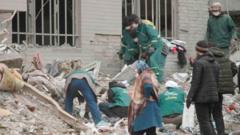
One month ago, a series of loud explosions woke the residents of Tehran in the middle of the night. The strikes were part of a coordinated military action by the U.S. and Israel. While the official reports focused on the destruction of missile sites and military command centers, several missiles hit residential areas. In the weeks that followed, the scale of the civilian damage became clear. Entire apartment blocks were turned into piles of broken concrete and twisted metal. Rescue workers spent days digging through the debris, often using only their hands or simple tools to look for survivors.
Important Numbers and Facts
Reports from local hospitals and rescue teams suggest that the number of civilian casualties is much higher than first thought. Thousands of people have been forced to leave their damaged homes, seeking shelter with relatives or in temporary camps. In some neighborhoods, basic services like water and electricity were cut off for weeks. While the exact number of deaths is hard to confirm due to government restrictions, many families have come forward to share stories of lost children and parents. The cost to repair the damaged civilian areas is expected to reach hundreds of millions of dollars, money that the local government says it does not have.
Background and Context
The tension between Iran, Israel, and the United States has been growing for a long time. These countries have had many disagreements over nuclear energy, regional power, and military influence. For years, this conflict was fought through words, sanctions, and small-scale actions. However, the strikes one month ago marked a major change in the situation. It was one of the most direct and powerful attacks on the Iranian capital in recent history. For the people living in Tehran, these political issues have now become a personal tragedy that has changed their lives forever.
Public or Industry Reaction
The reaction from the people in Tehran is a mix of deep sadness and quiet anger. Many residents feel that they are being punished for a conflict they did not start. One father told reporters that he spent three weeks waiting by a pile of bricks where his house used to be, hoping to find his daughter. Stories like this have spread across the city, creating a sense of shared grief. Internationally, human rights groups have expressed concern about the civilian toll. They are calling for more transparency regarding how targets were chosen and why so many homes were hit during the operation.
What This Means Going Forward
The road to recovery for Tehran will be long and difficult. Many families are now homeless and have lost everything they owned. There is also the problem of psychological trauma, as children and adults alike struggle with the memory of the explosions. In the coming months, the focus will likely be on rebuilding, but the fear of future strikes remains high. If the political situation does not improve, there is a risk that more military actions could happen, leading to even more civilian suffering. International aid groups are trying to get supplies into the country, but political barriers make this hard to do.
Final Take
The events of the past month show that in modern warfare, the line between military and civilian targets is often thin. While leaders talk about strategy and defense, the people on the ground are the ones who pay the highest price. The ruins in Tehran serve as a reminder that every bomb dropped has a human story behind it. Until a peaceful solution is found, the cycle of loss and fear will likely continue for the people living in the region.
Frequently Asked Questions
Why were the strikes carried out?
The United States and Israel stated that the strikes were intended to destroy military targets and missile sites to prevent future attacks. They claimed the move was necessary for regional security.
How many civilians were affected?
While exact numbers are not yet official, thousands of people have been displaced from their homes, and many families have reported deaths and injuries among their loved ones in residential areas.
Is there any help for the people in Tehran?
Local rescue teams and neighbors are helping each other, but international aid is limited. Sanctions and political tensions make it difficult for outside organizations to bring in large amounts of food, medicine, and building supplies.