
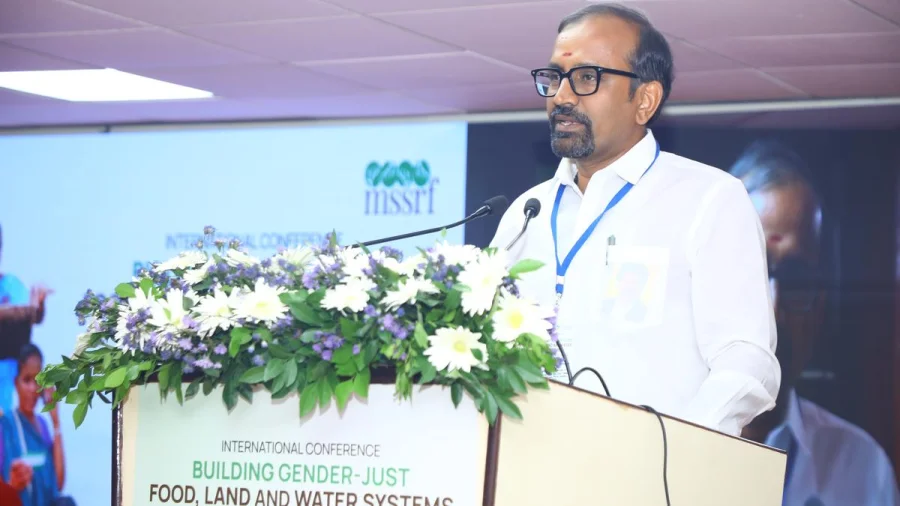
Tamil Nadu has signalled a sharper policy focus on women's economic security — starting with land, jobs, and nutrition. The Food and Civil Supplies Minister said the state will prioritise strengthening women's land rights, while also working to improve women's workforce participation, particularly in rural areas, and strengthen nutrition programmes by promoting protein-rich foods and traditional millets.
Land ownership moves to the centre of the state's gender agenda
The minister's statement places women's land rights at the heart of Tamil Nadu's policy direction. Land ownership is widely recognised as a foundation for economic independence, access to credit, and long-term household stability.
For rural women, secure land rights can mean greater bargaining power within households and communities. The announcement signals that the state views this as a priority area, though it did not specify how the strengthening would be achieved.
Rural workforce participation gets a dedicated push
Beyond land, the minister said the state is working to improve women's participation in the workforce, especially in rural areas. Women's labour force participation in India has historically lagged behind global averages, and rural women face additional barriers including unpaid domestic work and limited access to formal employment.
Tamil Nadu's focus on rural workforce participation suggests an attempt to address these structural gaps, with land rights likely serving as a supporting measure for economic mobility.
Millets and protein-rich foods enter the nutrition agenda
The minister also linked the policy push to nutrition, saying the state will strengthen nutrition programmes by promoting protein-rich foods and traditional millets. Millets — including ragi, jowar, and bajra — have been central to Indian diets for generations and are now being revived for their nutritional value, climate resilience, and low water footprint.
Combining land rights, employment, and nutrition in a single announcement suggests an integrated approach: stronger land ownership, better livelihoods, and improved food security for women and their families.
Why this combination matters for Tamil Nadu's women
Land rights, workforce participation, and nutrition are deeply interconnected. A woman with secure land rights is more likely to invest in farming, access institutional credit, and improve her family's food intake. Paid work strengthens her financial autonomy. Better nutrition, in turn, improves health and productivity across generations.
The minister's remarks tie these threads together — an indication that the state may be moving toward a more holistic gender-focused policy framework rather than isolated interventions.
What remains unclear
The available information does not include details on specific schemes, budget allocations, or implementation timelines. It is also unclear whether the land rights push will involve new legislation, changes to existing property laws, or targeted awareness and enforcement programmes.
Until official documents and scheme details are released, the announcement remains a statement of intent. Readers should treat the specifics — including how the workforce and nutrition goals will be funded and delivered — as pending confirmation.
Our Take
This announcement is significant less for what it promises than for what it connects. Land rights, rural employment, and nutrition are usually treated as separate policy silos. By addressing them together, the minister has framed women's economic security as a single, integrated challenge.
The test will lie in implementation. Tamil Nadu has a strong record of social welfare programmes, but translating policy intent into measurable outcomes — especially on land ownership, where social and legal barriers run deep — will require sustained effort and clear accountability.
Frequently Asked Questions
What did the Tamil Nadu Food Minister say about women's land rights?
The minister said the state will focus on strengthening women's land rights as part of its policy priorities. The announcement did not include specific schemes or legal changes.
How will Tamil Nadu improve women's workforce participation?
The minister said the state is working to improve women's participation in the workforce, particularly in rural areas. No specific programmes or targets were announced in the available information.
What is the nutrition programme change announced by the minister?
The state plans to strengthen nutrition programmes by promoting protein-rich foods and traditional millets. This signals a shift toward more nutrient-dense, locally available food options.
When will these measures be implemented?
The minister did not provide a timeline. Implementation details, budgets, and specific schemes are expected to be announced separately by the state government.



