
Summary
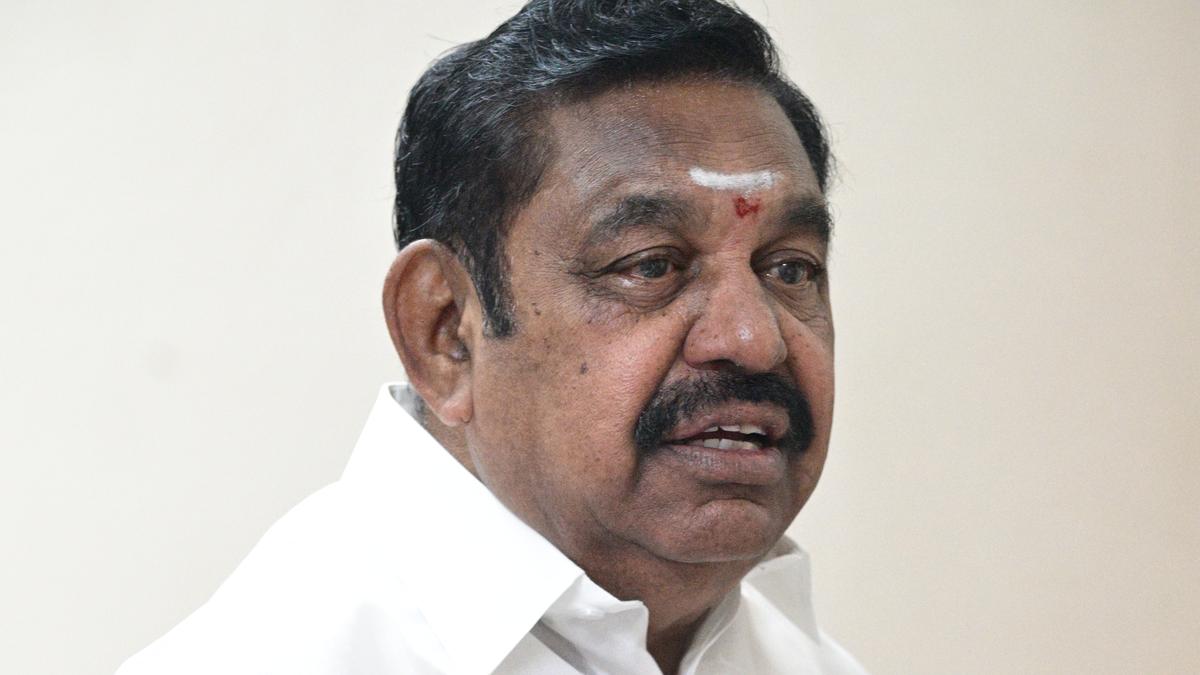
Edappadi K. Palaniswami, the leader of the AIADMK, has challenged the claims made by Tamil Nadu Chief Minister M.K. Stalin regarding the future of the state's political power. In a recent interview, Palaniswami pointed to new data suggesting that Tamil Nadu will not lose its influence in the central government. Instead, he noted that the state's share of seats in the Lok Sabha is expected to see a small increase. This development comes after assurances from Prime Minister Narendra Modi regarding the redrawing of electoral boundaries, a process known as delimitation.
Main Impact
The main impact of this statement is a shift in the political narrative in South India. For a long time, there has been a fear that Southern states would lose their voice in Parliament because they have been successful at controlling population growth. If seats are given based only on population, states with more people get more power. However, Palaniswami’s use of specific figures suggests that Tamil Nadu might actually gain a slightly larger percentage of the total seats. This challenges the argument that the central government is trying to reduce the influence of the South.
Key Details
What Happened
During an interview with The Hindu, Edappadi K. Palaniswami (EPS) spoke about the sensitive topic of delimitation. He stated that the fears spread by the DMK and Chief Minister Stalin are not based on the current facts. According to EPS, the Prime Minister has provided assurances that the interests of Tamil Nadu will be protected. He argued that Stalin’s frequent warnings about the state losing its representation have been proven wrong by the latest projections.
Important Numbers and Facts
The core of the argument rests on two specific numbers. Currently, Tamil Nadu’s share of seats in the Lok Sabha stands at 7.18%. According to the projections shared by Palaniswami, this share is expected to rise to 7.23%. While the increase of 0.05% seems small, it is significant in a political sense. It means that even as the total number of seats in Parliament grows, Tamil Nadu will keep its relative strength and perhaps even improve it slightly. This contradicts the idea that the state would be "punished" for its success in family planning and social development.
Background and Context
Delimitation is the process of fixing the limits or boundaries of territorial constituencies in a country. In India, this is done to ensure that each seat in the Lok Sabha represents a similar number of voters. The last time the number of seats was changed was decades ago. Since then, the population in Northern states has grown much faster than in Southern states like Tamil Nadu and Kerala. Because of this, many leaders in the South worried that a new round of delimitation would lead to the North getting many more seats, while the South stayed the same or lost ground.
The central government has been working on plans to increase the total number of seats in the Lok Sabha to better reflect the current population of India. This has led to a heated debate between regional parties and the national ruling party. The DMK, led by M.K. Stalin, has been one of the strongest voices claiming that this process would be unfair to Tamil Nadu. Palaniswami is now using the new projections to show that these fears might be exaggerated.
Public or Industry Reaction
The reaction to Palaniswami’s comments has been divided along party lines. Supporters of the AIADMK believe that EPS has successfully used data to expose what they call "fear-mongering" by the DMK. They argue that the state should focus on working with the central government to ensure the best outcome. On the other hand, members of the DMK and their allies remain skeptical. They argue that any system based on population will still favor states with higher birth rates in the long run. Political experts note that this debate is crucial as the state prepares for future elections, where the issue of "state rights" is always a major topic.
What This Means Going Forward
Moving forward, the focus will be on the official data released by the central government and the Delimitation Commission. If the numbers cited by Palaniswami hold true, it could take away a major talking point from the DMK. It would suggest that the formula used for redrawing seats might include factors other than just total population, such as social performance or economic contribution. However, if the final plan differs from these projections, the political tension between the state and the center is likely to increase. The next few years will be critical as the legal and political framework for the new Parliament is finalized.
Final Take
The debate over seat sharing is about more than just numbers; it is about how much power a state has to shape national policy. By highlighting a projected increase in Tamil Nadu’s share, Palaniswami has changed the direction of the conversation. Instead of focusing only on what might be lost, the discussion is now about the accuracy of the data and the reliability of government promises. This puts the pressure back on the state government to prove that their concerns are still valid in the face of these new figures.
Frequently Asked Questions
What is delimitation?
Delimitation is the process of redrawing the boundaries of Lok Sabha and State Assembly seats to make sure each seat represents an equal number of people based on the latest census data.
Why was Tamil Nadu worried about this process?
The state was worried because its population has grown more slowly than Northern states. There was a fear that this would lead to fewer seats for Tamil Nadu in Parliament, reducing its political power.
What are the new figures mentioned by EPS?
Edappadi K. Palaniswami stated that Tamil Nadu’s share of seats is projected to increase from 7.18% to 7.23%, which he says proves that the state will not lose its influence.



