
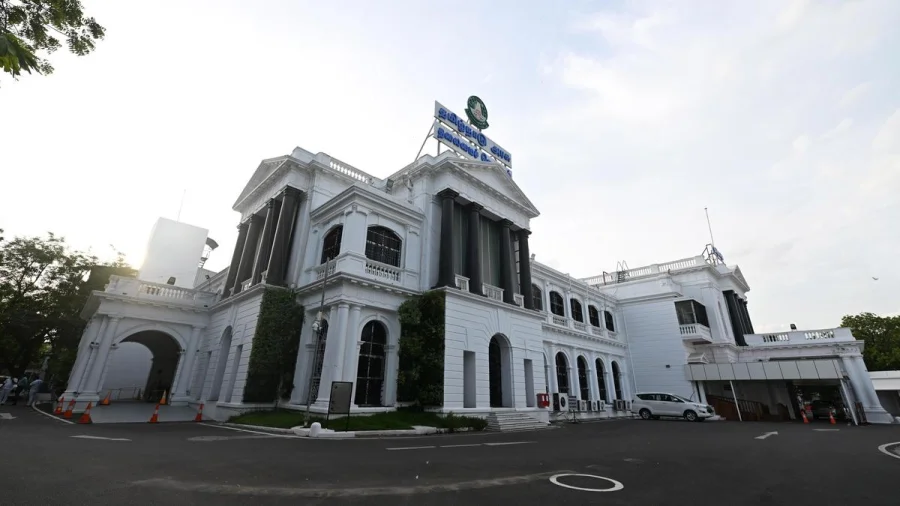
For millions who rely on village panchayats and municipal corporations for basic services — from road repairs to garbage collection — the health of local body finances is a quiet but critical matter. This week, the Tamil Nadu government signalled that it is not rushing the job. The Seventh State Finance Commission, formed only in May 2025, has been given more breathing room: its tenure is now extended till December 31.
Why the extension matters for your local tax money
State Finance Commissions are constitutional bodies that determine how much of the state’s tax revenue goes to rural and urban local bodies. Their recommendations affect budgets for schools, streetlights, water supply and sanitation. A delayed report means local bodies may have to wait longer for their share of funds — or work with interim allocations. The extension, therefore, is not a routine date change; it influences when and how money reaches your ward.
Who is on the panel and what was its mandate
The commission is chaired by K. Allaudin, a retired Indian Administrative Service officer with experience in state finance. It was constituted in May 2025 with a task to examine the financial position of local bodies and suggest principles for distribution of net proceeds of state taxes. The panel also reviews grants-in-aid to panchayats and municipalities. The original deadline is not publicly known, but the extension to December 31 indicates the volume of work — or the complexity of negotiations — required more time.
How this affects village panchayats and city corporations
Local bodies in Tamil Nadu — from Chennai Corporation to small village panchayats — depend heavily on state devolution. They also raise their own revenue through property tax, trade licences and user charges. But the share from the state is often the largest predictable income source. With the commission’s report delayed, local bodies must continue to operate on existing formulae. That could mean tighter budgets for development works until the new recommendations kick in.
Official response and what the government has said
The government order extending the tenure has not been widely publicised, but official sources confirm the decision. No reason has been formally stated, but such extensions are common when commissions need additional time for data collection, stakeholder consultations or finalising complex revenue-sharing formulas. The chairman, K. Allaudin, has not issued a separate statement.
What lies behind the numbers: balancing state and local needs
Finance Commissions often face a tough balancing act. The state government wants to retain resources for its own schemes, while local bodies argue they need more funds to meet growing urbanisation and rural infrastructure demands. The Seventh Commission’s report will likely address these tensions — and the extra time may allow for a more considered outcome rather than a hurried one.
Confirmed facts vs what remains unclear
Confirmed: The commission was formed in May 2025 under K. Allaudin. Its tenure has been extended till December 31. Unclear: The original deadline. The exact reason for the extension. Whether the panel has already submitted an interim report. No official statement from the chairperson is available.
Wider pattern: why Tamil Nadu’s local body finances are under scrutiny
Tamil Nadu has a strong tradition of local self-government. Yet many municipalities and panchayats report revenue shortfalls. The State Finance Commission is supposed to correct imbalances. Across India, several states have seen their finance commissions delayed or extended — a sign of the difficulty in agreeing on devolution formulas. Tamil Nadu’s extension fits this broader pattern.
What residents and local bodies should watch for
For citizens, the key date remains December 31. After the commission submits its report, the state government will table an action taken report in the assembly. Residents of panchayats and wards can track whether their local body’s receipts increase or decrease once the recommendations are implemented. Meanwhile, local body officials should plan for current fiscal year on existing allocation patterns.
What happens next
The commission is expected to complete its work by the new deadline. After that, the government will consider the recommendations and likely issue a notification on revised devolution shares. Any change will take effect from the next financial year. If the commission fails to meet even the extended deadline, a further extension — or an interim arrangement — may be needed.
Our Take
The extension is a practical administrative step that shows the government is not rushing a complex financial exercise. However, it also means local bodies will have to wait longer for any increase in their share of state taxes. For the common citizen, the impact is indirect but real: the quality of services like garbage clearance, street lighting and drinking water supply can depend on the commission’s final numbers. The extra time may produce a better formula — provided the commission makes good use of it.
Frequently Asked Questions
What is the Seventh State Finance Commission in Tamil Nadu?
It is a panel formed by the state government to recommend how state tax revenues should be shared with local bodies like panchayats and municipalities. It is chaired by retired IAS officer K. Allaudin and was constituted in May 2025.
Why was its tenure extended?
The government extended the tenure till December 31, likely to give the commission more time to complete its data collection and draft its recommendations. The exact reason has not been officially stated.
How will this extension affect local body funding?
Local bodies will continue to receive funds based on existing arrangements until the commission submits its report and the government implements new devolution norms. Any increase or change in funding may only take effect from the next financial year.
When can we expect the new revenue-sharing formula?
After the commission submits its report (by December 31), the government will table an action taken report in the assembly. The new formula could come into force from the following financial year, likely April 2026.



