
Summary
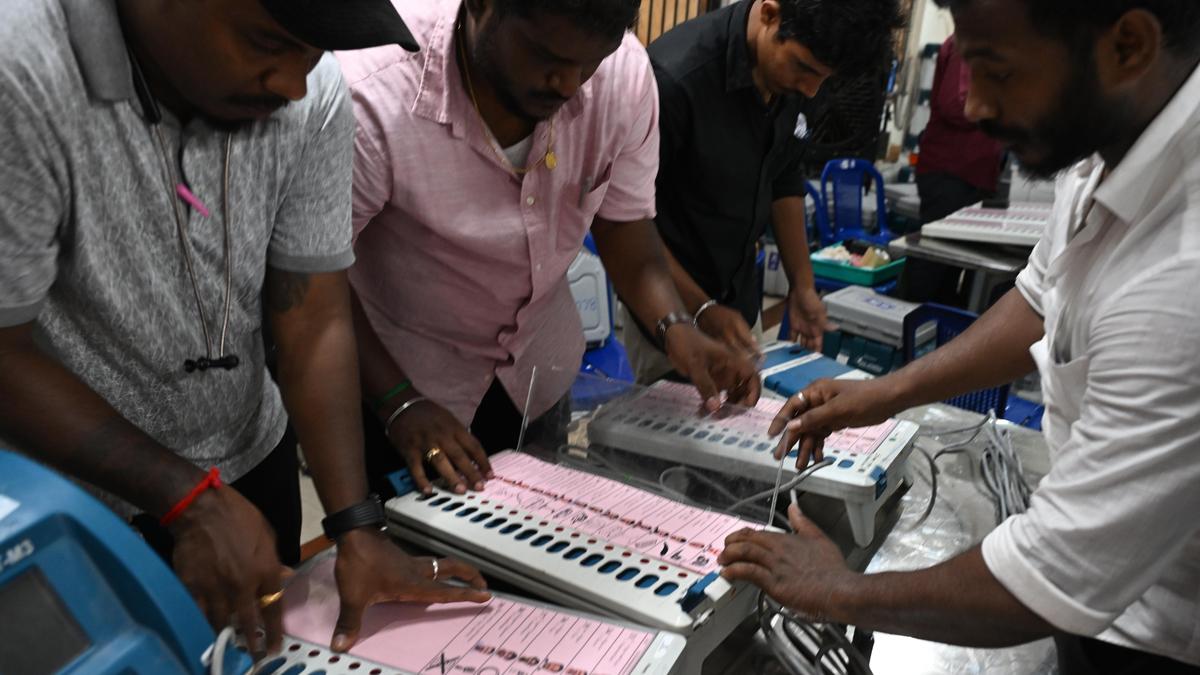
Election officials across Tamil Nadu have started the final preparation of voting machines for the upcoming Assembly elections. This process, known as commissioning, involves setting up Electronic Voting Machines (EVMs) and Voter Verifiable Paper Audit Trail (VVPAT) units. It is a critical step to ensure that every vote is recorded accurately and that the machines are ready for use by millions of voters. By testing the equipment now, the Election Commission aims to prevent technical delays on the day of the vote.
Main Impact
The start of this process marks a major shift in election preparations, moving from planning to the actual handling of voting technology. The main impact is the creation of a secure and verified voting environment. When officials commission these machines, they are essentially locking in the candidate list and ensuring that the hardware cannot be changed before the election. This builds public trust in the democratic process and ensures that political parties are satisfied with the fairness of the system.
Key Details
What Happened
In all 234 assembly constituencies in Tamil Nadu, district officials and election staff have gathered at secure storage centers. They are currently working on three main parts of the voting system: the Ballot Unit, the Control Unit, and the VVPAT. Staff members are inserting the ballot papers into the machines, which show the names and symbols of the candidates. They are also loading the electronic data into the VVPAT units so that the correct symbol prints when a voter presses a button.
This work is being done under strict supervision. Every step is recorded on camera, and representatives from different political parties are invited to watch. This transparency is meant to show that no machine is being tampered with or pre-set to favor any specific candidate.
Important Numbers and Facts
The scale of this operation is massive. Thousands of machines are being prepared to cover every polling station in the state. Officials usually prepare about 15% to 20% more machines than needed to serve as backups in case of a technical failure. Each machine undergoes a "mock poll" during this phase. In this test, officials and party agents press buttons to verify that the machine counts the votes correctly. For a small number of machines in each area, a more detailed test involving 1,000 mock votes is conducted to prove the system's reliability.
Background and Context
The use of Electronic Voting Machines has been standard in India for many years, but the addition of the VVPAT system is a more recent development. The VVPAT is a machine that sits next to the EVM. When you vote, it prints a small slip of paper with the candidate's name and symbol. You can see this slip through a glass window for seven seconds before it falls into a sealed box. This allows the voter to verify that their vote went to the right person. If there is ever a dispute about the electronic count, these paper slips can be counted by hand to confirm the result.
Tamil Nadu has a history of high voter turnout, making the reliability of these machines very important. The Election Commission follows a strict timeline to ensure that all machines are sealed and stored in "strong rooms" well before the morning of the election.
Public or Industry Reaction
Political parties in Tamil Nadu take this stage of the election very seriously. Most major parties have sent trained agents to the commissioning centers to watch the process. While some leaders have expressed concerns about machine safety in the past, the current process of open testing has helped reduce those fears. Election observers, who are senior officials from other states, are also on the ground to monitor the work. They ensure that the staff follows the rules set by the Election Commission of India. Generally, the reaction has been one of careful cooperation, as everyone wants a smooth voting day without machine breakdowns.
What This Means Going Forward
Once the commissioning is finished, the machines will be sealed with special green and pink paper seals that have unique serial numbers. These seals are signed by both the officials and the party agents. The machines are then moved back into strong rooms, which are protected by armed police and 24-hour CCTV cameras. The next time these machines are opened will be on the day before the election, when they are moved to the individual polling booths. This careful chain of custody is designed to make sure that the machines used on election day are exactly the same ones that were tested and approved today.
Final Take
The successful setup of these voting machines is a vital part of a fair election. It shows that the state is ready to handle the huge task of collecting millions of votes. By involving political parties in every step, the Election Commission is working to ensure that the final result is accepted by everyone. This technical preparation is the foundation of a peaceful and transparent voting process.
Frequently Asked Questions
What is commissioning in an election?
Commissioning is the process where election officials prepare voting machines for the actual vote. They load candidate names, symbols, and test the machines to make sure they work correctly before sealing them for election day.
How do officials ensure the machines are not rigged?
Officials perform mock polls where they cast test votes in front of representatives from all political parties. Once the tests are done, the machines are sealed with unique paper seals that cannot be broken without being noticed.
What happens if a voting machine fails on election day?
The Election Commission keeps a set of backup machines in every area. If a machine stops working, it is replaced with a fresh, pre-tested unit so that voting can continue with minimal delay.



