
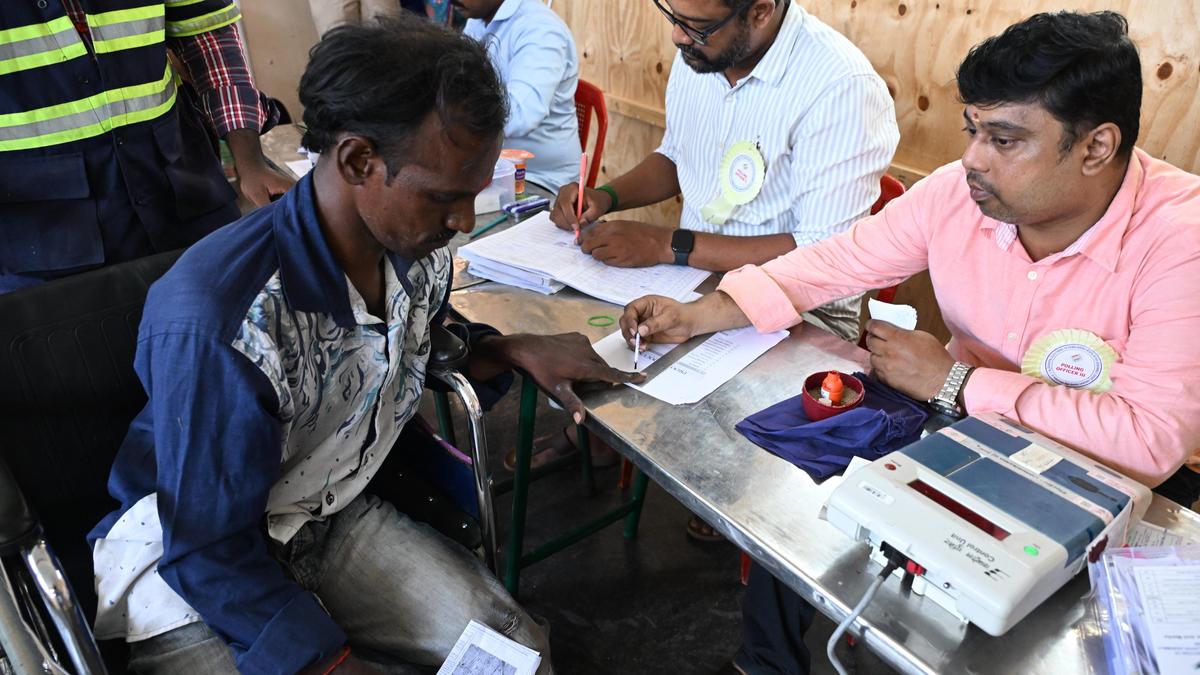
Summary
The recent elections in Tamil Nadu have highlighted a major problem for voters with disabilities. While the government promised that every polling station would be easy to access, many people found it very hard to vote. The main issue was the physical condition of the schools used as voting centers. Many of these locations had ground covered in thick sand or loose gravel, which stopped wheelchairs from moving. This situation has raised serious questions about whether the right to vote is truly equal for everyone.
Main Impact
The lack of proper paths at polling stations had a direct effect on voter turnout among people with physical challenges. When a person in a wheelchair cannot reach the voting booth, they are effectively blocked from participating in democracy. This problem goes beyond just a minor inconvenience. It shows a gap between the laws that protect disabled people and the actual work done on the ground. For many, the struggle to cross a sandy schoolyard meant they had to rely on strangers to carry them, which takes away their independence and dignity.
Key Details
What Happened
During the election day, many voters arrived at schools only to find that the entrance was not paved. In many parts of Tamil Nadu, government schools serve as the primary locations for voting. These schools often have large open courtyards that are not covered with concrete or tar. Instead, they are filled with sand, mud, or small stones. While the buildings themselves might have had a ramp at the door, the path from the main gate to that ramp was impossible for a wheelchair to cross alone. Small wheels on wheelchairs sink into the sand, making it impossible to roll forward.
Important Numbers and Facts
The Election Commission of India has strict rules that say every polling station must be accessible. This includes having ramps, clear signs, and help for those who need it. However, reports from various districts showed that these rules were not fully followed. In many cases, the "accessibility" was only on paper. While thousands of ramps have been built over the years, the surrounding environment is often ignored. Activists noted that even a small stretch of five meters of sand is enough to stop a person from voting if they do not have several people to help lift them.
Background and Context
The issue of accessible elections has been a topic of discussion for many years. The Rights of Persons with Disabilities Act of 2016 clearly states that the government must ensure that all polling stations are easy to use. The Election Commission also uses the slogan "No Voter Left Behind." To meet these goals, officials usually check schools before the election. However, these checks often focus only on the building itself and not the ground outside. In rural areas and small towns, the lack of paved surfaces is a common problem that the government has yet to fix permanently.
Public or Industry Reaction
Disability rights groups and activists have expressed their disappointment with the arrangements. Many feel that the government treats accessibility as a last-minute task rather than a basic right. Some voters shared their stories on social media, showing photos of wheelchairs stuck in the dirt. They argued that being carried by volunteers is not a solution because it can be unsafe and embarrassing. Activists are calling for a "social audit" where people with disabilities are the ones who check the polling stations months before the election to identify these problems early.
What This Means Going Forward
To fix this, the government needs to look at the entire journey a voter takes. This starts from the moment they get off a bus or car at the gate until they reach the voting machine. Simply building a ramp at the door is not enough. There is a clear need for permanent, hard-surface paths in all government schools. This would not only help during elections but would also benefit disabled students who attend those schools every day. In the future, officials may need to use temporary wooden or plastic walkways to cover sandy areas if permanent construction is not possible.
Final Take
A fair election is one where every citizen can cast their vote without facing physical barriers. The situation in Tamil Nadu shows that there is still a long way to go in making democracy truly inclusive. Physical access is a basic requirement, and until school grounds are made smooth and firm, many voters will continue to feel left out of the process. True progress will only happen when the environment is designed for everyone, regardless of how they move.
Frequently Asked Questions
Why were wheelchairs unable to move at the polling stations?
Many polling stations were located in schools with courtyards made of loose sand or gravel. Wheelchair wheels sink into these surfaces, making it impossible for the user to move without being carried by others.
Does the law require polling stations to be accessible?
Yes, the Rights of Persons with Disabilities Act and the Election Commission of India both require that all voting centers be fully accessible to people with disabilities, including the provision of ramps and easy paths.
What is the suggested solution for this problem?
Activists suggest building permanent concrete paths from the school gates to the voting rooms. They also recommend that people with disabilities should be involved in checking the stations before election day to ensure they are truly usable.



