
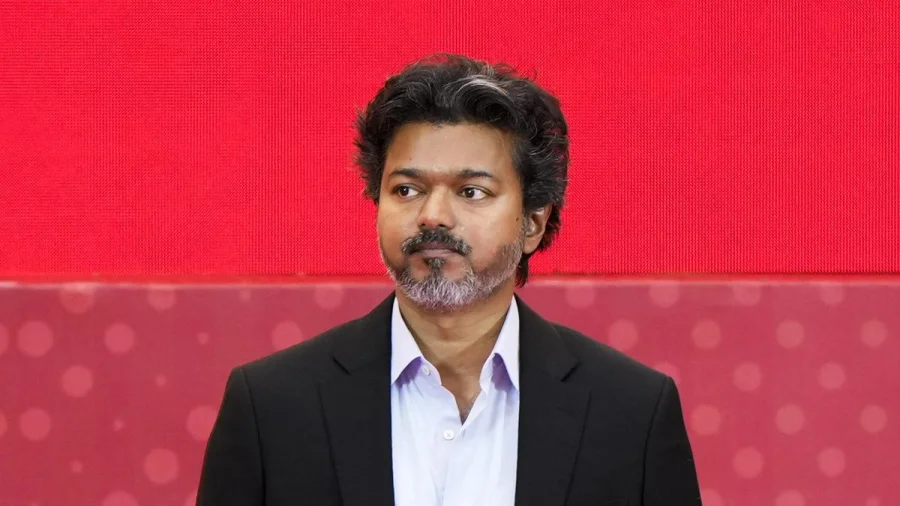
Tamil Nadu Chief Minister Vijay has made a strong political statement, demanding the immediate scrapping of the National Eligibility cum Entrance Test (NEET) and condemning the detention of Congress leader Rahul Gandhi and other Opposition leaders in New Delhi. He described the detention as "anti-democratic" and a direct assault on the country's federal structure.
Why NEET must go: CM Vijay's core argument
Speaking to reporters, CM Vijay argued that NEET is inherently biased against students from rural areas and economically weaker sections. He said the exam forces students to rely on expensive coaching, which is inaccessible to many in Tamil Nadu, where the state board curriculum is different from the national pattern. "NEET is an anti-poor exam. It must be scrapped to ensure equal opportunity for all students," he asserted.
The Delhi detention: A democratic concern
CM Vijay also took a strong stance on the detention of Rahul Gandhi and other Opposition leaders in New Delhi. He termed the action "anti-democratic" and accused the central government of using state machinery to silence dissent. "Detaining Opposition leaders without valid reason is a threat to democracy. This is not how a federal system should function," he said, linking the issue to the broader erosion of democratic norms.
Context: Tamil Nadu's long battle against NEET
Tamil Nadu has been at the forefront of the anti-NEET movement for years. The state assembly has passed multiple resolutions demanding exemption from NEET, citing the exam's adverse impact on students from government schools and rural backgrounds. The state government has also introduced a bill to bypass NEET for state medical college admissions, though it awaits central approval. CM Vijay's latest statement reinforces this long-standing position.
Human impact: Who is affected?
The demand to scrap NEET resonates deeply with lakhs of students and their families in Tamil Nadu. Every year, thousands of students from rural areas fail to clear NEET despite scoring well in state board exams, leading to frustration and a sense of injustice. The issue has become a major political flashpoint, with the DMK and other regional parties using it to mobilize support against the BJP-led central government.
Official response and political reactions
While the central government has not yet responded to CM Vijay's latest remarks, the BJP in Tamil Nadu has defended NEET, arguing that it ensures a uniform standard for medical admissions nationwide. Opposition parties in the state, including the Congress and the Left, have supported CM Vijay's demand, calling for a united front against what they describe as "central authoritarianism."
Analysis: Linking NEET and detention — a political strategy
CM Vijay's decision to link the NEET issue with the detention of Rahul Gandhi is a calculated political move. By framing both as examples of central overreach, he is attempting to build a broader narrative of democratic resistance. This strategy could help consolidate anti-BJP votes in Tamil Nadu, especially among students, parents, and those concerned about federal rights.
Confirmed facts vs what remains unclear
Confirmed: CM Vijay has publicly demanded the scrapping of NEET and condemned Rahul Gandhi's detention. The detention of Opposition leaders in Delhi has been reported by multiple news agencies. Unclear: The exact legal basis for the detention and whether it will lead to formal charges. Also unclear is whether the central government will respond to CM Vijay's demand for NEET scrapping in the near future.
Risks and balanced view
Critics argue that scrapping NEET could lead to a lack of standardization in medical admissions, potentially compromising the quality of medical education. Supporters of NEET say it ensures merit-based selection across the country. On the detention issue, the central government has not yet provided a detailed justification, leaving room for both criticism and defense. A balanced view acknowledges that while NEET has flaws, any alternative must also ensure fairness and transparency.
Wider trend: Rising state-centre tensions
CM Vijay's statement is part of a larger pattern of increasing friction between state governments and the centre, particularly over education policy and political dissent. Several non-BJP ruled states have challenged central decisions on exams, funding, and law and order, arguing that the centre is encroaching on state subjects. This trend is likely to intensify as the 2024 general elections approach.
Practical reader guidance
For students and parents in Tamil Nadu: Stay updated on the state government's next steps regarding NEET exemption. For those concerned about the detention issue: Follow official statements from the Delhi Police and the central government for clarity. For political observers: Watch for reactions from other Opposition leaders and potential legal challenges to the detention.
Future outlook
The demand to scrap NEET is unlikely to be resolved quickly, as it requires a constitutional amendment or a Supreme Court ruling. However, the political pressure may force the central government to consider alternative admission models. On the detention front, the issue could escalate if more Opposition leaders are detained, potentially leading to a larger political confrontation.
Our Take
CM Vijay's statement is significant not just for its content but for its timing. By linking two seemingly separate issues — NEET and the detention of Rahul Gandhi — he is attempting to create a unified narrative of democratic resistance. Whether this strategy succeeds will depend on how other Opposition parties respond and whether the central government offers a credible counter-narrative. For now, the debate highlights the deepening fault lines in Indian politics, where education policy and political freedom are increasingly intertwined.
Frequently Asked Questions
Why does TN CM Vijay want NEET scrapped?
He argues that NEET is biased against rural and economically weaker students who cannot afford expensive coaching, and that it disadvantages students from the Tamil Nadu state board curriculum.
What did CM Vijay say about Rahul Gandhi's detention?
He called the detention "anti-democratic" and accused the central government of using state machinery to suppress dissent, linking it to a broader threat to federalism.
Has Tamil Nadu tried to scrap NEET before?
Yes, the Tamil Nadu assembly has passed multiple resolutions seeking exemption from NEET, and the state government has introduced a bill to bypass the exam for state medical college admissions.
What happens next in the NEET debate?
The issue is likely to intensify politically, especially in Tamil Nadu, but any change to NEET requires central government approval or a Supreme Court decision, making a quick resolution unlikely.



