
Summary
Police in Surat have filed official complaints against three individuals for putting up posters against the Bharatiya Janata Party (BJP). These posters were found on public walls and featured red marks over the party's lotus symbol. The incident has caused a stir in the city as local elections are approaching. Authorities are investigating the matter because the posters were put up without following legal printing rules.
Main Impact
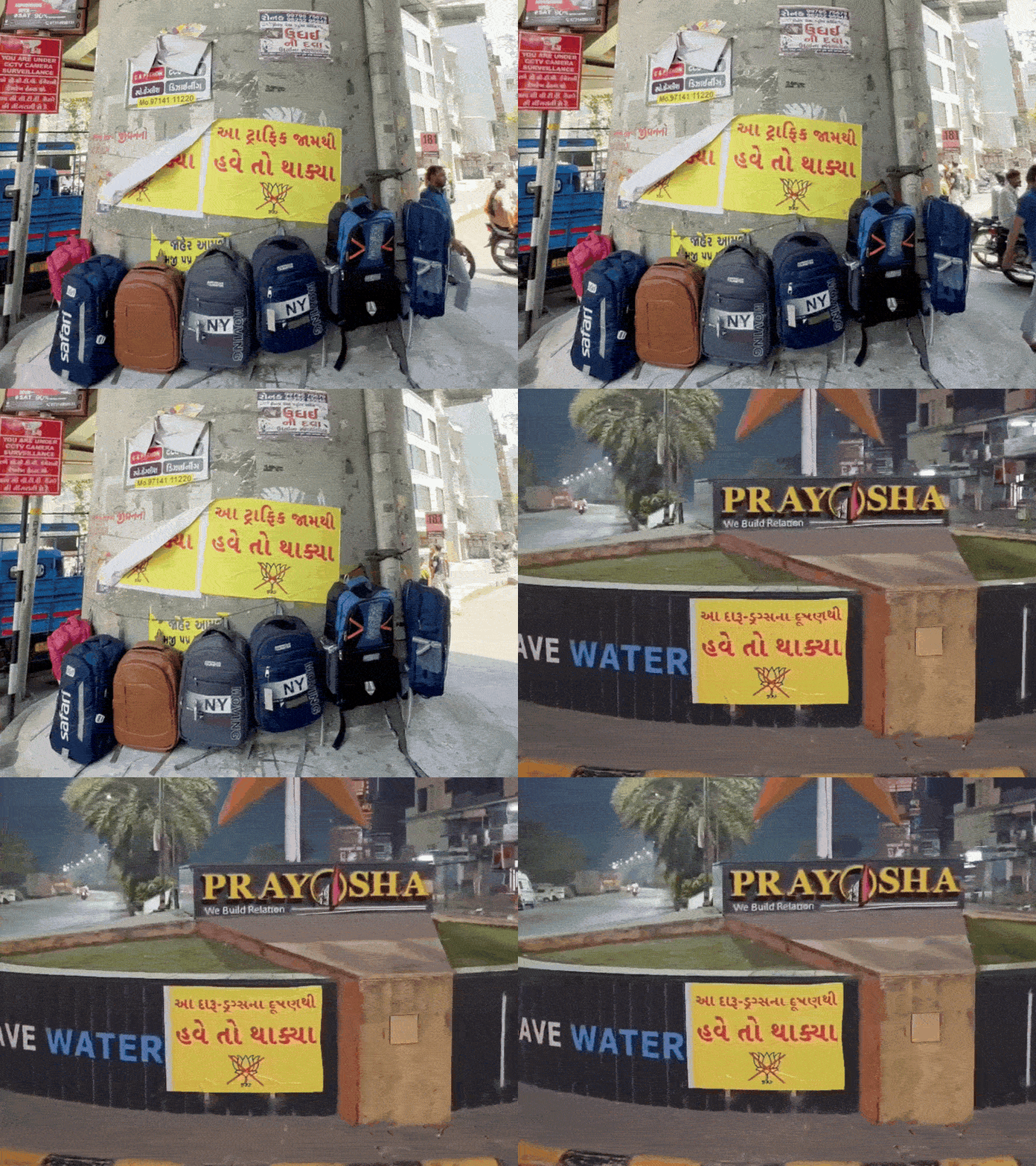
This "poster war" has increased political tension in Surat. By placing controversial messages in public spaces, the people involved tried to damage the image of the ruling party. The police have taken this seriously because the posters contained unverified facts and lacked the required details of the printing press. This legal action sends a clear message that illegal political campaigning will not be ignored by the city administration.
Key Details
What Happened
During the nights of March 28 and March 29, several posters appeared across different parts of Surat. These posters targeted the BJP with slogans and symbols meant to show disapproval. They were pasted on bridge pillars, garden walls, and busy road crossings. A major legal issue was that the posters did not list the name or address of the printer. Under the law, any political material must show who produced it so that people can be held responsible for the content.
Important Numbers and Facts
The police have registered cases at two main locations: the Puna and Katargam police stations. In the Puna area, the main person named in the complaint is Vishal Bhikhabhai Chavda. He is accused of putting up posters near the Sitanagar overbridge and the Punagam Mandli area. In Katargam, the police named Devshibhai Popatbhai Thebariya and Chirag Navadiya as the main suspects. They allegedly targeted busy spots like Dabholi Char Rasta and Lalita Chowkdi.
The authorities have used specific laws to file these cases. These include sections of the Bharatiya Nyaya Sanhita (BNS) related to spreading false information and the Press and Registration of Books Act. Along with the three named men, the police are also looking for two or three other unknown people who helped them.
Background and Context
Surat is a very active city when it comes to politics in Gujarat. As local government elections get closer, different groups try to win over the public. While expressing opinions is allowed, there are strict rules about how it can be done. Using public property to paste posters without permission is usually against city rules. More importantly, hiding the identity of the printer is a crime because it allows people to spread rumors without getting caught. This incident is seen as a part of the growing rivalry between different political supporters in the region.
Public or Industry Reaction
Local BJP workers and supporters expressed strong anger when they saw the posters. They claimed the posters were a planned attempt to mislead voters and create a negative atmosphere. On the other hand, some residents were surprised by the sudden appearance of the posters in so many busy areas. The police acted quickly after receiving reports from local observers. Many people are now watching to see if this leads to more political arguments between different groups in the city.
What This Means Going Forward
The Surat police are now using technology to find everyone involved. They are checking CCTV cameras near the spots where the posters were found. They want to see who actually pasted them and where the posters were printed. The suspects could face fines or other legal punishments if found guilty. In the coming weeks, security and monitoring of public walls might increase to prevent more "poster wars" from happening before the election day. This case will likely make political groups more careful about how they share their messages.
Final Take
Political debates are a healthy part of any society, but they must happen within the rules of the law. Using secret posters to attack a party avoids honest discussion and breaks city regulations. The quick response by the Surat police shows that maintaining order and following printing laws is a priority during election season. It remains to be seen how this will affect the mood of the voters in the upcoming local polls.
Frequently Asked Questions
Why did the police file a case over posters?
The posters were illegal because they did not have the name of the printing press and were used to spread negative messages against a political party on public property.
Who are the people accused in this case?
The police have named Vishal Chavda, Devshibhai Thebariya, and Chirag Navadiya in the complaints, along with a few other unknown individuals.
Where in Surat were these posters found?
The posters were found in several busy areas, including Puna, Katargam, Sitanagar, and Dabholi. These are popular spots with many people passing by every day.



