
Summary
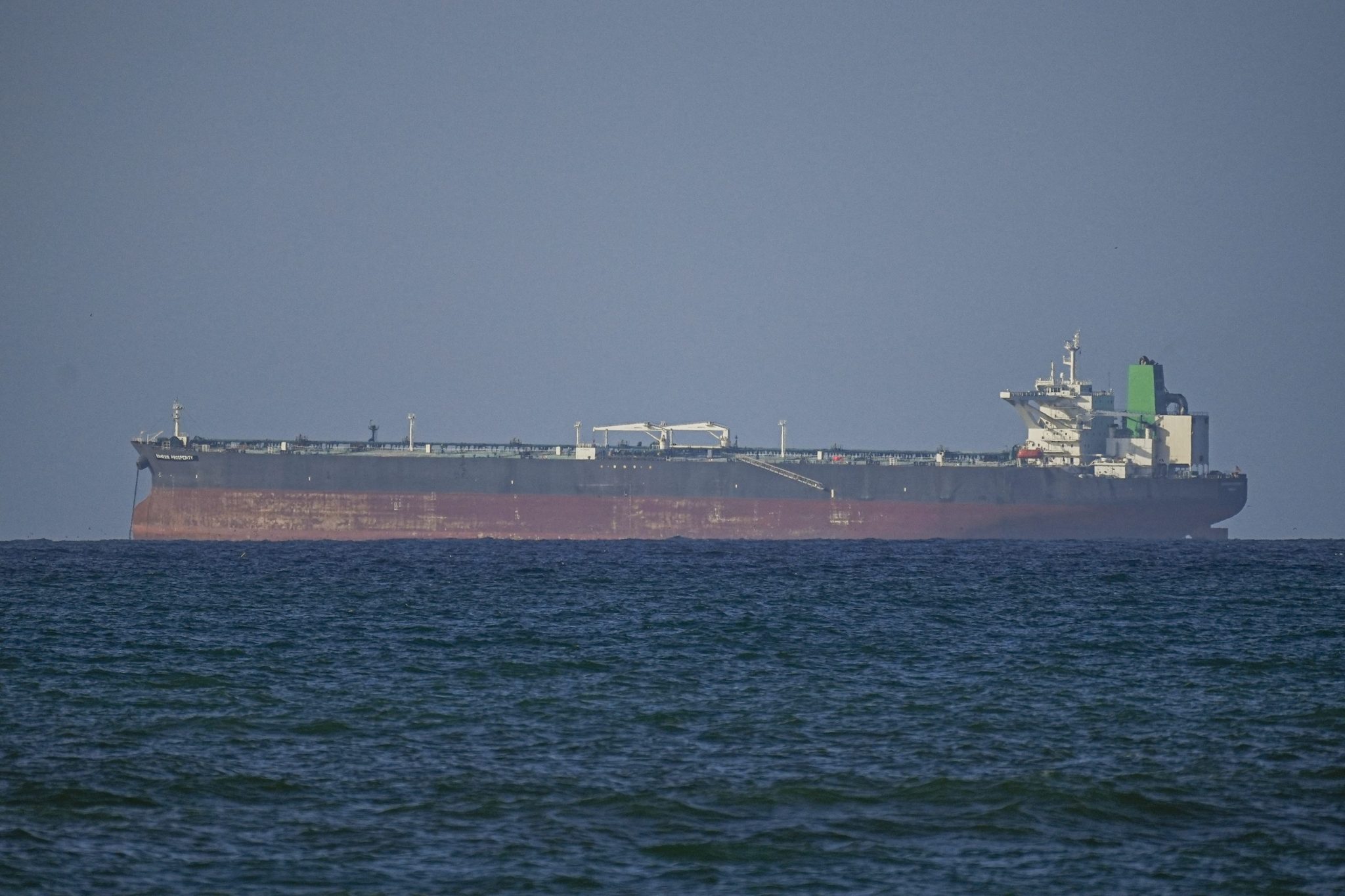
Three massive oil tankers recently traveled through the Strait of Hormuz, signaling a potential restart for global energy trade. This movement happened just a few days after the United States and Iran announced a fragile ceasefire. Two of the ships are from China, and one is from Greece. Their successful passage is the most significant sign of life in this vital waterway since conflict nearly stopped all shipping traffic six weeks ago. This development is a major step toward stabilizing oil supplies that have been restricted by recent fighting.
Main Impact
The movement of these supertankers is a big deal for the global economy. For over a month, the closure of the Strait of Hormuz kept millions of barrels of oil from reaching the rest of the world. This caused oil prices to stay high and made it difficult for many countries to get the fuel they needed. By seeing these ships move safely through the area, the energy market is getting a sign that the "tightness" in oil supply might finally start to ease. While the amount of oil moving is still much lower than usual, it shows that the path is opening up again.
Key Details
What Happened
On Saturday, three large vessels known as supertankers left the Persian Gulf. Two of these ships belong to Chinese companies, and the third is a Greek vessel. This is the first time since the war began on February 28 that such a large amount of oil has moved through the strait in a single day. Interestingly, none of these ships were carrying oil from Iran. Instead, they were carrying oil from other countries in the region, showing that international trade is trying to return to normal.
Important Numbers and Facts
The three tankers involved are named the Cospearl Lake, the He Rong Hai, and the Serifos. Together, these three ships have the capacity to carry about 6 million barrels of crude oil. To put that in perspective, the Serifos and the He Rong Hai picked up their oil in Saudi Arabia. The Cospearl Lake loaded its cargo in Iraq. Even though 6 million barrels sounds like a lot, it is only about half of what usually moves through the strait on a normal day before the war started. This shows that while progress is being made, the shipping industry is still far from a full recovery.
Background and Context
The Strait of Hormuz is one of the most important places in the world for the energy industry. It is a narrow stretch of water that connects oil producers in the Middle East to the rest of the world. About 20% of all the world's oil and natural gas passes through this small area. When the war broke out in late February, shipping companies were afraid to send their boats through the strait because of the risk of attacks. This caused a massive backup and led to a global shortage of oil. The current ceasefire has provided a small window of safety, allowing these brave crews to attempt the journey once again.
Public or Industry Reaction
The reaction from the shipping and energy industries has been one of cautious hope. China, in particular, is pleased to see its ships moving again. As a major buyer of oil, China was hit hard by the shipping blockages. However, the situation remains tense. Iran has stated that ships are allowed to use the waterway, but they must follow specific rules. For example, the three tankers had to take a northern route that stays close to the Iranian coast and passes by the islands of Qeshm and Larak. This is different from the usual shipping lanes that stay further south. By following these rules, the ships were able to pass without being stopped.
What This Means Going Forward
The next few days will be very important for the future of global oil prices. Officials from the United States and Iran are scheduled to meet in Islamabad for peace talks. If these talks go well, we can expect to see many more ships moving through the Strait of Hormuz. However, if the ceasefire fails, the waterway could close again very quickly. Shipping companies are watching the situation closely. They want to make sure it is truly safe before they send hundreds of other ships back into the area. For now, the successful passage of these three tankers serves as a test case for the rest of the industry.
Final Take
The sight of supertankers moving through the Strait of Hormuz is a positive sign for a world that has been struggling with high energy costs. It shows that diplomacy and ceasefires can have a real, physical impact on global trade. While the volume of oil is not yet back to normal, the fact that these ships passed through safely suggests that the worst of the shipping crisis might be over. The world now waits to see if the upcoming peace talks can turn this temporary opening into a permanent solution for global energy security.
Frequently Asked Questions
Why is the Strait of Hormuz so important?
It is a vital shipping lane that handles about one-fifth of the world's oil and natural gas. If it is blocked, energy prices go up globally because the supply is cut off.
Which countries owned the tankers that passed through?
Two of the supertankers are from China and one is from Greece. They carried oil from Saudi Arabia and Iraq, rather than from Iran itself.
Is the shipping situation back to normal?
No, it is not back to normal yet. While these three ships moving is a good sign, the amount of oil passing through is still only about half of what it was before the conflict began.



