
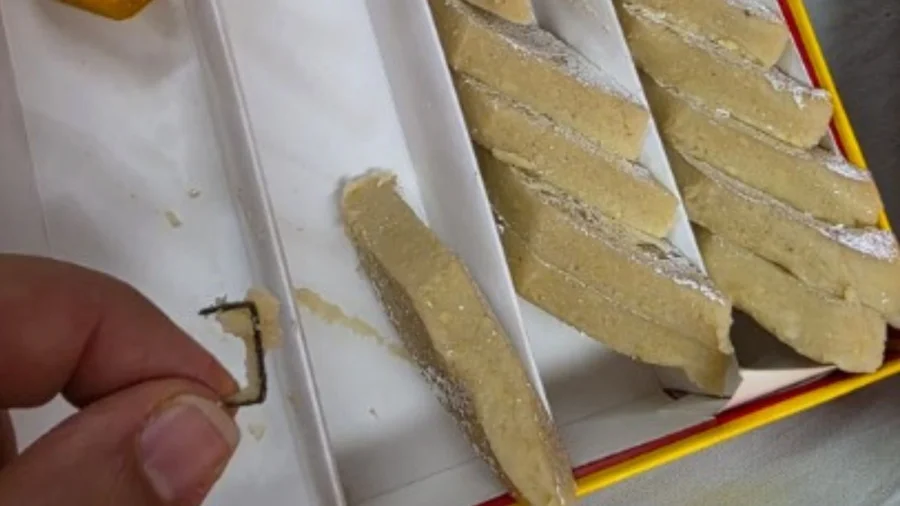
A sweet moment turned into a shock for a Mumbai man who bit into a kaju katli — and found a stapler pin instead of the smooth, nutty texture he expected. The discovery has now led to the suspension of Tewari Bros. Mithaiwala's licence, according to the headline report.
A staple where the nuts should be
A customer in Mumbai found a stapler pin inside a kaju katli purchased from Tewari Bros. Mithaiwala. The complaint resulted in the suspension of the sweet shop's licence.
The full sequence — from the date of purchase to the inspection that followed — has not been independently verified at this stage.
Why this goes beyond one bad bite
Swallowing a metal staple can injure the mouth, throat or digestive tract. For consumers, the incident raises a basic question: how carefully is the mithai you buy actually checked?
For the shop, the stakes are reputational. Indian sweet shops are built on long-standing customer trust, and a single lapse of this kind can shake that confidence.
What is confirmed, what is not
Confirmed by the headline: a Mumbai man found a stapler pin in kaju katli, and Tewari Bros. Mithaiwala's licence was suspended as a result.
Not yet confirmed: the exact date of the purchase or complaint, the outlet's location within Mumbai, the customer's identity, and the specific authority that issued the suspension. All of these remain unverified.
The human cost of a food safety lapse
For the customer, what should have been a treat became a health scare. For the shop, the suspension means lost business and damaged goodwill. For other consumers, it is a reminder that food safety complaints can lead to real regulatory consequences.
There is also a wider emotional layer. Kaju katli is a gift of choice during festivals and celebrations in India. Finding a staple inside it makes people wonder about the care behind every box of sweets they buy.
No official word yet
As of this report, no verified statement has been released by Tewari Bros. Mithaiwala or by food safety officials. The shop's version of events, and any corrective steps it may have taken, are still unknown.
Without an official response, it is also unclear whether the suspension is temporary or permanent.
How food safety action typically works in India
In India, food businesses operate under licences governed by the Food Safety and Standards framework. Consumer complaints about foreign objects in food can trigger inspections, and authorities can suspend or cancel licences where violations are found.
This case appears to fit that pattern, but specifics cannot be verified without official documents or statements.
The trust factor sweet brands carry
Traditional mithai businesses survive on repeat customers, family recipes and word-of-mouth reputation. That goodwill is their real moat — more valuable than any single outlet's daily sales.
Incidents like this test that moat. A loyal customer base may forgive once, but only if the response is fast, honest and corrective.
Risks and the other side of the story
Licence suspensions are serious actions, and they can also be challenged. It is possible the shop disputes the claim, or that the pin entered the product somewhere in the supply chain rather than at the counter.
None of these possibilities are confirmed. They are presented here only as part of a balanced view, until the shop or the authorities clarify the facts.
A pattern worth watching
Complaints about foreign objects in food — from hair to plastic to metal — surface regularly across India. Each case renews the same demand: stricter quality control, better packaging checks and faster action on consumer grievances.
This suspension, if upheld, adds to that pattern and signals that regulators are willing to act on visible lapses.
What customers should do now
If you find a foreign object in sweets, stop eating immediately. Keep the product and packaging as evidence, note the date and place of purchase, and save the bill.
Take clear photographs of the object inside the product, then file a complaint with the local food safety authority in your city. A written complaint with evidence can trigger an official inspection.
What happens next
Further reporting may reveal the shop's response, the duration of the suspension, and whether any penalty follows. The shop could also seek a review of the decision — but that remains speculation at this stage.
Consumers and industry watchers will now wait to see how Tewari Bros. Mithaiwala responds publicly, and whether the authorities publish the findings of their inspection.
Our Take
This is a small incident with an outsized message. India's sweet shops thrive on loyalty, tradition and festival purchases — exactly the kind of trust that is hard to rebuild once broken.
The licence suspension, if confirmed in all its details, sends a clear signal: even well-known brands must answer for basic quality control. What matters now is transparency — what went wrong, who is responsible, and what will change.
Frequently Asked Questions
Why was Tewari Bros. Mithaiwala's licence suspended?
According to the headline, the licence was suspended after a Mumbai man reported finding a stapler pin in a kaju katli he bought from the shop.
Which authority suspended the sweet shop's licence?
The specific authority has not been named in the available headline. In Mumbai, food business licences typically come under state food safety authorities operating within India's food safety regulatory framework.
Is kaju katli from sweet shops safe to eat now?
Most sweet shops follow hygiene norms, but this incident is a reminder to inspect mithai before eating, especially when buying in bulk. Choosing reputed brands and checking for visible issues can reduce risk.
What should I do if I find a foreign object in mithai?
Stop eating the product, keep the sample and packaging, take photographs, preserve the bill, and report the



