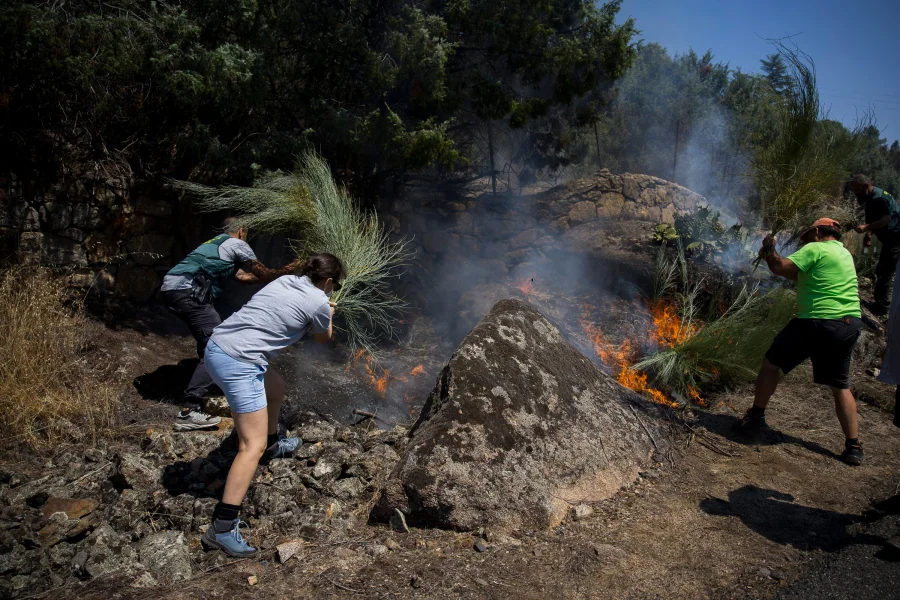
For the first time in Spain's modern history, a single wildfire has consumed 50,000 hectares — an area larger than the city of Madrid. The fire, which started in Burgohondo, Ávila, has shattered records, and officials are warning that the country's fire season is spiraling into unprecedented territory.
Confirmed: Ávila blaze becomes Spain's biggest wildfire on record
Minister for Ecological Transition Sara Aagesen confirmed Sunday that the Burgohondo fire has burned an estimated 50,000 hectares, making it the largest wildfire ever recorded in Spain since systematic records began. "This is a fire of extraordinary dimensions," she said, adding that the entire 2025 campaign is proving to be "extraordinarily complicated."
Why this fire season is different: 153,000 hectares burned nationwide
The Ávila fire is not an isolated event. According to Aagesen, Spain has already seen 153,000 hectares consumed by wildfires so far in 2025 — six times more than the same period last year. A total of 32 large wildfires (classified as burning over 500 hectares) have been recorded, underscoring a dramatic escalation in fire intensity and frequency across the country.
Where the fire is now: Pantano de San Juan under threat
Government delegate in Madrid, Francisco Martín, said Sunday that the firefighting operation's primary concern is now the area surrounding the Pantano de San Juan reservoir, a popular recreational zone southwest of Madrid. Teams are working to prevent the fire from reaching residential and infrastructure zones. No evacuation orders or casualty reports have been officially announced as of now.
Who is affected: Residents, firefighters, and a nation watching
Thousands of residents in Ávila province and neighbouring areas face smoke hazards, road closures, and potential evacuations. Firefighters from multiple regions, supported by air units, are battling extreme conditions — high temperatures, low humidity, and strong winds — that have made containment difficult. For many rural communities dependent on forestry and agriculture, the loss of land is both ecological and economic.
Official response: Minister warns of longer, more intense fire seasons
Minister Aagesen linked the severity of the fires to climate change, warning that Spain must prepare for longer and more intense wildfire seasons. "This is not a one-off. The data shows a clear trend," she stated. The government has activated additional resources, including the Military Emergency Unit (UME), to support local crews.
Why this fire broke records: geography, weather, and fuel load
The Burgohondo fire spread rapidly through dense pine and scrub vegetation in a mountainous terrain that hampers ground access. Combined with a prolonged drought and a heatwave that pushed temperatures above 40°C in parts of central Spain, the conditions created a perfect storm for a megafire. Experts note that such fires are becoming more common across southern Europe.
Confirmed facts vs what remains unclear
Confirmed: 50,000 hectares burned; largest in Spanish history; minister's statement; 32 large fires this season; 153,000 hectares nationwide. Unclear: Exact containment percentage; number of evacuated people; whether any injuries or fatalities have occurred; full damage assessment of structures and protected areas. Officials have not yet provided a timeline for full control.
Risks and balanced view
While the minister's warning is stark, some regional officials caution that historic fire records can be influenced by improved monitoring techniques. However, the sheer scale of burned area — 50,000 hectares — is not a measurement error. Critics argue that Spain's forest management policies, including insufficient clearing of undergrowth and limited prescribed burning, have contributed to the severity of recent fires.
Wider trend: Mediterranean wildfires intensify across Europe
Spain is not alone. In 2024 and 2025, Greece, Portugal, Italy, and France have all experienced early-season megafires. Scientists point to a "fire-climate feedback loop" where hotter, drier conditions create more combustible vegetation, which in turn releases more carbon. The Ávila fire is the latest, and most extreme, example of a pattern that is reshaping Europe's fire landscape.
Practical reader guidance: what to do if you are in the affected area
Residents near the fire zone should follow official alerts from Protección Civil and avoid roads leading to Pantano de San Juan. Keep windows closed, use air purifiers if available, and prepare a go-bag with documents, medication, and essentials. Those with respiratory conditions should limit outdoor exposure. For tourists, avoid travel to the affected areas until the fire is contained.
Future outlook
Containment is not expected in the next 48 hours due to continued hot, dry weather. Firefighters hope that a predicted drop in temperatures midweek may ease conditions. However, with 153,000 hectares already burned nationally, Spain faces the prospect of more large fires before the summer ends. The government is expected to request EU assistance through the rescEU firefighting fleet.
Our Take
The Ávila wildfire is a watershed moment for Spain. It is no longer a question of whether climate change is amplifying fire risk — it is here. The loss of 50,000 hectares of forest, farmland, and wildlife habitat is a national tragedy. But the real story is the speed at which records are being broken. If 2025 is already six times worse than last year, Spain — and Europe — must rethink not just firefighting, but landscape management, early warning systems, and long-term adaptation. This fire should be a wake-up call, not just a headline.
Frequently Asked Questions
Is the Ávila wildfire really the largest in Spain's history?
Yes. Minister Sara Aagesen confirmed that the fire has burned approximately 50,000 hectares, surpassing all previous records since modern wildfire record-keeping began.
Where exactly is the fire burning?
The fire started in Burgohondo, a municipality in the province of Ávila, in central Spain. It has expanded toward the Pantano de San Juan reservoir, about 50 km west of Madrid.
Are there any casualties or evacuations?
As of the latest official statements, no casualties have been reported. Specific evacuation numbers have not been released, but residents in threatened areas have been advised to prepare for possible evacuation.
What is being done to fight the fire?
Spanish firefighters, the Military Emergency Unit (UME), and multiple air tankers are battling the blaze. The government has also indicated it may request support from the EU's rescEU firefighting fleet.
Why is this year's fire season so severe?
Officials cite a combination of extreme drought, record heatwaves, and a buildup of dry vegetation. Climate change is making such conditions more frequent and intense across the Mediterranean region.