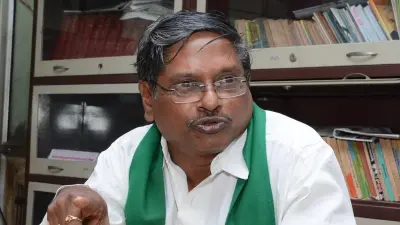
A day meant to celebrate degrees ended with a challenge instead. At Vignan's convocation, the Chairman of Andhra Pradesh's higher education council told graduating students that the certificate they just earned may not carry them as far as the skills they build from here.
A convocation message aimed at the future of work
The APSCHE Chairman said skills, not degrees, will shape the future. The statement matters because of who made it — the Andhra Pradesh State Council of Higher Education (APSCHE), the body that coordinates higher education policy across universities and colleges in the state.
When a regulator talks about the limits of degrees, it signals where policy attention is heading.
Why the remark matters more than it sounds
Employers have repeated the same complaint for years: many graduates are qualified on paper but struggle with real-world problem-solving, communication and teamwork. A senior education official saying this publicly — at a graduation ceremony — moves the debate from corporate grievance to academic acceptance.
The clear implication: future employability will depend on demonstrable skills, not just marksheets.
The setting: Vignan's convocation in focus
The message was delivered at a Vignan convocation. Vignan is a prominent private education group in Andhra Pradesh, running engineering, science, pharmacy and management programmes.
A skills-first message delivered to its graduating batch carries weight because of the audience: thousands of young engineers and professionals entering a competitive job market.
Who is affected most by this message
Current students, fresh graduates and those planning higher education will feel the shift most directly. For them, the message translates into practical choices — internships, projects, certifications, communication training and problem-solving experience.
Parents who measure education in percentages may also need to rethink what employability really looks like.
Official response and available details
As of now, only the headline statement is confirmed. The full text of the APSCHE Chairman's address at the Vignan convocation has not been released publicly.
Exact quotes, statistics and any policy announcements, if offered, are awaited from official channels. No additional details about specific initiatives were available at the time of writing.
Reading between the lines of the chairman's remark
It is unusual for an education regulator to tell graduates at a convocation that their degree is not enough. Ceremonies typically celebrate the credential.
The choice of words — skills over degrees — suggests a deliberate push toward competency-based learning. Whether this translates into concrete changes in university curricula remains to be seen.
What is confirmed and what remains unclear
Confirmed: The APSCHE Chairman said skills, not degrees, will shape the future, during a Vignan convocation.
Unclear: The exact wording of the address, whether any new APSCHE programmes were announced, and how universities under APSCHE may respond. These details need official confirmation.
Why Vignan offers a fitting platform for this idea
Vignan's academic network spans multiple disciplines and serves a large student population in Andhra Pradesh. A skills-first message delivered on this platform reaches not just one graduating batch, but families, faculty and employers connected to the institution.
It also places private university groups at the centre of the skills debate.
The other side of the argument
Degrees are not obsolete. Government jobs, higher education admissions and professional licensing still depend on formal qualifications.
Critics of the "skills over degrees" narrative argue that without strong foundational education, vocational training alone cannot produce capable professionals. The realistic position is not either-or, but both: degrees open doors, skills determine how far a person walks through them.
A pattern taking shape across Indian education
The statement aligns with a wider shift in Indian higher education. The National Education Policy 2020 emphasises skill-based learning, internships and multidisciplinary education. Industry bodies have also pushed for hiring based on portfolios rather than marks alone.
APSCHE's message at Vignan is part of this broader current, not an isolated comment.
What students should do now
Treat the message as practical advice. If you are a student, build projects, take up internships, work on communication and document what you can actually do.
If you are a graduate, treat skill-building as a continuous process rather than a one-time degree. If you are a parent, value learning outcomes over purely academic scores.
What could happen next
APSCHE may follow up with curriculum-level changes, skill-based credit frameworks or industry partnerships. Universities like Vignan could introduce more hands-on training and certifications.
Until official announcements come, the convocation remark stands as a strong signal — not yet a policy.
Our Take
The message is both timely and overdue. For years, the gap between degree completion and job readiness has been one of Indian education's most discussed problems.
A regulator choosing a convocation stage to say skills matter more than degrees is a sign that the conversation has moved from corporate boardrooms to the academic establishment. The real test is what follows — curriculum reform, industry links and evaluation of competencies. If the words remain just words, the statement will be forgotten. If they turn into action, this convocation line could be remembered as an early marker of change.
Frequently Asked Questions
Who is the APSCHE Chairman?
The Chairman of the Andhra Pradesh State Council of Higher Education (APSCHE). APSCHE is the state body that coordinates higher education policy, admissions and academic planning across Andhra Pradesh universities and colleges. The Chairman's name was not confirmed in the available reporting of the convocation statement.
What did the APSCHE Chairman say at Vignan's convocation?
He said that skills, not degrees, will shape the future. Delivered at Vignan's convocation, the message emphasised employability and practical ability over formal qualifications alone.
Does this mean degrees have lost their value?
No. Degrees still act as entry-level qualifications for jobs, higher education and government recruitment. The message stresses that long-term career growth and job readiness depend on demonstrable skills — not on a degree alone.
Will APSCHE bring any policy changes after this statement?
There is no confirmed information yet. The statement is reported as a convocation address. Any changes to curriculum, skill credits or university guidelines would need to be announced officially by APSCHE.