Summary
Pakistan all-rounder Salman Ali Agha recently found himself at the center of a major cricket debate following a strange run-out during the second One Day International (ODI) against Bangladesh. The incident happened when Agha stepped out of his crease, thinking the ball was no longer in play, only for Bangladesh’s Mehidy Hasan Miraz to dismiss him. While the move followed the official rules of cricket, it sparked a heated discussion about sportsmanship and the "spirit of the game." This event has become the main talking point of the series, highlighting the tension between following the rules and being a fair player.
Main Impact
The primary impact of this dismissal was an immediate rise in tension between the two teams. Cricket is often called a "gentleman’s game," where players are expected to show respect even in tough situations. When Mehidy Hasan Miraz chose to run out Agha while he was trying to be helpful, it created a divide among fans and experts. Some believe that players should take every chance to win within the rules, while others feel that such actions hurt the reputation of the sport. This moment changed the mood of the match and led to a verbal clash on the field that required the captains to step in later.
Key Details
What Happened
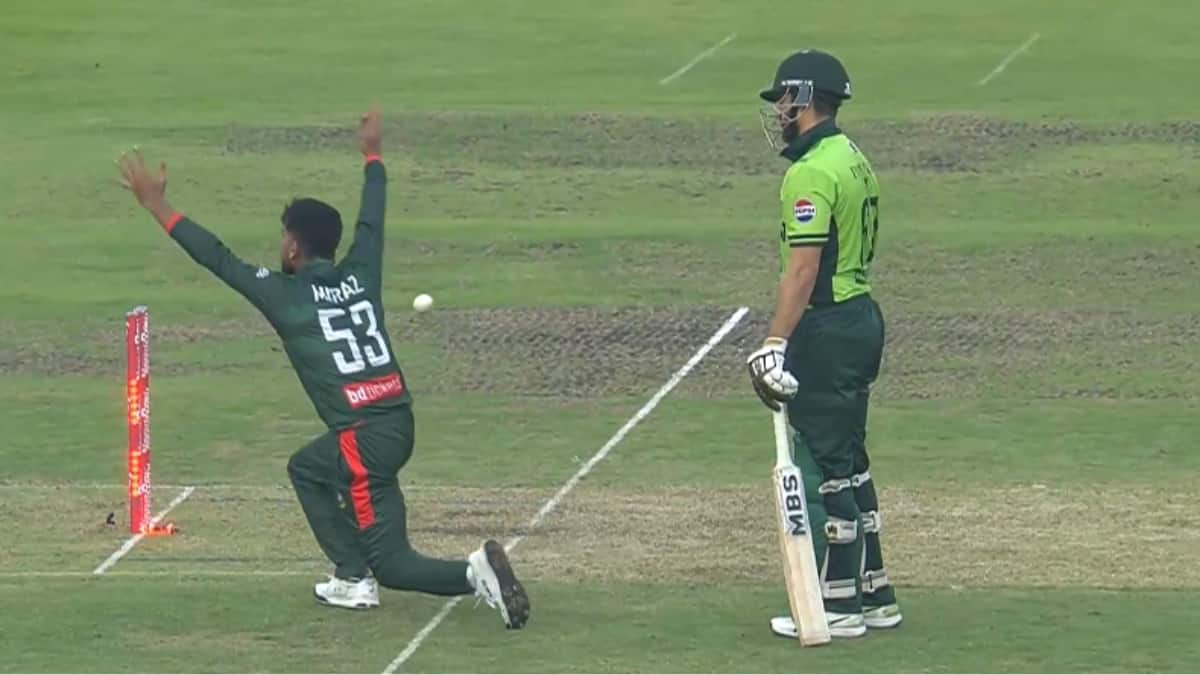
The incident took place during a critical part of the match on Friday. Salman Ali Agha was batting when a ball delivered by Mehidy Hasan Miraz struck his leg pad and then his bat. In cricket, when a ball hits multiple pieces of equipment like that, players often assume the play has ended if no run is being attempted. Agha, believing the ball was "dead" or out of play, walked out of his safe batting area to pick up the ball and hand it back to the bowler as a gesture of help. However, Miraz noticed Agha was outside the crease, took the ball, and quickly broke the wickets. The umpires had no choice but to declare Agha out because the ball was technically still live.
Important Numbers and Facts
The match was held on March 13, 2026, as part of a three-match ODI series. Despite the loss of Agha in such a frustrating way, Pakistan managed to stay focused. They ended up winning the game by a large margin of 128 runs using the DLS method, which is a mathematical way to decide scores when a game is interrupted. This victory was very important because it leveled the series at 1-1, making the final upcoming match the decider for the trophy.
Background and Context
To understand why this caused such a stir, one must understand how run-outs work in cricket. Usually, a run-out happens when a player is trying to score a run and fails to reach the crease before the wickets are hit. In this case, Agha was not trying to score. He was simply trying to return the ball to the bowler. There is an unwritten rule in cricket that players should not take advantage of a mistake if the opponent is trying to be helpful or if they are not trying to gain an advantage. This is often called the "Spirit of Cricket." Over the years, similar incidents have happened, and they always lead to big arguments about whether winning is more important than playing with honor.
Public or Industry Reaction
After the match, Salman Ali Agha spoke openly about what happened. He admitted that while the dismissal was legal, he was very disappointed. He mentioned that he would never have done the same thing if he were in the bowler's position. Agha explained that he thought the ball hitting his pad and bat meant he was safe from a run-out. On the field, the two players were seen arguing, and Agha admitted that the words they exchanged were not very friendly. Fans on social media were split; some praised Miraz for his quick thinking, while many others criticized him for not showing better sportsmanship.
What This Means Going Forward
This incident adds a lot of pressure to the final match of the series. The relationship between the Pakistan and Bangladesh players will be under a microscope. Often, when something like this happens, it makes the next game much more aggressive. The captains of both teams will need to manage their players carefully to ensure that the competition stays professional. For Salman Ali Agha, this serves as a hard lesson to never leave the crease until the umpire or the situation clearly shows the ball is dead. For the sport of cricket, it continues the long-running debate on whether the rulebook needs to be changed to prevent these types of "unfair" dismissals.
Final Take
While the scoreboard shows a win for Pakistan, the conversation remains focused on the ethics of the game. Rules provide the structure for sports, but respect provides the heart. This event reminds every player that even if an action is allowed by the law, it might not always be the right thing to do in the eyes of the public and fellow competitors. As the series moves to the final game, all eyes will be on how these two teams treat each other on the pitch.
Frequently Asked Questions
Was the run-out of Salman Ali Agha legal?
Yes, according to the official laws of cricket, the ball was still in play. Since Agha was outside his crease and the bowler broke the wickets with the ball, the umpire had to rule him out.
Why was Salman Ali Agha angry about the dismissal?
Agha was upset because he was not trying to score a run. He had stepped out of his crease only to help the bowler by returning the ball, and he felt that taking advantage of that gesture was poor sportsmanship.
Who won the match between Pakistan and Bangladesh?
Pakistan won the match by 128 runs. This victory helped them tie the three-match series at one win each, setting up an exciting final game.