
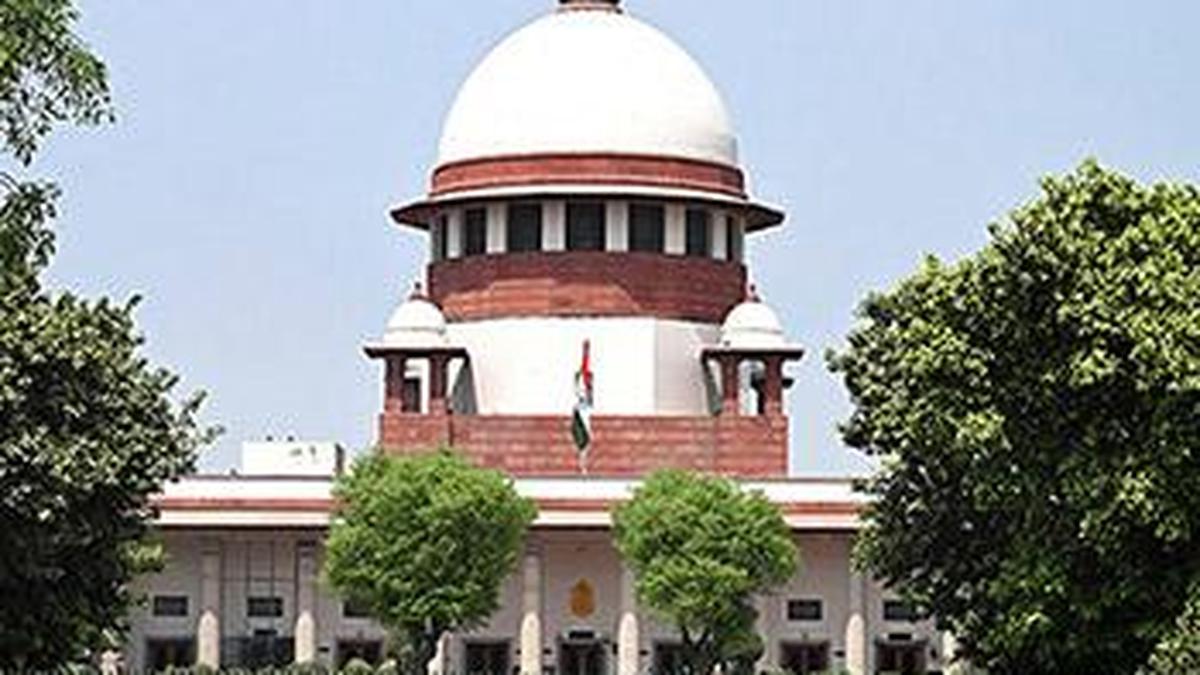
Summary
The Supreme Court of India has highlighted a new focus in the ongoing legal debate over the Sabarimala temple. The court stated that any decision regarding the entry of women into the shrine should take into account the views of women devotees and past experiences. This development comes as the Kerala government urged the court to prioritize the perspectives of women who are directly affected by the temple's traditions. The goal is to balance long-standing religious customs with the modern principles of equality and fairness.
Main Impact
This shift in the court's approach could change how religious cases are handled in India. By asking for the views of women devotees, the court is moving beyond strictly legal or historical arguments. This means that the lived experiences of people who follow the faith will now play a bigger role in the final judgment. It also places a heavy responsibility on the state government and religious bodies to present a clear picture of how these traditions impact the lives of women today. The outcome could set a standard for other religious sites that have similar restrictions.
Key Details
What Happened
During the recent hearings, the Supreme Court noted that the matter of Sabarimala is not just about law books but also about the people who practice the religion. The Kerala government made a strong plea, asking the court to listen to what women have to say about the entry ban. Previously, the debate was mostly centered on whether the ban was an "essential" part of the religion. Now, the focus is widening to include the social and personal impact on women who wish to offer prayers at the hill shrine.
Important Numbers and Facts
The Sabarimala issue has been in the legal spotlight for many years. In 2018, a five-judge bench of the Supreme Court ruled in a 4-1 majority that the ban on women of "menstruating age" (typically between 10 and 50 years old) was unconstitutional. This ruling sparked massive protests across Kerala and led to dozens of review petitions. Because the issue involves complex questions about religious freedom, the case was eventually referred to a larger nine-judge bench. This larger group is now tasked with deciding how the right to practice religion matches up against the right to equality guaranteed by the Indian Constitution.
Background and Context
The Sabarimala temple is dedicated to Lord Ayyappa, who is considered a "Naishtika Brahmachari" or an eternal celibate. Because of this belief, the temple tradition has historically restricted women between the ages of 10 and 50 from entering the premises. Supporters of the tradition argue that this is a unique practice that must be respected to maintain the sanctity of the deity. On the other side, activists and many women devotees argue that such a ban is discriminatory and treats women as secondary citizens based on biological factors.
The Kerala government has seen its position change over the years. At different times, different state leaders have either supported the tradition or pushed for reform. Currently, the government is emphasizing that the court must understand the feelings and rights of women before making a final call. This context is vital because it shows that the case is not just about one temple, but about how India defines "constitutional morality"—the idea that the Constitution's values should guide how society functions.
Public or Industry Reaction
The reaction to the court's latest stance has been mixed. Religious groups and traditionalists believe that the court should not interfere in matters of faith. They worry that changing the rules of one temple could lead to a loss of unique cultural identities. They argue that "devotion" should be the priority, and true devotees would respect the rules of the deity.
On the other hand, women's rights groups and progressive thinkers have welcomed the court's interest in hearing from women. They believe that for too long, men have been the ones deciding what women can and cannot do in religious spaces. By bringing women's views to the forefront, they feel the court is taking a step toward a more inclusive and fair legal process. Social media and local news outlets in Kerala remain deeply divided on the issue, showing how sensitive this topic is for the public.
What This Means Going Forward
The next steps involve the court gathering more information and hearing detailed arguments from various sides. The nine-judge bench will likely look at other similar issues, such as the entry of women into mosques or the practice of female genital mutilation in certain communities. This means the Sabarimala case is now the "lead case" for a much bigger conversation about religion in India.
For the Kerala government, the challenge will be to present evidence or testimony from women devotees that accurately reflects the diverse opinions within the state. There is also the risk of further social tension if the final decision is seen as too radical or too conservative. The legal world will be watching closely to see if the court creates a new test to decide when a religious practice can be overruled by the state.
Final Take
The Supreme Court's decision to consider the views of women devotees is a sign of a maturing legal system. It shows a willingness to look at the human side of the law rather than just technical rules. While the road to a final decision remains long and difficult, including the voices of those most affected is a necessary step. Balancing ancient faith with modern rights is never easy, but it is essential for a country that values both its heritage and its future.
Frequently Asked Questions
Why is there a ban on women at Sabarimala?
The ban applies to women between the ages of 10 and 50. It is based on the tradition that the deity, Lord Ayyappa, is a celibate, and therefore women of that age group should not enter the temple to maintain the tradition's purity.
What did the Supreme Court say in 2018?
In 2018, the court ruled that the ban was unconstitutional because it violated the right to equality and discriminated against women based on their biology. This ruling allowed all women to enter, though it faced strong local opposition.
What is the Kerala government's current position?
The Kerala government is currently asking the Supreme Court to consider the views and experiences of women devotees. They want the court to understand the perspective of the women who are directly impacted by these religious rules before making a final decision.



