
Summary
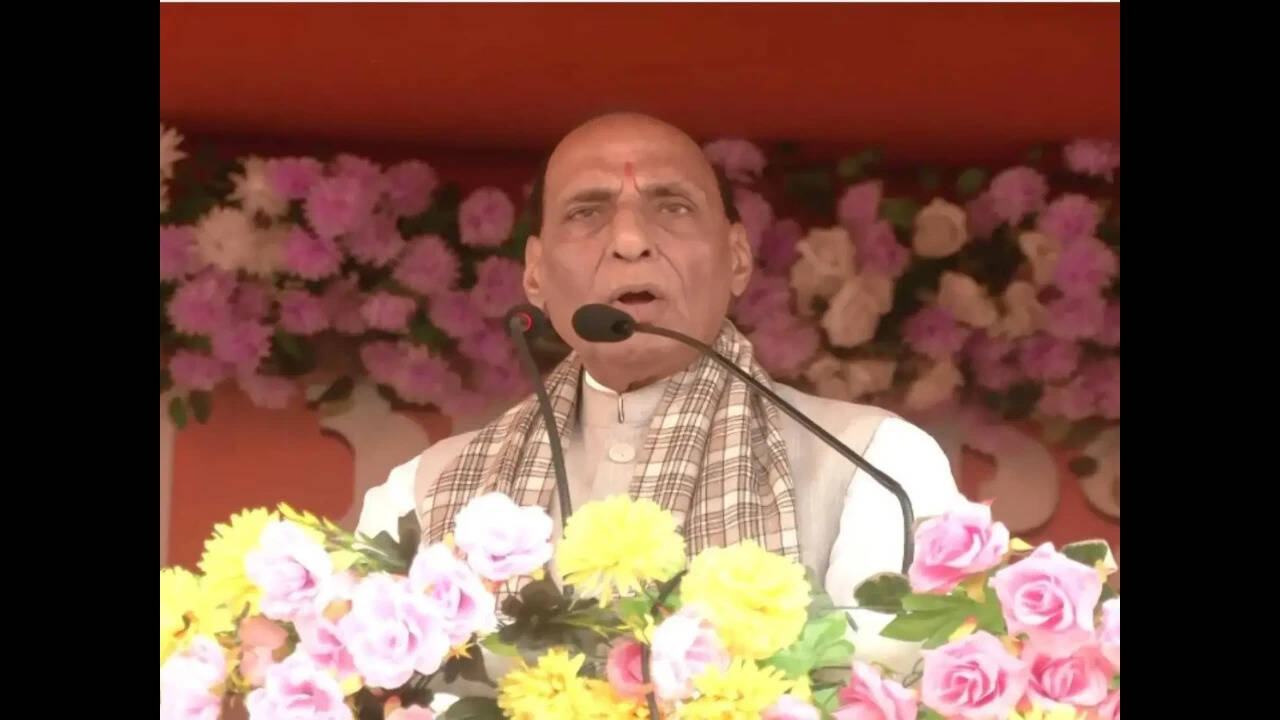
Union Defense Minister Rajnath Singh has launched a sharp verbal attack on West Bengal Chief Minister Mamata Banerjee. During a recent political event, Singh accused the state government of failing to protect the economy and allowing illegal activities to grow. He claimed that the current leadership has driven away big businesses and failed to create jobs for the youth. This criticism comes at a time when the political battle between the Bharatiya Janata Party (BJP) and the Trinamool Congress (TMC) is intensifying over the future of the state.
Main Impact
The primary impact of these statements is a renewed focus on the economic health of West Bengal. By accusing the Chief Minister of "deindustrializing" the state, Rajnath Singh is highlighting a major concern for voters: the lack of local jobs. If people believe that the state is no longer a good place for factories and companies, it could change how they vote in upcoming elections. Furthermore, the focus on corruption suggests that the central government intends to make transparency and law a major part of their political campaign in the region.
Key Details
What Happened
Rajnath Singh spoke to a large crowd about the decline of West Bengal’s industrial power. He noted that many years ago, Bengal was a leader in manufacturing and trade. However, he argued that under the current administration, the state has lost its way. He pointed out that instead of building new factories, the government has created an environment where business owners feel unsafe or unwelcome. He also spoke about the rise of "cut money," which is a local term for illegal commissions taken by political workers from ordinary citizens.
Important Numbers and Facts
While specific new data was not the main focus, Singh referenced the historical shift of businesses moving out of the state. He mentioned that thousands of young graduates from Bengal are forced to move to cities like Bengaluru, Noida, and Hyderabad every year because there are no high-paying jobs at home. He also brought up the issue of law and order, specifically mentioning the safety of women and the recent incidents in areas like Sandeshkhali. Singh argued that without safety and honest government, no investor would want to put money into the state’s economy.
Background and Context
West Bengal has a complex political history. For over 30 years, it was ruled by a group of communist parties. In 2011, Mamata Banerjee came to power with the promise of "Ma, Mati, Manush" (Mother, Land, and People). While she was praised for her social welfare programs, her critics have often pointed to the lack of industrial growth. One of the most famous examples was the exit of the Tata Nano factory years ago, which many see as the start of the state's industrial problems. The BJP is now trying to position itself as a party that can bring "Asol Poriborton" (Real Change) by focusing on modern industries and cleaning up the government.
Public or Industry Reaction
The reaction to Singh’s comments has been divided. Supporters of the BJP agree that the state needs a new economic plan and better security for businesses. They feel that the current system favors local political leaders over hard-working citizens. On the other hand, the Trinamool Congress has dismissed these claims as political lies. TMC leaders often point to their own data, showing that the state has grown in the small business sector and that their welfare schemes have helped millions of poor families. Some industry experts suggest that while Bengal has potential, the "image" of the state as a place of political protests still scares away some large investors.
What This Means Going Forward
Moving forward, the debate over "jobs versus welfare" will likely dominate the news. The BJP will continue to push the idea that West Bengal is falling behind other states like Gujarat or Uttar Pradesh in terms of building infrastructure. Meanwhile, the TMC will likely focus on its direct cash transfer programs to keep its support among rural voters. The real test will be whether the state can attract any major global companies in the next year. If the government cannot show new factories or IT parks being built, the accusations of deindustrialization may become even harder to ignore.
Final Take
The words spoken by Rajnath Singh reflect a deep political divide in West Bengal. While the state remains a cultural hub, its economic future is a subject of intense debate. For the average citizen, the most important thing is not the political fighting, but the availability of good jobs and a safe environment. Whether the current government can prove its critics wrong or if a change in leadership is coming will depend on how these economic issues are handled in the coming months.
Frequently Asked Questions
What does deindustrialization mean in this context?
In this context, it refers to the claim that West Bengal is losing its factories and businesses, and that no new large-scale industries are being set up to replace them.
What is "cut money"?
"Cut money" is a local term used to describe illegal bribes or commissions that some political workers allegedly demand from people to give them access to government schemes or to let them do business.
Why is the BJP focusing on West Bengal's economy?
The BJP is focusing on the economy because they believe the lack of jobs is a major weakness for the current state government. They want to convince voters that they can bring more investment and development to the region.



