
Summary
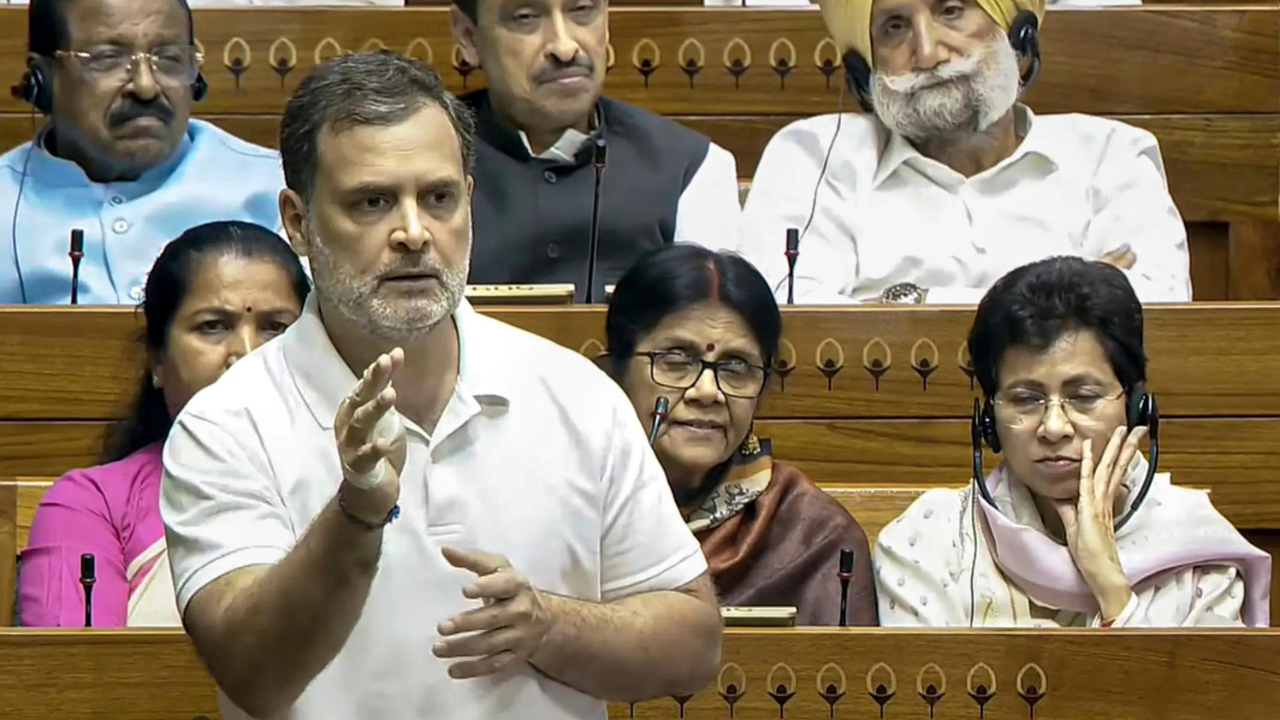
Opposition leader Rahul Gandhi has criticized the government after a bill to reserve seats for women failed to pass in the Lok Sabha. Gandhi called the bill an "unconstitutional trick" and claimed that the opposition group, known as the INDIA bloc, successfully stopped it. He argued that the bill was not actually about helping women but was instead a hidden attempt to change how elections work in India. The Congress party is now calling for a clear plan to give women 33% of the seats in parliament by the 2029 elections.
Main Impact
The failure of this bill marks a major moment in Indian politics. It shows that the opposition parties are working together closely to block government plans they do not agree with. By stopping the bill, the INDIA bloc has sent a message that they will not accept changes to the country's voting system without a fight. This event also delays the long-awaited goal of having more women in the Lok Sabha, which has been a topic of debate for many years.
Key Details
What Happened
The government introduced a bill that was supposed to set aside seats for women in the lower house of parliament. However, during the session in the Lok Sabha, the bill did not move forward. Rahul Gandhi spoke out shortly after, saying that the people of India have seen through the government's actions. He claimed the bill was a "trick" designed to alter the basic structure of how people are elected. According to Gandhi, the INDIA bloc recognized this danger and acted to prevent the bill from becoming law.
Important Numbers and Facts
The main goal of the proposed law was to provide 33% reservation for women in the Lok Sabha and state assemblies. This means one out of every three seats would be kept for female candidates. The Congress party has stated that they want this 33% rule to be fully active in time for the 2029 national elections. Currently, the number of women in the Indian parliament is much lower than this target, which is why the issue is so important to many voters.
Background and Context
The idea of reserving seats for women in India is not new. For decades, different governments have tried to pass laws to make sure women have a fair share of political power. While there is reservation for women in local village councils, it has been very hard to pass similar rules for the national parliament. Many people believe that having more women in power would lead to better laws for families, education, and safety. However, political parties often disagree on the details, such as whether there should be special quotas for women from different social groups.
Public or Industry Reaction
The reaction to the bill's failure has been split. Supporters of the INDIA bloc are praising the move, believing that the opposition protected the constitution from unfair changes. They argue that any law about women's rights should be simple and honest, not tied to other political changes. On the other side, some people are frustrated that another attempt to help women has failed. They worry that political fighting is getting in the way of progress. Women's rights groups have expressed a mix of anger and hope, urging all parties to stop playing games and pass a fair law soon.
What This Means Going Forward
The focus now shifts to the 2029 elections. The government will likely face more pressure to bring back a version of the bill that the opposition can support. If the government does not act, the Congress party and its partners will likely use this as a major talking point during their campaigns. There is also a risk that this political battle will make it harder for other laws to pass in the future. Both sides will need to find a way to talk to each other if they want to reach the 33% goal. The next few years will be critical for deciding how women will be represented in India's future.
Final Take
This clash in the Lok Sabha shows that even when everyone agrees on a goal, like helping women, they can still disagree on the method. Rahul Gandhi's strong words suggest that the opposition is ready to challenge the government on every detail. While the bill failed this time, the demand for more women in politics is not going away. The real test will be whether the government can create a new plan that everyone can agree on before the next big election.
Frequently Asked Questions
Why did Rahul Gandhi call the bill a trick?
He believed the bill included hidden changes to the way elections are held in India, rather than just focusing on reserving seats for women.
What is the 33% reservation goal?
It is a plan to make sure that 33% of all seats in the Lok Sabha and state assemblies are held by women to ensure better representation.
When does the Congress party want the reservation to start?
The Congress party is pushing for the 33% women's reservation to be fully implemented by the 2029 elections.



