
Summary
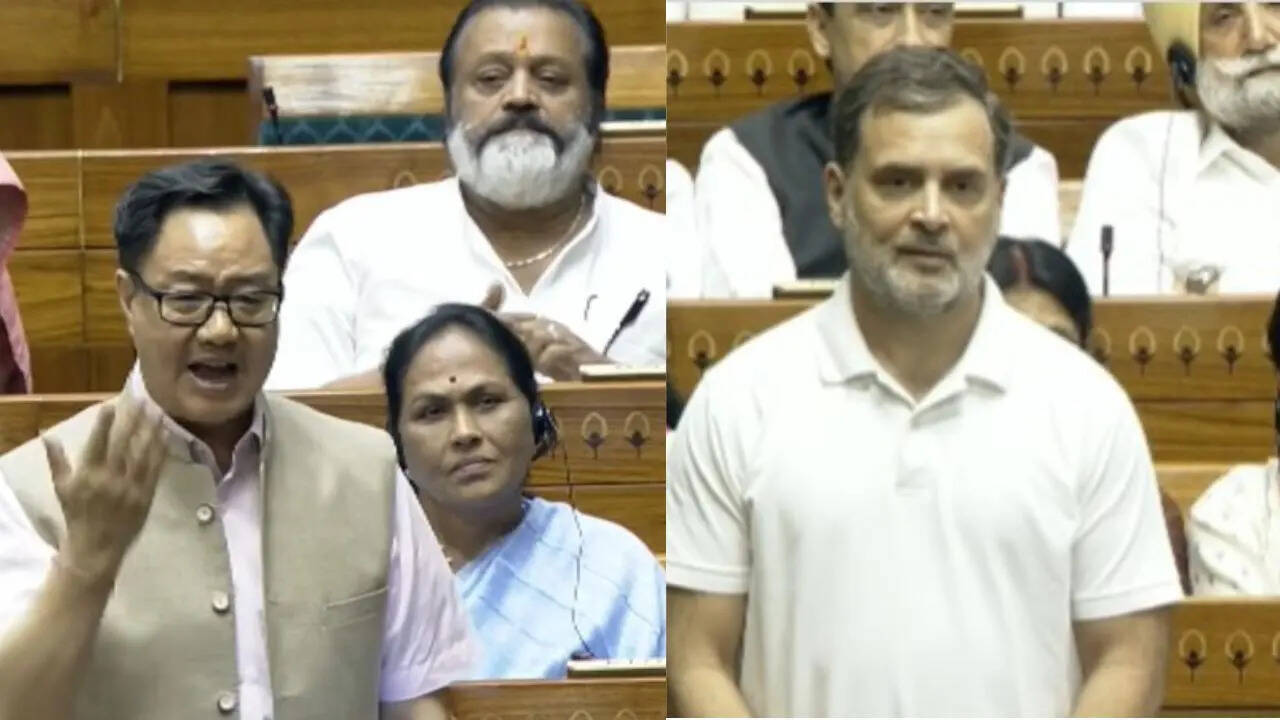
A major political disagreement has broken out between Rahul Gandhi and Kiren Rijiju over the rights of Other Backward Classes (OBCs). The debate centers on the new law that sets aside seats for women in India's Parliament and state assemblies. While the law is a historic step, leaders are fighting over whether it does enough for women from backward communities. This clash highlights the deep divide in how different political parties view social justice and the timing of new government policies.
Main Impact
The main impact of this debate is a shift in the focus of the Women’s Reservation Bill. What started as a move to bring more women into politics has now become a battle over caste representation. Rahul Gandhi’s demand for an OBC sub-quota has forced the government to defend its record on social equality. This discussion is important because it affects how millions of people from backward communities feel represented in the highest levels of the Indian government.
Key Details
What Happened
During a session in Parliament, Congress leader Rahul Gandhi criticized the government’s approach to the Women’s Reservation Bill. He argued that the bill is unfair because it does not include a specific quota for women from the OBC category. Gandhi claimed that the government is effectively taking away power from these groups by leaving them out of the new law. He also questioned why the law would only be put into action after a new census and a process called delimitation, which could take many years.
In response, Union Minister Kiren Rijiju attacked the Congress party’s past record. He asked why the Congress did not implement these changes during the 60 years they were in power. Rijiju argued that the current government is the one finally taking action to empower women and that the opposition is simply trying to create hurdles. He suggested that the Congress party is only talking about OBC rights now because they are no longer in power.
Important Numbers and Facts
The Women’s Reservation Bill, also known as the Nari Shakti Vandan Adhiniyam, aims to reserve 33 percent of seats in the Lok Sabha and state legislative assemblies for women. However, the implementation of this law is tied to two major events. First, a new national census must be conducted. Second, a delimitation exercise must happen to redraw the boundaries of voting districts. Critics say these requirements could delay the actual start of the reservation until 2029 or even later.
Rahul Gandhi also pointed to the small number of OBC officers in the central government. He noted that out of 90 top secretaries in the Indian government, only a very small fraction belong to the OBC community. He used these numbers to argue that the system is currently stacked against backward classes.
Background and Context
The idea of reserving seats for women in India’s Parliament has been around for nearly three decades. Previous governments tried to pass similar bills, but they often failed because of disagreements over sub-quotas for different castes. The current government successfully passed the bill in a special session of Parliament, marking a major milestone. However, the decision to link the law to the census and delimitation has caused fresh controversy.
Delimitation is the process of fixing limits or boundaries of territorial constituencies in a country. This is usually done based on the latest census data to ensure each seat represents a similar number of people. Because the census has been delayed, the timeline for when women will actually see these reserved seats remains unclear. This delay is what the opposition is using to claim the government is not being sincere.
Public or Industry Reaction
The reaction to this clash has been split along party lines. Supporters of the government praise the bill as a bold move that finally gives women their due share in politics. They believe the legal process of census and delimitation is necessary to make the change permanent and fair. On the other hand, social activists and opposition leaders argue that without an OBC sub-quota, the law will mostly benefit women from privileged backgrounds. They worry that the most marginalized women will still be left out of the political process.
What This Means Going Forward
Looking ahead, the debate over OBC representation is likely to become a central theme in future elections. The government will need to show that it is working for all sections of society, not just a few. Meanwhile, the opposition will continue to push for a "caste census" to count exactly how many people belong to each group. This data would then be used to demand more quotas in jobs, education, and politics. The actual implementation of the women's quota will remain a distant goal until the census and delimitation processes are completed.
Final Take
The clash between Rahul Gandhi and Kiren Rijiju shows that while everyone agrees on the need for more women in power, the path to getting there is full of political obstacles. The fight over OBC quotas is not just about one bill; it is about who gets a seat at the table in India’s future. As the country waits for the census, the debate over fairness and representation will only grow louder.
Frequently Asked Questions
What is the Women’s Reservation Bill?
It is a law that reserves one-third of the seats in the Lok Sabha and state assemblies for women to increase their participation in politics.
Why is there a debate about OBCs in this bill?
Opposition leaders want a specific part of the reserved seats to be set aside for women from Other Backward Classes (OBCs) to ensure they are represented.
When will the women’s reservation actually start?
The reservation will only begin after the next national census is finished and the boundaries of voting districts are redrawn, which may take several years.



