
Summary
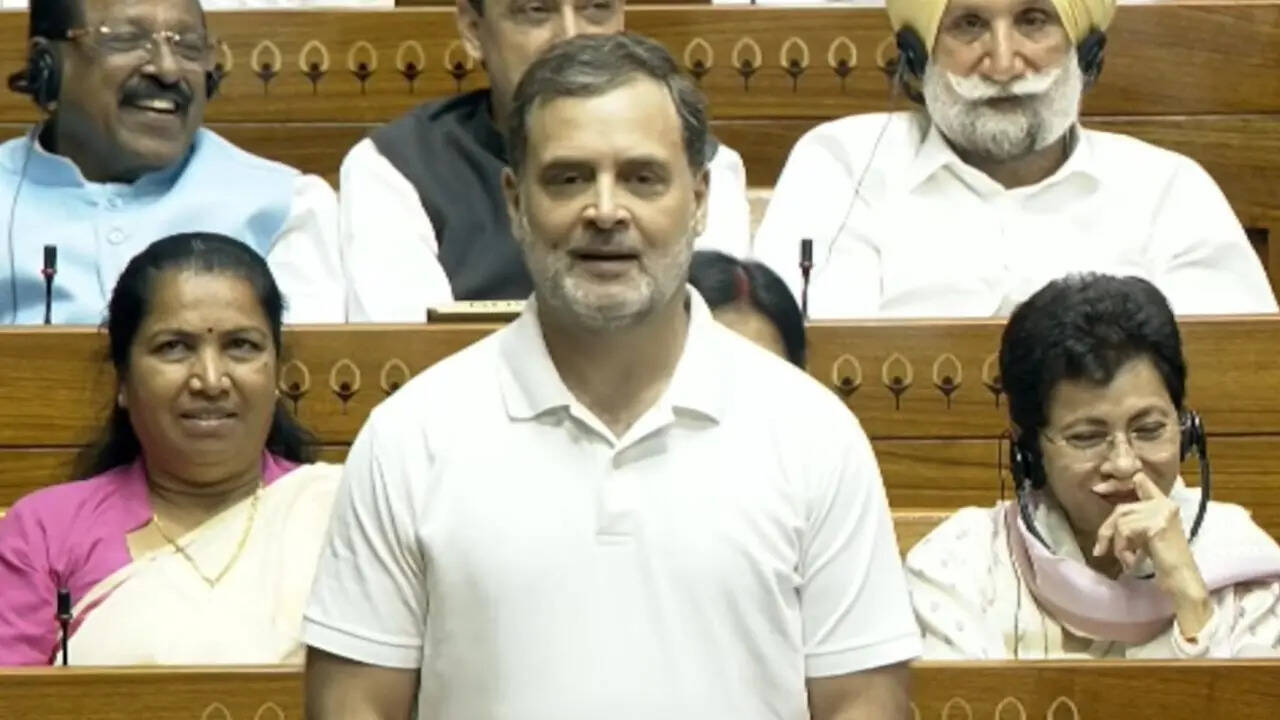
Rahul Gandhi, a prominent leader of the Congress party, has strongly criticized the central government’s plan to redraw the country’s voting districts. During a session in the Lok Sabha, he claimed that the government is attempting to change the electoral map of India to suit its own political goals. He argued that the current approach to the Women’s Reservation Bill is a way to delay giving power to women by linking it to a new census and the redrawing of boundaries.
Main Impact
The primary impact of this development is a renewed political battle over how India counts its people and divides its voting power. By challenging the Delimitation Bill, Gandhi has shifted the focus toward the representation of different social groups, specifically the Other Backward Classes (OBC). This move forces the government to defend its timeline for legislative changes and brings the demand for a Caste Census back to the center of national discussion.
Key Details
What Happened
In a heated speech in Parliament, Rahul Gandhi addressed the Nari Shakti Vandan Adhiniyam, also known as the Women’s Reservation Bill. While he expressed support for the idea of giving women 33% of seats in the legislature, he pointed out what he called "two major flaws." These flaws are the requirements for a census and a delimitation process before the law can take effect. He suggested that these conditions are unnecessary and are designed to push the implementation of the law many years into the future.
Important Numbers and Facts
Gandhi shared specific data to support his claim that the current government does not represent all sections of society. He stated that out of the 90 secretaries who run the various departments of the Government of India, only three belong to the OBC category. He further noted that these three officials only control a tiny fraction of the national budget. This data was used to argue that the government is not truly inclusive and that a Caste Census is the only way to ensure fairness.
Background and Context
Delimitation is the process of fixing the limits or boundaries of territorial constituencies in a country. In India, this is done to ensure that each seat in the Lok Sabha represents a similar number of voters. However, this process has been frozen for a long time. The fear is that states that have successfully controlled their population growth might lose seats, while states with rapidly growing populations would gain more power. By linking women's seats to this process, the government has created a complex legal path that could take a decade or more to complete.
Public or Industry Reaction
The reaction to Gandhi’s speech has been divided along party lines. Members of the ruling party argue that following the census and delimitation process is a legal necessity to avoid future court challenges. They claim the opposition is simply trying to take credit for a bill they failed to pass in the past. Conversely, many social activists and opposition parties have praised the focus on the Caste Census. They believe that without knowing the exact population of different castes, it is impossible to distribute resources and political power fairly.
What This Means Going Forward
Looking ahead, the debate over the "electoral map" will likely become a major theme in upcoming elections. The opposition is expected to keep pushing for an immediate Caste Census as a way to challenge the government’s narrative. If the government proceeds with delimitation after the next census, it could lead to significant tension between northern and southern states. The timing of when women will actually see more seats in Parliament remains the biggest unanswered question, as the current rules suggest it will not happen until at least 2029 or later.
Final Take
The dispute over the Delimitation Bill is about much more than just drawing lines on a map. It is a fundamental disagreement over who gets a voice in India’s future. By highlighting the lack of diversity in top government roles and questioning the delay in women's representation, the opposition is calling for a complete rethink of how the country is governed. The demand for a Caste Census is no longer just a small request; it has become a central part of the fight for political equality in India.
Frequently Asked Questions
What is delimitation in simple terms?
Delimitation is the process of redrawing the boundaries of voting areas. This is done to make sure that the number of people in each area is roughly equal, so that every vote has the same weight.
Why is Rahul Gandhi against the current Delimitation Bill?
He believes the government is using it as a tactic to delay the Women’s Reservation Bill. He also fears that the process might be used to unfairly change the political balance of the country.
What is a Caste Census?
A Caste Census is a government count of the population that includes details about which caste every person belongs to. Supporters say it is needed to help the government create better policies for marginalized groups.



