
Summary
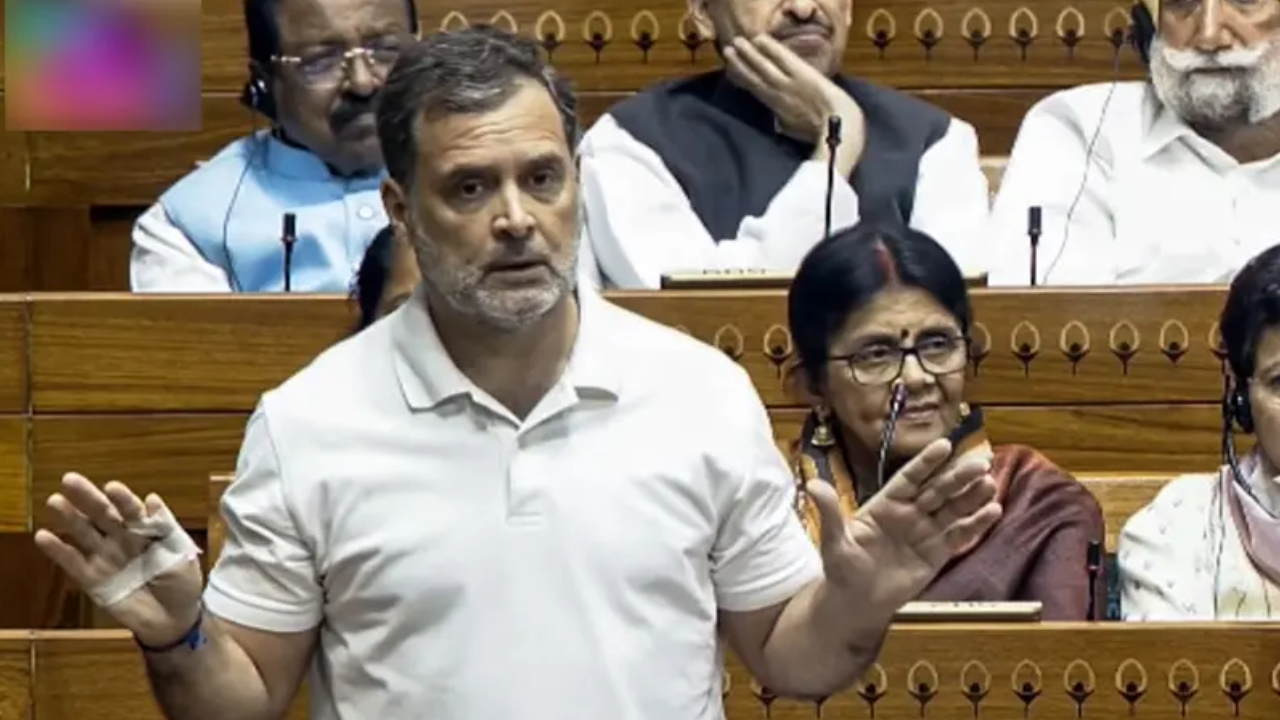
Rahul Gandhi, a prominent leader of the Congress party, recently raised serious questions about the central government's plans for redrawing electoral boundaries. During a heated debate in Parliament, he repeatedly pointed to the "number 16," suggesting that the government has a hidden timeline or a secret strategy behind its actions. This issue, known as delimitation, is a major concern because it will change how many representatives each state has in the Indian Parliament, which could shift the balance of political power for decades to come.
Main Impact
The primary impact of this debate is the growing tension between the central government and various state leaders. If the government redraws voting districts based strictly on current population numbers, states in northern India will gain many more seats. Meanwhile, states in the south, which have been more successful at controlling population growth, fear they will lose their influence. This has turned a technical administrative task into a massive political battle about fairness and regional representation.
Key Details
What Happened
During a discussion about the future of India's voting system, Rahul Gandhi took a direct shot at the ruling party's motives. He claimed that several major government decisions are all connected to the number 16. While he did not explain exactly what he meant, many political experts believe he was referring to the year 2026. This is the year when the current freeze on changing the number of seats in the Lok Sabha is scheduled to end. Gandhi suggested that the government is waiting for this specific moment to push through changes that would benefit them politically.
Important Numbers and Facts
The number of seats in India's Parliament has been frozen for several decades to prevent states from being punished for having smaller families. Currently, there are 543 seats in the Lok Sabha. However, the new Parliament building has been constructed with enough space to hold more than 800 members. This physical change suggests that a massive increase in the number of politicians is already being planned. The government has also linked the implementation of the Women’s Reservation Bill to this delimitation process, which means women may not get their reserved seats until these new boundaries are drawn.
Background and Context
Delimitation is the process of fixing the limits or boundaries of territorial constituencies in a country to reflect changes in population. In a fair system, every member of Parliament should represent roughly the same number of people. However, India has a unique problem. Some states have grown much faster than others. If the government simply follows the population numbers, the states that followed national goals for education and family planning will end up with less power. To avoid this, the process was put on hold years ago. Now, as the 2026 deadline approaches, the country must decide how to move forward without making some regions feel ignored.
Public or Industry Reaction
The Congress party and other opposition groups have reacted with suspicion. They are calling for a national caste census before any changes are made to the voting districts. They argue that the government cannot fairly represent the people without knowing the exact social and economic status of different groups. Leaders from southern states have been particularly vocal, stating that they should not be penalized for their social progress. On the other side, supporters of the government argue that delimitation is a constitutional requirement that must be finished to ensure that every citizen's vote has equal weight.
What This Means Going Forward
The road ahead is likely to be filled with legal challenges and political protests. Before any redrawing of boundaries can happen, the government must complete a national census, which has already been delayed for several years. Once the census data is ready, a special commission will be formed to decide where the new lines should be drawn. This process will be closely watched by every political party. If the "number 16" theory proves true, we can expect a major push for these changes starting in 2026, which could lead to a very different looking Parliament in the next decade.
Final Take
The mystery of the "number 16" highlights the deep lack of trust between the government and the opposition. While redrawing boundaries is a normal part of a growing democracy, the way it is handled in India will test the unity of the country. It is not just about numbers on a map; it is about ensuring that every part of the country feels it has a fair voice in how the nation is run. The coming years will reveal whether this process brings the country together or creates deeper divisions between the north and the south.
Frequently Asked Questions
What does the number 16 mean in this debate?
While not explicitly defined by Rahul Gandhi, it is widely believed to refer to the year 2026. This is the year when the legal freeze on changing the number of parliamentary seats expires, allowing the government to redraw the electoral map.
Why are southern states worried about delimitation?
Southern states have lower population growth compared to northern states. If seats are assigned based on population, southern states will have fewer representatives in Parliament, reducing their power to influence national laws and funding.
When will the new voting boundaries be decided?
The process can only begin after the next official census is completed. After the census, a delimitation commission will be set up to study the data and propose new boundaries, a process that could take several years to finish.



