Summary
Rahul Gandhi, a senior leader of the Congress party, recently made strong comments about the political situation in Bihar while speaking in Tamil Nadu. He claimed that the Bharatiya Janata Party (BJP) was able to take control of former Chief Minister Nitish Kumar because of his past actions. Gandhi suggested that Nitish Kumar was "compromised," which allowed the BJP to move him out of his leadership role in the state. This development has sparked a new debate about how national parties interact with regional leaders and the pressure used in modern politics.
Main Impact
The main impact of these statements is a direct attack on the credibility of the alliance between the BJP and the Janata Dal (United). By claiming that a veteran leader like Nitish Kumar was forced into a corner, Rahul Gandhi is trying to show that the BJP uses power to silence its partners. This narrative suggests that regional leaders may not always be acting out of free will but are instead following orders to avoid trouble from central authorities. This could change how voters in Bihar and other states view their local leaders when they decide to join hands with the ruling party at the center.
Key Details
What Happened
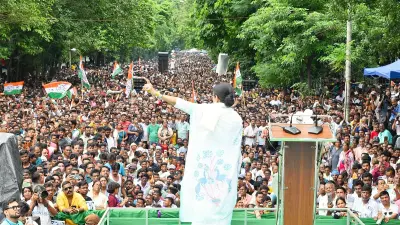
During a political event in Tamil Nadu, Rahul Gandhi spoke to the public about the shifting loyalties in Indian politics. He focused specifically on Nitish Kumar, who has served as the Chief Minister of Bihar multiple times. Gandhi told the crowd that the BJP had found ways to pressure Nitish Kumar due to things he had done in the past. According to Gandhi, this pressure was so strong that Nitish Kumar had to step down from his position as Chief Minister and accept a seat in the Rajya Sabha, which is the upper house of India's Parliament. Gandhi noted that since this move, the former Chief Minister has remained unusually quiet.
Important Numbers and Facts
Nitish Kumar has a long history of changing political alliances, often moving between the Congress-led opposition and the BJP-led alliance. In the most recent turn of events, he left the opposition group to join the BJP again. Shortly after, the leadership structure in Bihar changed. Gandhi pointed out that being sent to the Rajya Sabha is often seen as a way to move a leader away from active state politics. The Congress leader emphasized that the lack of protest from Nitish Kumar is proof that he no longer has the power to fight back against the BJP's decisions.
Background and Context
To understand why this matters, one must look at the history of Bihar politics. Bihar is a very important state for any party wanting to rule India. For years, Nitish Kumar was the face of the state government. He was known for his focus on development, but his frequent changes in political partners earned him a reputation for being unpredictable. Rahul Gandhi’s comments come at a time when the Congress party is trying to build a strong front against the BJP for the upcoming national elections. By calling Nitish Kumar "compromised," Gandhi is warning other regional leaders that the BJP might use similar tactics against them if they have any weaknesses in their past.
Public or Industry Reaction
The reaction to Gandhi's speech has been divided. Members of the Congress party and their allies have praised Gandhi for being brave and speaking the truth about how the BJP operates. They argue that central agencies are often used to scare political opponents into joining the government. On the other side, BJP leaders have dismissed these claims. They say that Nitish Kumar joined them because he wanted better growth for Bihar and was tired of the internal problems within the opposition. Supporters of Nitish Kumar have also stayed mostly silent, which some experts say adds weight to Gandhi's claim that the leader has lost his voice in the current political setup.
What This Means Going Forward
Going forward, this situation shows that the fight for political power in India is becoming more personal. The focus is shifting from just talking about policies to talking about the personal history and honesty of leaders. For the people of Bihar, this means more uncertainty about who is actually in charge of their state's future. For the rest of the country, it serves as a lesson on how national parties can influence state politics. We can expect more heated debates as the elections get closer, with the opposition trying to prove that the government is using unfair pressure, while the ruling party claims it is simply bringing more leaders into its fold for the good of the nation.
Final Take
Rahul Gandhi's speech in Tamil Nadu is more than just a criticism of one leader; it is a warning about the nature of political alliances today. If leaders are indeed being controlled by their past mistakes, the independence of state governments could be at risk. This situation highlights the need for transparency in politics and shows that the path to power is often filled with hidden deals and heavy pressure. As the political map continues to change, the real test will be whether voters prioritize the stability of an alliance or the independence of their chosen leaders.
Frequently Asked Questions
Why did Rahul Gandhi talk about Bihar in Tamil Nadu?
Rahul Gandhi is traveling across India to gather support for his party. He uses examples from different states to show how the central government works and to warn voters in other regions about what might happen in their own states.
What does it mean when a leader is called "compromised"?
In this context, it means that a person has done things in the past that they do not want the public or the law to find out. Other people can use this information to force that leader to do what they want, such as changing political sides or giving up a job.
What is the Rajya Sabha?
The Rajya Sabha is the upper house of the Indian Parliament. While it is a very important body, moving a powerful state leader like a Chief Minister to the Rajya Sabha is often seen as a way to take them out of local politics where they have the most influence.