Summary
Seven out of the ten Aam Aadmi Party (AAP) members in the Rajya Sabha have decided to join the Bharatiya Janata Party (BJP). This major political move was led by Raghav Chadha, who was once a top leader in AAP. The group used a specific rule in the Indian Constitution that allows a large group of lawmakers to merge with another party. This change significantly weakens AAP’s power in the national parliament and gives the BJP more control in the upper house.
Main Impact
The immediate impact of this move is a shift in power within the Rajya Sabha, which is the upper house of India's Parliament. By losing seven of its ten members, AAP has lost its status as a significant force in national law-making. This defection makes it harder for opposition parties to block government bills. For the BJP, gaining seven experienced members helps them get closer to a majority in the house, making it easier for them to pass new laws without needing help from outside parties.
Key Details
What Happened
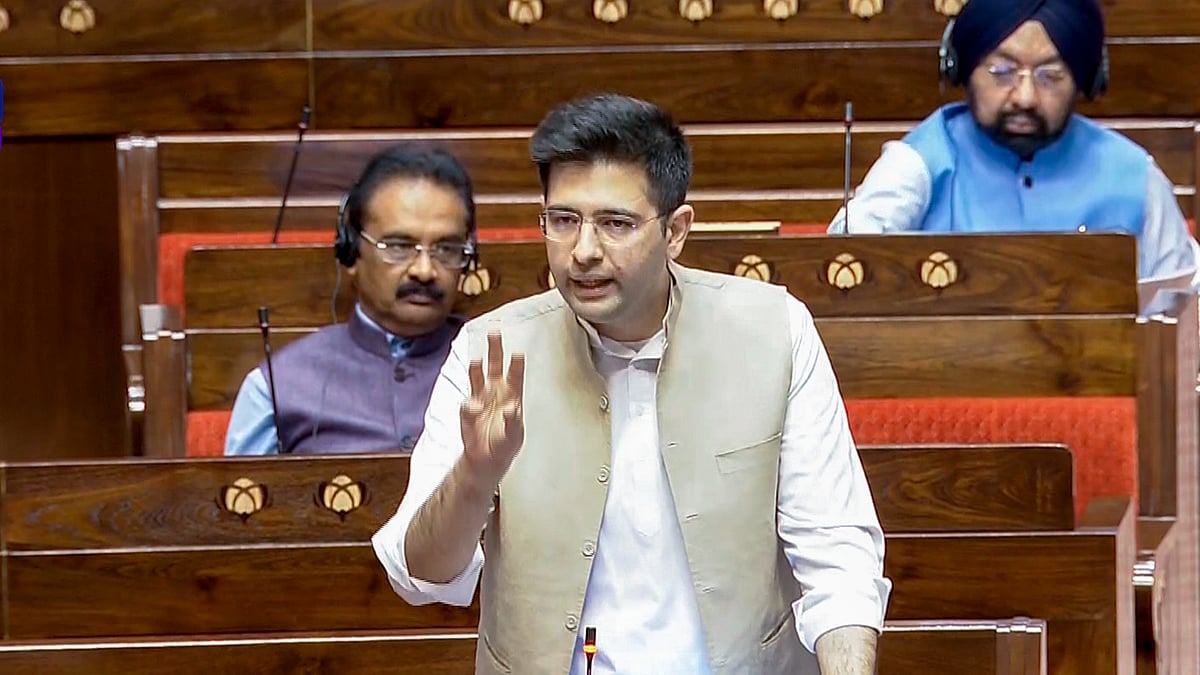
On Friday, Raghav Chadha held a press conference in Delhi to announce the merger. He explained that the group had already submitted the necessary paperwork to the Vice-President of India, C.P. Radhakrishnan, who serves as the Chairman of the Rajya Sabha. Chadha stated that the move was legal because they had enough members to meet the "two-thirds" rule. This rule is part of the anti-defection law in India, which usually punishes lawmakers for switching parties unless a large enough group moves together.
Important Numbers and Facts
The group joining the BJP includes several well-known names. Along with Raghav Chadha, the members are Sandeep Pathak, Harbhajan Singh, Rajendra Gupta, Vikram Sahni, Swati Maliwal, and Ashok Mittal. Out of the 10 total AAP members in the Rajya Sabha, these seven represent 70% of the party's strength in that house. Because this is more than the required two-thirds (66.6%), they will not lose their seats in Parliament. They will now be counted as BJP members during votes and debates.
Background and Context
This split did not happen overnight. For several months, there were signs that Raghav Chadha was unhappy within AAP. He was once considered the right-hand man of the party leader, Arvind Kejriwal. However, reports suggested that Chadha was being left out of important decisions. He also began to change the way he spoke about the BJP in public, becoming less critical than he used to be. Other members, like Swati Maliwal, had also shown signs of disagreement with the party leadership over the past year.
The Aam Aadmi Party started as a group focused on fighting corruption. Over the years, it grew quickly and won elections in Delhi and Punjab. However, as the party tried to grow across the whole country, internal arguments began to surface. Some leaders felt that the party's strategy was not working, while others felt they were being ignored by the top leadership in Delhi.
Public or Industry Reaction
The reaction to this news has been intense. Political experts say this is one of the biggest setbacks AAP has ever faced. It shows that the party is struggling to keep its top leaders united. Supporters of the BJP have welcomed the move, saying it shows that even leaders from rival parties believe in the government's work. On the other hand, AAP loyalists have criticized the move, calling it a betrayal of the voters who put these leaders in power. Many people are surprised to see Harbhajan Singh, a famous former cricketer, and Swati Maliwal, a well-known activist, among those switching sides.
What This Means Going Forward
In the coming weeks, AAP will have to work hard to prove that it is still a strong and united party. Losing high-profile faces like Chadha and Singh makes it harder for the party to campaign in other states. They will need to find new leaders to fill the gap left by those who departed. For the BJP, this move is a clear win that strengthens their position before future elections. It also sends a message to other opposition parties that their members might be open to joining the ruling party.
Legally, the focus will now be on the Rajya Sabha Chairman’s office. They must verify the documents and officially change the seating and records of the house. Once this is finished, the seven members will officially start working as part of the BJP team in Parliament.
Final Take
This event marks a turning point in Indian politics. It shows how quickly political alliances can change and how internal disagreements can lead to major shifts in power. While AAP loses its voice in the upper house, the BJP gains more influence. The move by Raghav Chadha and his colleagues will likely change how both parties plan their strategies for years to come.
Frequently Asked Questions
Why are the MPs allowed to switch parties without losing their jobs?
Under Indian law, if two-thirds or more of a party's lawmakers decide to merge with another party, they are protected from being disqualified. Since 7 out of 10 MPs moved, they met this requirement.
Who led the group of MPs to the BJP?
The move was led by Raghav Chadha, who was previously a very prominent leader and spokesperson for the Aam Aadmi Party.
How does this help the BJP?
The BJP now has seven more members in the Rajya Sabha. This helps them pass laws more easily, as they are now closer to having a full majority in the upper house of Parliament.