
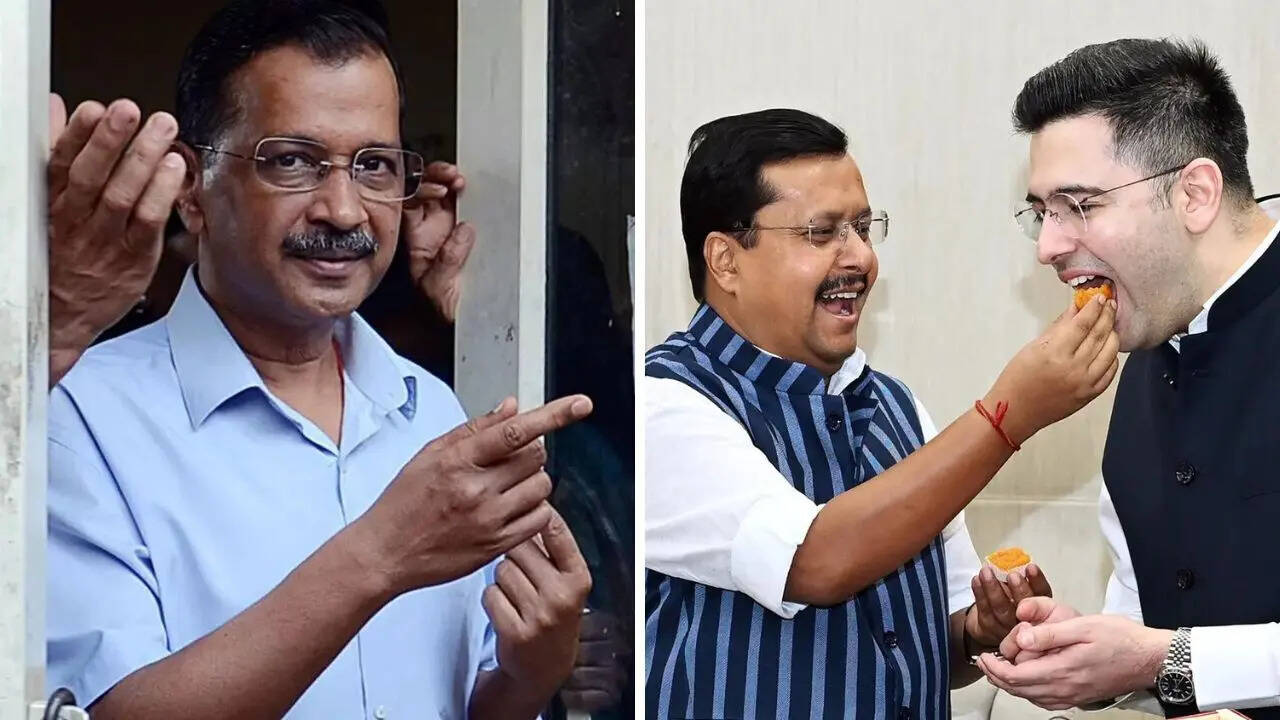
Summary
The Aam Aadmi Party (AAP) is facing a major internal crisis after seven of its Rajya Sabha members decided to leave the party. Led by high-profile leader Raghav Chadha, the group has joined the Bharatiya Janata Party (BJP). This move has significantly weakened AAP’s strength in the upper house of Parliament and forced the party to change its national strategy. The defecting members stated that they chose to leave because the party had moved away from the core principles it was built upon.
Main Impact
The immediate impact of this move is a shift in power within the Rajya Sabha. AAP has gone from being a strong voice in the upper house to having only a small presence. For the BJP, this is a major gain that helps them move closer to a majority in the Rajya Sabha. This change makes it much easier for the government to pass new laws without facing heavy opposition from AAP. For AAP, the loss of Raghav Chadha is particularly painful, as he was one of the party’s most popular and well-known faces across the country.
Key Details
What Happened
In a sudden move that surprised many political experts, seven out of the ten AAP members in the Rajya Sabha announced they were switching sides. They officially joined the BJP, claiming that AAP had lost its way. This group was led by Raghav Chadha, who has been a key member of AAP since its early days. The move happened quickly, leaving the AAP leadership struggling to respond. The party is now looking for ways to stop more members from leaving and is trying to figure out how to rebuild its team in the national capital.
Important Numbers and Facts
The numbers in this situation are very important because of India’s anti-defection laws. AAP had a total of 10 members in the Rajya Sabha. According to the law, if at least two-thirds of a party's elected members leave together to join another group, they do not lose their seats in Parliament. Since seven members left, they meet this two-thirds requirement (which would be roughly 6.6 members). This means the seven MPs can keep their positions while representing the BJP. AAP has stated it will still try to seek the disqualification of some of these members, but legal experts say this will be a difficult task given the current rules.
Background and Context
The Aam Aadmi Party started over a decade ago as a group focused on fighting corruption. It grew out of a massive public protest movement and promised to bring a new kind of politics to India. Over the years, it successfully formed governments in Delhi and Punjab. Raghav Chadha was a central part of this growth, often acting as the party's main spokesperson on financial and legal matters. However, in recent months, there have been reports of internal disagreements. The members who left claim that the party has stopped listening to its original members and has changed its focus, leading to this mass exit.
Public or Industry Reaction
The reaction to this news has been divided. AAP leaders have expressed deep anger, calling the move a "betrayal" of the voters who supported them. They have accused the BJP of using unfair tactics to pull their members away. On the other hand, the BJP has welcomed the new members, stating that these leaders want to contribute to the country's progress under the current national leadership. Political analysts suggest that this event shows a growing trend of smaller parties struggling to keep their members when faced with the influence of larger national parties. Many voters in Delhi and Punjab are also watching closely to see how this will affect the local governments in those areas.
What This Means Going Forward
Going forward, AAP faces a tough road. The party needs to find new leaders who can speak on national issues and represent them in Parliament. They also need to reassure their supporters that the party is still stable. There is a risk that this exodus could spread to the state assemblies in Delhi or Punjab, which would be a much bigger problem for the party's survival. For the BJP, the focus will be on integrating these new members and using their knowledge of AAP’s inner workings to further weaken their political rivals. Legal battles are also expected as AAP tries to challenge the defection in court, which could take months or even years to resolve.
Final Take
This mass exit is a turning point for the Aam Aadmi Party. Losing a key leader like Raghav Chadha along with most of their Rajya Sabha team is a blow that will take a long time to recover from. It highlights the challenges that younger parties face as they try to maintain unity while growing on a national scale. The coming months will show whether AAP can fix its internal issues or if this is the start of a larger decline for the party.
Frequently Asked Questions
Why did Raghav Chadha and the other MPs leave AAP?
The MPs stated that they left because the party had moved away from its original goals and core principles. They felt they could no longer work effectively within the party's current structure.
Will the MPs lose their seats in the Rajya Sabha?
Probably not. Because seven out of ten members left together, they meet the "two-thirds" rule under the anti-defection law. This usually protects them from being disqualified as members of Parliament.
How does this affect the BJP?
The BJP gains seven more seats in the Rajya Sabha, which helps them get closer to a majority. This makes it much easier for the government to pass bills that require approval from the upper house.



