
Summary
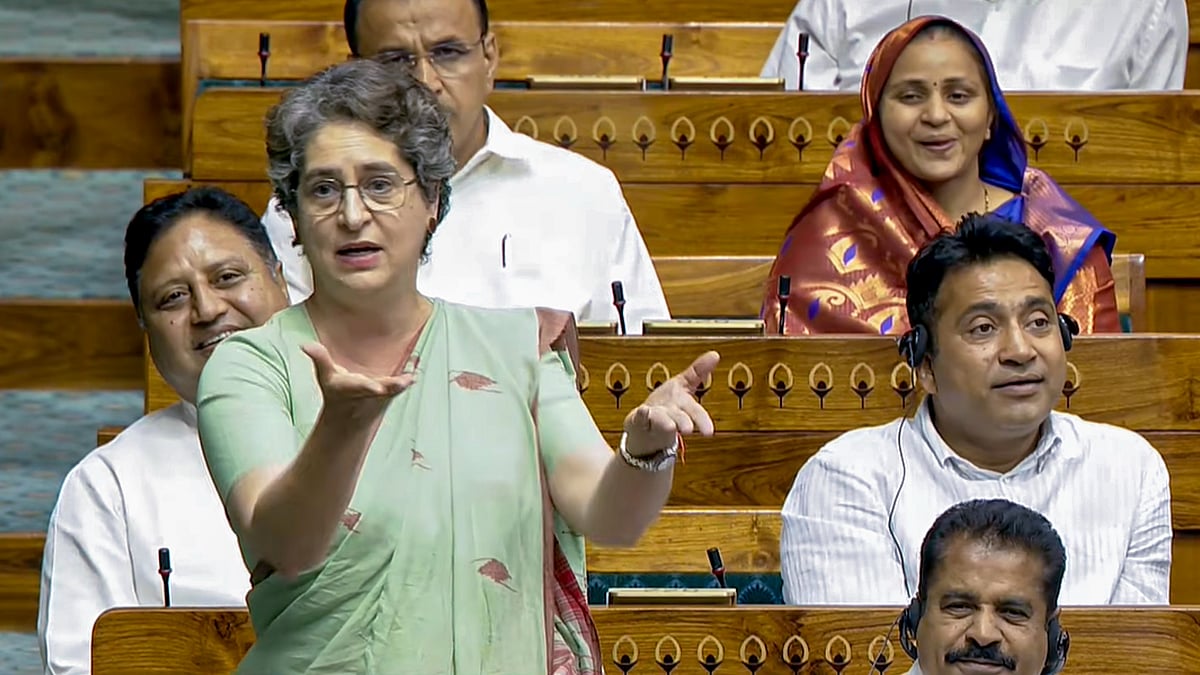
Congress MP Priyanka Gandhi Vadra recently took a sharp jab at Union Minister Kiren Rijiju during a heated debate in the Lok Sabha. The argument started when Rijiju quoted India’s first Prime Minister, Jawaharlal Nehru, to defend the current Speaker, Om Birla. Priyanka Gandhi found this move ironic because the ruling party frequently criticizes Nehru’s legacy. She suggested that the government only respects Nehru when his words serve their immediate political needs.
Main Impact
This exchange highlights the growing tension between the government and the opposition over how Parliament is run. By using Nehru’s historical words, the government tried to use the opposition’s own hero to stop a move against the Speaker. However, Priyanka Gandhi’s response turned the focus back on the government’s habit of attacking Nehru in other settings. This clash shows that both sides are now using history as a tool to win modern political battles.
Key Details
What Happened
The debate centered on a resolution brought by the opposition to remove Speaker Om Birla from his position. During the discussion, Union Minister Kiren Rijiju brought up a speech from 1954. In that speech, Jawaharlal Nehru had defended the then-Speaker, G.V. Mavalankar, against a similar attempt to remove him. Rijiju used Nehru’s words to suggest that the current opposition was being unfair and "vicious" by targeting the Speaker.
Priyanka Gandhi was seen laughing during Rijiju’s speech. When asked why, she explained that it was funny to see the government quote a leader they usually criticize "day and night." She argued that the government was suddenly showing respect for the man who built India’s democracy only because it helped their current argument.
Important Numbers and Facts
The historical reference used by Rijiju dates back to 1954, which was a landmark year for parliamentary rules in India. The current resolution against Speaker Om Birla is a rare move, as the Speaker is traditionally seen as a neutral figure. Priyanka Gandhi has become a much more active voice in the Lok Sabha since the 2024 general elections, often standing alongside her brother, Rahul Gandhi, to challenge the government’s decisions.
Background and Context
The Speaker of the Lok Sabha is the person who manages the meetings of India's lower house of Parliament. This person is supposed to be fair to both the ruling party and the opposition. However, the opposition parties have recently accused Speaker Om Birla of being biased. They claim he does not give them enough time to speak and favors the government’s side.
Because of these complaints, the opposition moved a resolution to remove him. To fight this, the government looked back at history. In 1954, Jawaharlal Nehru faced a similar situation with the first Speaker, G.V. Mavalankar. Nehru argued that trying to remove a Speaker was a serious and harmful act. By quoting this, Kiren Rijiju hoped to make the current opposition look like they were going against Nehru’s own principles.
Public or Industry Reaction
The reaction within Parliament was immediate and loud. Congress members were upset that the government was using Nehru’s name, especially since the BJP often blames Nehru for many of India’s past problems. Priyanka Gandhi also used the moment to defend Rahul Gandhi, the Leader of the Opposition. She stated that the government is afraid of Rahul Gandhi because he asks difficult questions that they cannot answer.
Outside of the Nehru debate, Priyanka Gandhi also made strong claims about the government’s foreign policy. She alleged that the government had "bowed" to the United States in a recent deal and was weakening Indian institutions. These comments show that the opposition is planning to attack the government on multiple fronts, including international relations and the strength of democracy.
What This Means Going Forward
This event marks a new phase in the relationship between the government and the Gandhi family in Parliament. Priyanka Gandhi’s presence adds a new layer to the opposition’s strategy. It is clear that she will not hesitate to call out what she sees as hypocrisy. The government, on the other hand, seems ready to use historical precedents to defend its current leaders.
The fight over the Speaker’s role is likely to continue. If the opposition feels they are being silenced, they may bring more resolutions or protests. This could make it harder for the government to pass new laws smoothly. The use of historical figures like Nehru in these debates also suggests that the battle over India’s history and identity is far from over.
Final Take
The exchange between Priyanka Gandhi and Kiren Rijiju is more than just a simple argument; it is a battle over who gets to claim India’s democratic history. While the government tried to use Nehru’s words to protect the Speaker, the opposition used the moment to highlight the government’s inconsistent views on past leaders. As Parliament continues its session, these personal and historical clashes are likely to become even more common.
Frequently Asked Questions
Why did Kiren Rijiju quote Jawaharlal Nehru?
He quoted Nehru to defend Speaker Om Birla. He used a 1954 speech where Nehru said that trying to remove a Speaker was a "vicious" act, hoping to shame the current opposition for doing the same thing.
What was Priyanka Gandhi’s main criticism?
She criticized the government for being hypocritical. She pointed out that they usually attack Nehru every day but were now using his words because it was convenient for their argument.
Why is the opposition trying to remove the Speaker?
The opposition claims that Speaker Om Birla is biased and does not act independently. They believe he favors the ruling party and pressures the opposition during House proceedings.

