Summary
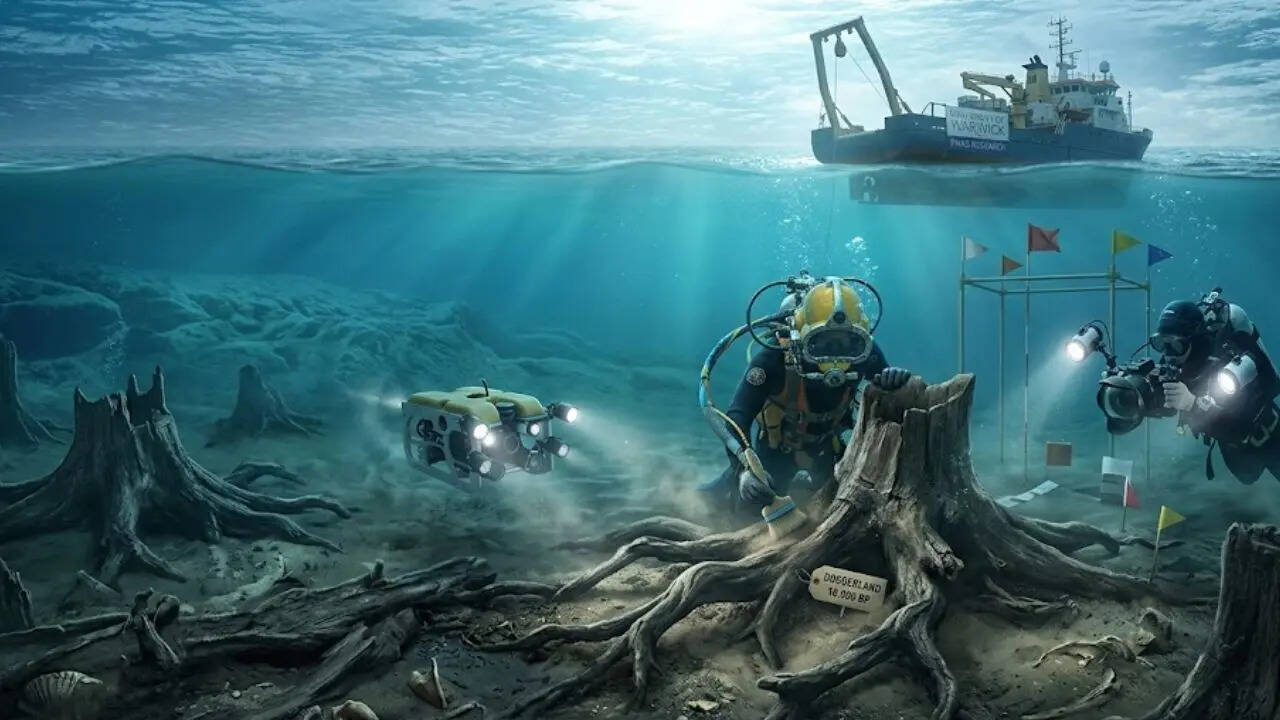
Scientists have discovered a massive prehistoric forest hidden deep beneath the North Sea. This ancient woodland dates back approximately 16,000 years to a time when the area was dry land. The discovery provides a rare look at how humans and animals lived before rising sea levels swallowed the region. It offers vital clues about how the Earth changed at the end of the last Ice Age.
Main Impact
This find changes how we look at the history of Europe and the United Kingdom. It proves that a vast, fertile area once connected Great Britain to the rest of the continent. By studying these remains, experts can see how quickly the environment changed in the past. This helps us understand the long-term effects of climate change and how rising oceans can reshape the world.
Key Details
What Happened
A team of underwater archaeologists used advanced technology to scan the seabed. They found evidence of a "lost world" known as Doggerland. Beneath layers of sand and mud, they found tree stumps and roots that are still standing in their original positions. These trees have been preserved for thousands of years because they were buried in a way that kept oxygen out, preventing them from rotting.
Important Numbers and Facts
The forest is roughly 16,000 years old, placing it at the end of the Pleistocene period. At its peak, Doggerland covered thousands of square miles, making it a massive territory for early humans. The water in this part of the North Sea is now dozens of meters deep, but it was once a lush valley filled with rivers, lakes, and thick woods. Researchers collected samples of wood, pollen, and even tiny insects to study the environment of that time.
Background and Context
Long ago, during the last Ice Age, much of the world's water was frozen in huge ice sheets. Because the water was trapped in ice, the sea levels were much lower than they are now. This created a land bridge between what is now England and countries like the Netherlands and Denmark. People lived in this area for thousands of years. They hunted deer, gathered nuts, and built small camps. As the Earth warmed up and the ice melted, the water rose. Eventually, around 8,000 years ago, the land was completely flooded, and the forest was buried under the sea. For a long time, people only found hints of this place when fishing boats pulled up old bones or stone tools in their nets.
Public or Industry Reaction
Scientists are calling this one of the most important underwater finds in recent years. Many experts believe there are many more secrets hidden under the waves. Historians are excited because this area was likely a central hub for early human culture. Some people are surprised that wood can stay preserved for so long under salt water. The discovery has sparked new interest in "wetland archaeology," which looks for history in places that are now underwater. Environmental groups are also using this news to highlight how quickly coastal areas can disappear when global temperatures rise.
What This Means Going Forward
Researchers plan to go back to the site to collect more samples. They want to find more tools or even signs of early homes. This work is difficult because the North Sea is often rough and cold, making it hard for divers and robots to work. However, the data they collect will help map out exactly where the old coastlines were. This information is useful for modern scientists who study how fast the ocean might rise in the future. By looking at how Doggerland disappeared, we can better prepare for how modern coastal cities might be affected by rising water levels.
Final Take
Finding a 16,000-year-old forest under the ocean is a powerful reminder of how much the Earth can change. It shows that the ground we walk on today might not always be there. This discovery helps us respect the power of nature and the history of the people who came before us. It is a window into a world that was lost to the sea, now finally being seen again.
Frequently Asked Questions
What is Doggerland?
Doggerland is the name given to the area of land that once connected Great Britain to mainland Europe. It was a dry, inhabited region before it was flooded by rising sea levels thousands of years ago.
How did the trees survive underwater for so long?
The trees were covered by thick layers of mud and sediment. This created an environment without oxygen, which stopped the wood from decaying. This kept the tree stumps and roots in very good condition.
Why did the forest disappear?
As the last Ice Age ended, the Earth's temperature rose and caused massive ice sheets to melt. This extra water flowed into the oceans, causing sea levels to rise and eventually cover the land where the forest grew.