
Summary
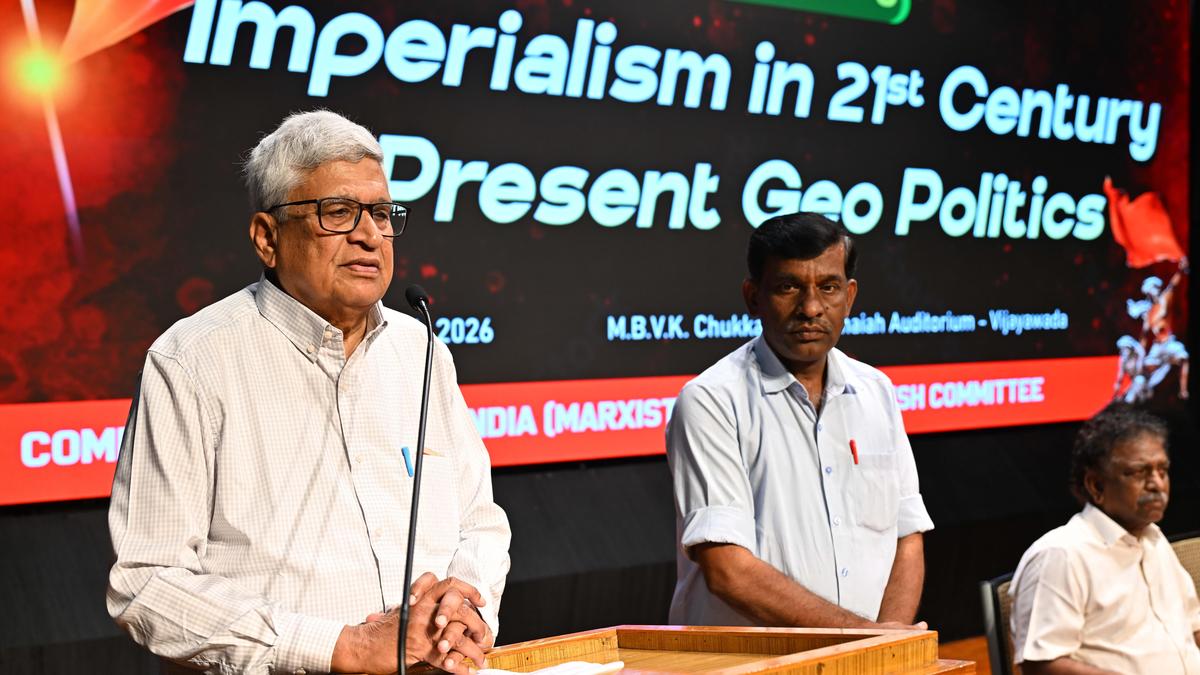
Prakash Karat, a senior leader of the Communist Party of India (Marxist), has publicly criticized the Indian government for its response to recent military actions. He expressed strong disapproval of the Union government's failure to condemn an attack on Iran carried out by the United States and Israel. Karat argues that the current administration, led by Prime Minister Narendra Modi, has moved away from India’s long-standing tradition of having an independent foreign policy. This criticism highlights a growing debate about how India should balance its global friendships during times of international conflict.
Main Impact
The main impact of Karat’s statement is the focus it puts on India’s changing role in global politics. For a long time, India was known for staying neutral and not taking sides in fights between big world powers. Karat believes that by staying silent about the attack on Iran, India is showing that it is now too close to the United States. This shift could affect India's reputation with other countries in the Middle East and across the world. It suggests that India might be choosing sides rather than acting as a fair and independent voice in global affairs.
Key Details
What Happened
Prakash Karat, the former General Secretary of the CPI(M), spoke out against the central government’s silence following a military strike on Iran. The strike involved forces from the United States and Israel. While many countries around the world shared their views on the event, the Indian government did not issue a strong statement of condemnation. Karat claims this silence is a sign that India is no longer making its own choices in foreign policy. Instead, he suggests that the government is following the lead of the United States to maintain a close partnership.
Important Numbers and Facts
India has a long history of working with Iran, especially in areas like energy and trade. Iran has often been one of the top providers of oil to India. Additionally, India has invested heavily in the Chabahar port in Iran, which is a key trade route to Central Asia. On the other hand, India’s trade and defense deals with the United States have grown significantly over the last ten years. These deals are worth billions of dollars and include advanced military equipment and technology sharing. Karat points to these growing ties as the reason why the government is hesitant to speak against U.S. actions.
Background and Context
To understand why this matters, it is important to look at India’s history. For many years, India followed a policy called "non-alignment." This meant that India did not want to be part of any military group led by the U.S. or the former Soviet Union. This policy allowed India to talk to everyone and make decisions based on its own needs. However, the world has changed. Today, India sees the United States as a vital partner for security and economic growth. At the same time, the Middle East is a very sensitive area. India has millions of citizens working in Middle Eastern countries, and it relies on the region for much of its fuel. Balancing these different interests is a very difficult task for any government.
Public or Industry Reaction
The reaction to Karat’s comments has been split. Members of opposition parties and some political experts agree that India should be more vocal when international laws are broken. They worry that being too close to one side will hurt India’s ties with other important partners like Russia and Iran. However, supporters of the current government argue that foreign policy must be practical. They believe that a strong relationship with the U.S. is necessary to protect India’s borders and grow the economy. They suggest that "strategic silence" is sometimes better than making loud statements that could damage important alliances. Many people in the business world also prefer a stable relationship with the U.S., as it brings more investment into the country.
What This Means Going Forward
Looking ahead, the Indian government will likely continue to face pressure to clarify its position on global conflicts. As tensions between the U.S. and countries like Iran or Russia continue, India will find it harder to stay neutral. There is a risk that if India is seen as too one-sided, it could lose its influence in groups like BRICS or the Shanghai Cooperation Organisation. The government will need to find a way to keep its strong bond with the U.S. while also showing the rest of the world that it still makes its own decisions. This will involve careful talk and making sure that India’s own national interests always come first.
Final Take
The criticism from Prakash Karat brings a major internal political debate to the surface. It asks whether India can truly remain independent while building a deep military and political partnership with a superpower like the United States. While the government focuses on the benefits of this alliance, critics warn that the cost might be India’s long-held reputation as a neutral leader. How the government handles these conflicting pressures will define India’s place in the world for the next generation.
Frequently Asked Questions
Why did Prakash Karat criticize the government?
He criticized the government for not condemning a U.S.-Israel attack on Iran, arguing that India has lost its independent foreign policy and is now too closely aligned with the United States.
What is India’s traditional foreign policy?
Traditionally, India followed a policy of non-alignment, which meant it did not take sides in conflicts between major world powers and made independent decisions based on its own interests.
Why is the relationship with Iran important for India?
Iran is important because it provides energy resources like oil and serves as a key trade gateway to Central Asia through projects like the Chabahar port.

