
Summary
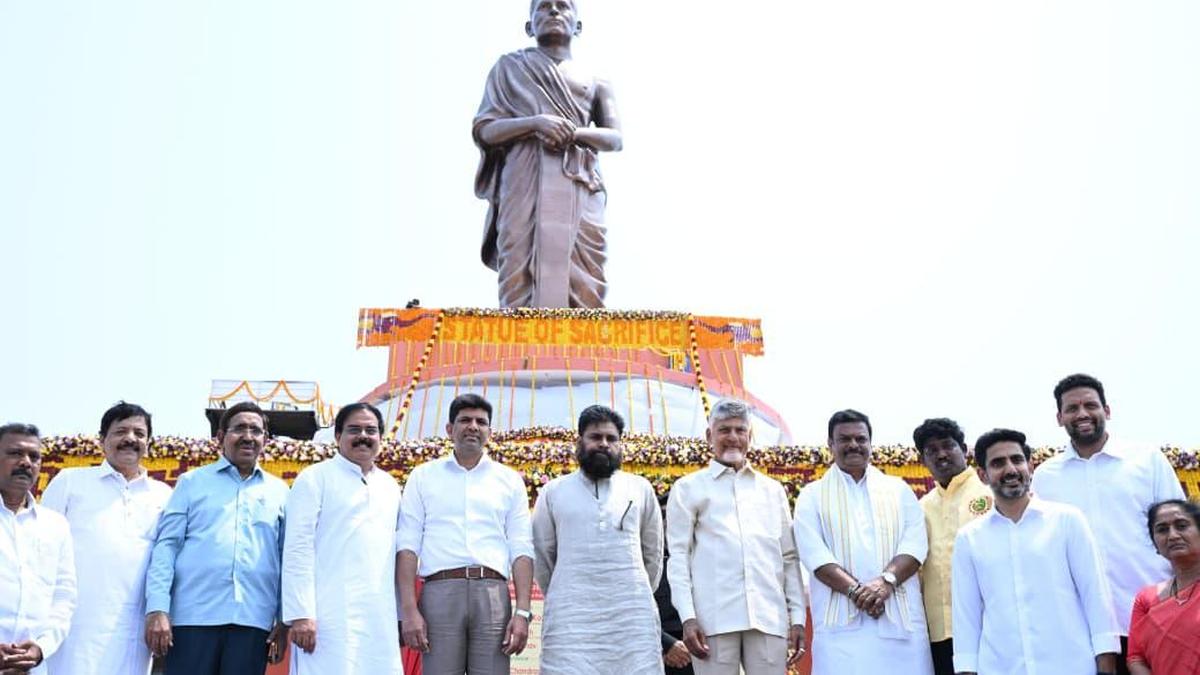
Andhra Pradesh Chief Minister Chandrababu Naidu has officially unveiled a massive statue of Potti Sriramulu in the capital city of Amaravati. This monument is the first major sculpture of its kind to be built in the new capital, marking a significant moment for the state's cultural identity. The project was completed in a very short time, showing the government's focus on building the city quickly. This statue honors the man who played a vital role in the formation of the state of Andhra.
Main Impact
The opening of this statue is more than just a construction update; it is a move to give Amaravati a soul and a history. As a new city, Amaravati needs landmarks that connect people to their past. By placing a statue of Potti Sriramulu at the heart of the capital, the government is making a statement about the pride and unity of the Telugu-speaking people. It also proves that the state can handle large-scale engineering tasks in record time, which builds confidence in the overall development of the capital project.
Key Details
What Happened
Chief Minister Chandrababu Naidu led the inauguration ceremony for the Potti Sriramulu statue. The event was attended by various officials and leaders who gathered to pay their respects. The statue is designed to be a permanent landmark that will stand for generations. It is the first of many planned monuments intended to turn Amaravati into a city of culture and heritage. The construction team worked day and night to ensure the first phase was ready for the public.
Important Numbers and Facts
The scale of the project is quite impressive. Builders used about 26 tonnes of bronze to create the outer layer of the statue, giving it a classic and durable finish. To keep the structure stable and strong, an internal framework made of 42 tonnes of iron was used. Perhaps the most surprising fact is the speed of the work. Officials confirmed that the first phase of the project was finished in just six months. This is considered a record time for a monumental sculpture of this size and weight.
Background and Context
To understand why this statue matters, one must know who Potti Sriramulu was. He is often called "Amarajeevi," which means "the immortal one." In 1952, he started a hunger strike that lasted for 58 days. His goal was to get a separate state for Telugu-speaking people, who were then part of the Madras Presidency. His sacrifice eventually led to the creation of Andhra State in 1953. This was a turning point in Indian history, as it led to the reorganization of other states based on the languages people spoke.
Amaravati is the planned capital of Andhra Pradesh. After the state was divided in 2014, there was a need for a new center of government. Chandrababu Naidu has been a strong supporter of building Amaravati as a modern, world-class city. However, a city is not just made of offices and roads; it needs symbols that people can look up to. This statue serves as that symbol, linking the modern goals of the capital with the historical struggle that created the state in the first place.
Public or Industry Reaction
The reaction to the statue has been largely positive. Many citizens feel that it is a fitting tribute to a man who gave his life for the state. Local historians have praised the decision to make this the first major monument in Amaravati, noting that it puts the state's history at the forefront of its future. Engineering experts have also expressed interest in the project, noting that completing such a heavy bronze and iron structure in six months is a difficult task that requires careful planning and a large workforce.
Some people have also pointed out that this move helps boost the image of Amaravati as a growing hub. By focusing on cultural landmarks, the government is making the city more attractive to residents and visitors. There is a sense of excitement among the public as they see the capital city taking shape with tangible symbols of their heritage.
What This Means Going Forward
Looking ahead, the completion of this statue suggests that more projects in Amaravati might move at a faster pace. The government seems eager to show that the capital is growing quickly. This statue is likely the first of several monuments that will honor famous figures from the region's history. These landmarks will help define the character of different areas within the city.
For the people of Andhra Pradesh, this monument will become a place of gathering and remembrance. It will likely become a popular spot for tourists and students who want to learn about the state's origins. The success of this project also sets a high bar for future construction in the city, showing that quality and speed can go together when there is strong political will.
Final Take
The inauguration of the Potti Sriramulu statue is a landmark event for Amaravati. It combines modern engineering with deep historical respect. By using 26 tonnes of bronze and 42 tonnes of iron, the state has built a lasting tribute to its founding hero. This project shows that while Amaravati is a city of the future, it will never forget the sacrifices of the past. It is a proud moment for the state and a clear sign that the capital city is moving toward its goal of becoming a major cultural and political center.
Frequently Asked Questions
Who was Potti Sriramulu?
Potti Sriramulu was a famous activist who fasted to death in 1952 to demand a separate state for Telugu-speaking people. His sacrifice led to the formation of Andhra State.
How big is the new statue in Amaravati?
The statue is a massive structure built using 26 tonnes of bronze for the exterior and 42 tonnes of iron for the internal support frame.
How long did it take to build the statue?
The first phase of the statue project was completed in a record time of six months, which is very fast for a monument of this scale.

