
Summary
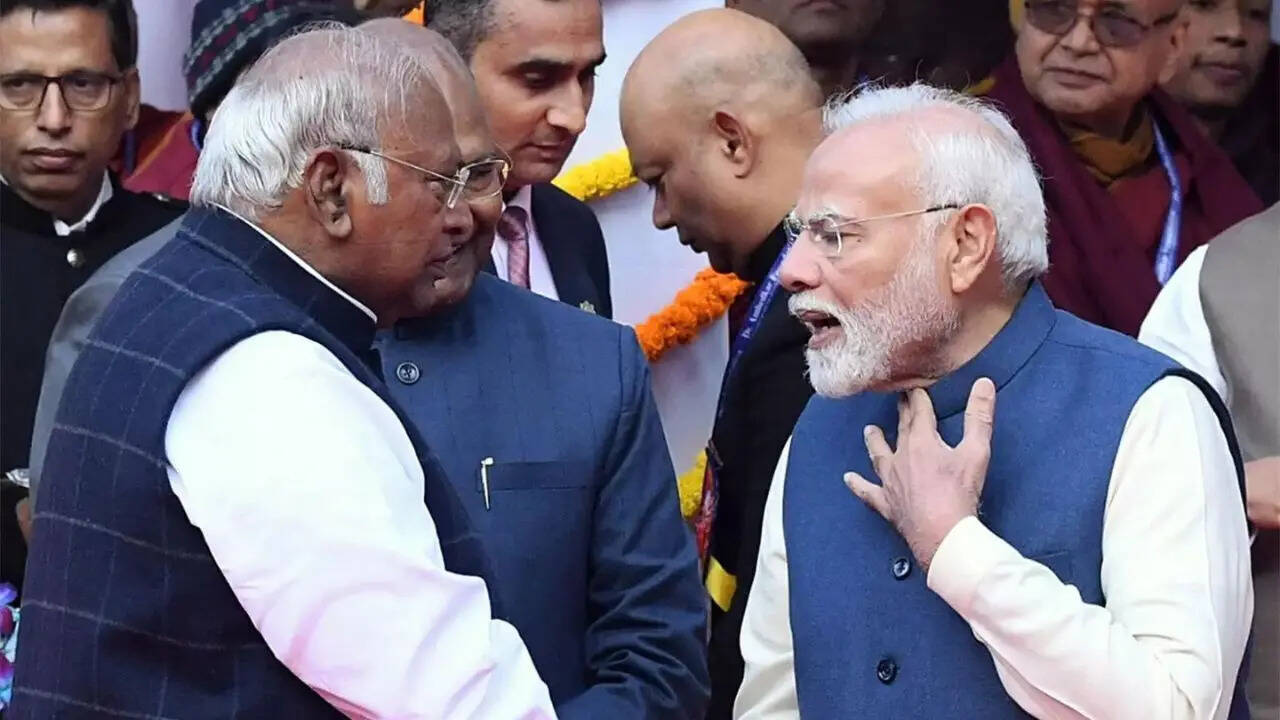
Top opposition leaders in India have launched a sharp verbal attack on Prime Minister Narendra Modi following his recent public address. Led by Congress President Mallikarjun Kharge, the opposition claims that the Prime Minister focused heavily on attacking his political rivals instead of discussing important social issues. They specifically pointed out that while the Prime Minister mentioned the Congress party dozens of times, he gave very little attention to the struggles and rights of women in the country.
Main Impact
This political clash highlights a growing divide over the Women’s Reservation Bill and how it is being put into action. The opposition argues that the government is using the bill as a political tool rather than a sincere effort to empower women. By focusing on the number of times the Prime Minister attacked his opponents, the opposition is trying to paint the ruling party as more interested in winning elections than in solving long-standing social problems. This debate is likely to influence how voters view the government's commitment to gender equality in the coming months.
Key Details
What Happened
During a recent speech, Prime Minister Narendra Modi spoke at length about the history and actions of the Congress party. However, Mallikarjun Kharge and other leaders like Mamata Banerjee and D.K. Shivakumar were quick to criticize the content of the speech. They argued that the Prime Minister’s words did not match the reality of the government's policies. The main point of contention is the Women’s Reservation Bill, which seeks to reserve one-third of seats in Parliament and state assemblies for women. The opposition claims the government has added conditions to this bill that will delay its start for many years.
Important Numbers and Facts
Mallikarjun Kharge provided a specific count to support his criticism. He noted that the Prime Minister mentioned the word "Congress" 59 times during his speech. In contrast, the Prime Minister spoke about women and their specific needs very few times. The opposition also highlighted that the Women’s Reservation Bill is tied to "delimitation," which is the process of redrawing the boundaries of voting districts. Because this process can only happen after a new national census, the opposition says the benefits for women will not be seen until at least 2029 or later.
Background and Context
The fight for women's representation in Indian politics has been going on for over thirty years. Different governments have tried to pass laws to give women a guaranteed number of seats in the legislature. The current government recently passed the bill, which was seen as a major victory. However, the opposition argues that the way the law is written makes it a "hollow promise." They believe that by linking the law to the census and boundary changes, the government is intentionally pushing the actual changes far into the future. The Congress party claims it has supported this cause since the 1990s and accuses the current administration of taking credit for an idea that was not theirs, while also making it harder to implement.
Public or Industry Reaction
The reaction from opposition parties has been united. Mamata Banerjee, the Chief Minister of West Bengal, expressed her doubts about the government's intentions, suggesting that the bill was passed quickly just to gain votes before major elections. D.K. Shivakumar, a senior leader from Karnataka, echoed these thoughts, stating that the public can see through political tactics. On the other side, supporters of the ruling party argue that they are the only ones who finally managed to pass the bill after decades of failure by previous governments. They claim the census and boundary rules are necessary legal steps to make sure the seats are distributed fairly across the country.
What This Means Going Forward
The focus on the Prime Minister's speech suggests that the next election cycle will be heavily focused on identity and social justice. The opposition will likely continue to track how often the government talks about its rivals versus how often it talks about policy results. For the Women’s Reservation Bill, the next big step is the national census. Until that happens, the law remains a plan on paper rather than a reality in the halls of power. This delay will remain a major talking point for critics who want to see immediate changes in how the country is governed.
Final Take
The current political debate shows that even when a popular law is passed, the details of how and when it starts can lead to intense fighting. While the government celebrates the passage of the Women’s Reservation Bill as a historic achievement, the opposition’s focus on the Prime Minister’s speech reminds the public that political rivalry often takes center stage. The real test will be whether these promises lead to more women in leadership roles in the near future or if the legal requirements will keep them waiting for another decade.
Frequently Asked Questions
Why is the opposition criticizing the Prime Minister's speech?
They claim he spent too much time attacking the Congress party—mentioning them 59 times—while failing to address the actual needs and progress of women in India.
What is the main problem with the Women’s Reservation Bill according to critics?
Critics say the bill is delayed because it can only start after a census and a redrawing of voting boundaries, which means it might not take effect for several years.
What does "delimitation" mean in this context?
Delimitation is the process of changing the boundaries of areas where people vote to make sure each area has a fair number of people. The government says this must happen before the new seats for women can be assigned.



