
Summary
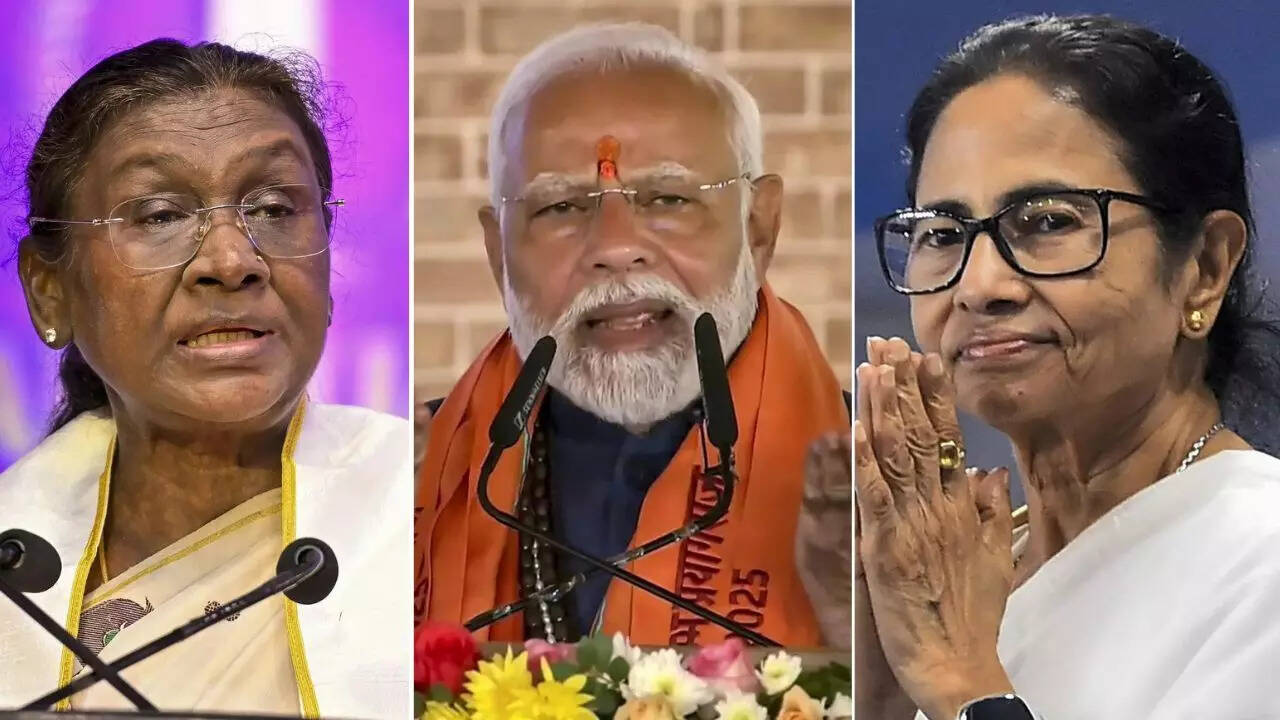
A sharp political disagreement has broken out between the central government and the West Bengal state government. Prime Minister Narendra Modi recently criticized the Trinamool Congress (TMC) for its attitude toward President Droupadi Murmu, stating that the party has crossed all limits. In response, West Bengal Chief Minister Mamata Banerjee advised the President to stay away from political matters. This exchange marks a significant low point in the relationship between the state and the highest office in the country.
Main Impact
The primary impact of this row is a deepening divide between federal and state authorities. When the Prime Minister and a Chief Minister argue over the role of the President, it creates a sense of instability in the country's political system. This conflict makes it much harder for the central government and West Bengal to work together on important issues like security, funding, and development. It also brings the neutral office of the President into the middle of a heated political battle, which many experts find concerning.
Key Details
What Happened
The tension started following comments made by President Droupadi Murmu regarding the current state of affairs in West Bengal. The TMC government felt that these remarks were influenced by the central government's political agenda. Prime Minister Narendra Modi quickly came to the President's defense during a public event. He accused the TMC of showing a lack of respect for the President, who is the first woman from a tribal community to hold the position. He claimed that the state government’s behavior was unacceptable in a democracy.
Chief Minister Mamata Banerjee did not stay silent. She held a press conference where she suggested that the President should remain a neutral figure. Banerjee argued that the President’s office should not be used to target state governments. She told the President directly to avoid "indulging in politics," suggesting that the BJP was using the office to put pressure on West Bengal.
Important Numbers and Facts
The row has sparked a wave of statements from both sides of the political aisle. Over the last few days, several senior ministers from the central cabinet have issued statements supporting the Prime Minister. In West Bengal, multiple TMC leaders have held rallies to support Mamata Banerjee’s stance. This is not the first time these two sides have clashed, but it is one of the few times the President has been the central figure of the argument. The timing is also important, as political parties are already preparing for upcoming local and national discussions in 2026.
Background and Context
To understand why this is happening, one must look at the history of West Bengal’s relationship with the central government. For several years, the TMC and the BJP have been in a constant state of conflict. They have disagreed on almost everything, from how to handle local crimes to how central money should be spent in the state. In the past, the Governor of West Bengal has often been the one arguing with the Chief Minister. Now, that tension has moved up to involve the President.
The President of India is supposed to be a figure who stays above party politics. The role is mostly ceremonial, meaning the President acts on the advice of the government but represents the entire nation. However, when a President speaks about the internal problems of a state, it often leads to accusations of bias from the party ruling that state. This is exactly what is happening now in West Bengal.
Public or Industry Reaction
The reaction to this row has been split along party lines. Supporters of the BJP say that the TMC is being disrespectful to a national leader and is trying to hide its own failures in governing the state. They believe the Prime Minister is right to stand up for the dignity of the President’s office. They argue that the TMC's comments are an insult to the tribal community that the President represents.
On the other side, TMC supporters and some opposition leaders believe that the central government is using every tool it has to weaken state leaders. They see the President’s comments as part of a larger plan to make the West Bengal government look bad. Many people on social media have expressed worry that this constant fighting is distracting leaders from solving real problems like inflation and unemployment.
What This Means Going Forward
Looking ahead, this conflict is likely to lead to more heated debates in Parliament. There is a risk that the relationship between the Governor and the West Bengal government will become even more difficult. If the state government continues to feel that the President is being unfair, they may stop participating in certain national meetings or events. This could lead to a "constitutional standoff," where the state and center refuse to cooperate on any level. In the long run, this might influence how voters feel about both parties in the next election cycle.
Final Take
The strength of a democracy depends on respect for its institutions. While it is normal for political parties to disagree, bringing the office of the President into a public fight can be risky. Both the central government and the West Bengal government need to find a way to communicate that does not involve public insults. For the sake of the people, a professional working relationship between the state and the center is necessary, regardless of who holds the office.
Frequently Asked Questions
Why is the Prime Minister angry with the TMC?
The Prime Minister believes the TMC government has been disrespectful to President Droupadi Murmu. He claims the state government has crossed limits by criticizing the President's comments on state matters.
What was Mamata Banerjee’s main message to the President?
Mamata Banerjee advised the President to remain neutral and avoid getting involved in political disputes. She believes the President should not take sides in the ongoing fight between the BJP and the TMC.
Is the President of India allowed to talk about state politics?
The President usually stays neutral, but they can express concern about the state of the nation. However, because the President acts on the advice of the Union Council of Ministers, state governments often view such comments as political statements from the central government.



