Summary
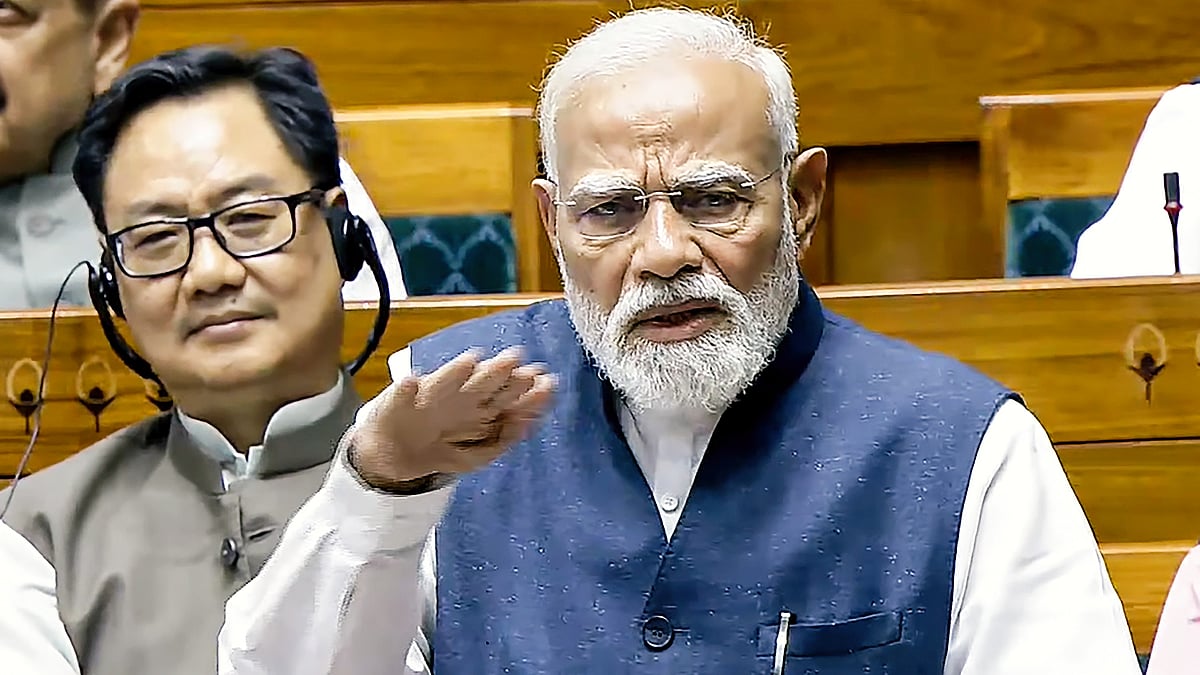
Prime Minister Narendra Modi addressed the Lok Sabha on Thursday to discuss the future of women’s representation and the redrawing of electoral boundaries. While the speech touched on the importance of women in leadership, it failed to provide clear answers on why certain reforms have been delayed. Many state governments are now concerned about how these changes will affect their influence in Parliament. The lack of specific details has created a sense of uncertainty regarding the upcoming 2029 elections.
Main Impact
The primary impact of the Prime Minister’s address is a growing debate over the proposed Delimitation Bill. This bill suggests increasing the number of seats in the Lok Sabha to 850. Such a massive change would alter the political balance of the country. States with smaller populations or those that have successfully managed population growth fear they might lose their voice in the national government. Without a clear explanation for these changes, regional parties are questioning the government's true motives.
Key Details
What Happened
During his speech on April 16, 2026, Prime Minister Modi spoke about the Women’s Reservation Bill, which was passed in 2023. However, he did not explain why this law was not used for the 2024 elections. Instead, the focus has shifted to the 2029 elections. The government is also moving forward with "delimitation," which is the process of changing the boundaries of voting districts and increasing the total number of seats in Parliament.
Important Numbers and Facts
The government plans to expand the Lok Sabha to 850 seats. Currently, the House has 543 elected members. There is no clear reason why the number 850 was chosen over other options like 750 or 800. Additionally, the proposed 131st Constitutional Amendment seeks to change how these updates happen. In the past, seat changes were tied directly to the results of a national census. The new proposal would allow the government to decide when to make these changes by passing a new law, rather than following a set schedule based on the census.
Background and Context
To understand this issue, it is important to know what delimitation and women’s reservation mean. Women’s reservation is a plan to set aside one-third of all seats in Parliament for female candidates. While almost all parties agree with this idea, they disagree on how to do it. The government wants to increase the total number of seats so that men do not have to lose their current positions. The Opposition argues that women can be given seats within the current number of 543.
Delimitation is even more sensitive. In India, the number of seats a state gets in Parliament depends on its population. States in the south have worked hard to control population growth, while some states in the north have much larger populations. If seats are redrawn based strictly on new population numbers, southern states could end up with less power compared to northern states. This has been a major point of tension for decades.
Public or Industry Reaction
The Opposition, led by the Congress party and the Trinamool Congress (TMC), has been very vocal in its criticism. They point out that some regional parties already have a high percentage of women in Parliament without needing a law to force it. For example, the TMC noted that about 40 percent of its members are women. Opposition leaders are calling the Prime Minister’s speech "deceptive" because it promises that no state will lose power, but the actual text of the bill does not include those protections.
Leaders from southern states are particularly worried. They are asking for a legal guarantee that their representation will not decrease. They argue that verbal promises in a speech are not enough to protect their rights. They want these protections written directly into the Constitution so they cannot be easily changed later.
What This Means Going Forward
The next few days are critical for Indian politics. A vote on the Delimitation Bill is expected on Friday afternoon. There are rumors that the government might add new sections to the bill to address the concerns of the states. However, if these additions are not part of a Constitutional Amendment, they could be changed by a simple majority vote in the future. This means the 2029 elections could look very different from any previous election in India’s history. The government must decide if it will offer the legal guarantees that the states are demanding or push forward with its current plan.
Final Take
The debate over seats and reservations is about more than just numbers; it is about how much power different parts of the country hold. While increasing women's roles in politics is a goal everyone shares, the way the government is linking this to a massive change in seat numbers has caused deep distrust. For the public to have full confidence in the system, the government needs to provide clear, written rules that protect every state’s voice in democracy. Simple speeches are no longer enough to settle such a major constitutional shift.
Frequently Asked Questions
What is delimitation?
Delimitation is the process of fixing or redrawing the boundaries of territorial constituencies in a country to reflect changes in population. This ensures that each seat represents a similar number of voters.
Why are southern states worried about the new bill?
Southern states have slower population growth than northern states. They fear that if seats are redistributed based only on population, they will lose seats in Parliament, giving them less influence over national laws.
When will the women's reservation take effect?
Although the bill was passed in 2023, the government plans to implement it for the 2029 Lok Sabha elections. It was not used for the 2024 elections because the government linked it to the completion of the census and the delimitation process.