
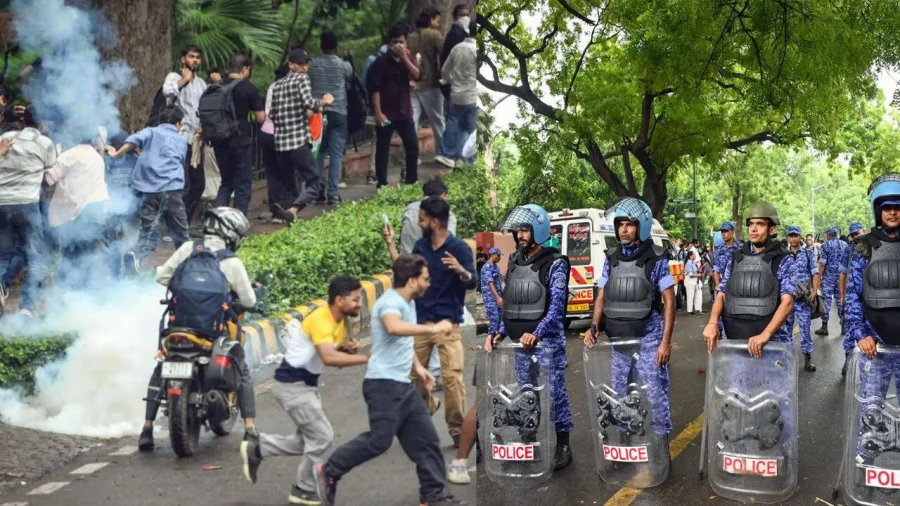
The Supreme Court on Wednesday declined to impose a blanket ban on the use of pellet guns for crowd control, leaving a delicate balance between the need for public order and the rights of protesters. The decision, delivered by a bench hearing a petition related to police conduct during protests, comes amid long-standing concerns over the weapon's severity.
Court questions feasibility of blanket ban
The bench questioned whether a complete prohibition on pellet guns was practical. It noted that alternatives may not always be effective in controlling large, volatile crowds. The court stopped short of outlawing the weapon, instead focusing on accountability and safeguards.
Treatment for injured protesters ordered
In a significant directive, the Supreme Court ordered the Delhi government to ensure that every protester injured in police action receives proper medical treatment. The order applies to past and future incidents, underscoring the state's responsibility for harm caused during law enforcement.
Preservation of ammunition logs mandated
The court directed authorities to preserve all ammunition logs related to pellet gun use. This step, the bench said, is essential for any future investigation into excessive force or misconduct. The logs must be maintained and made available for legal scrutiny.
Police safety gear emphasized
While refusing a blanket ban, the court stressed that police personnel must be equipped with adequate safety gear during protests. The observation indicates that the bench expects law enforcement to rely on less-lethal measures when possible, even if pellet guns remain an option.
Peaceful protests and miscreants
The bench reiterated a critical nuance: peaceful protests can sometimes be hijacked by miscreants. The statement reflects the court's recognition that distinguishing between genuine demonstrators and violent elements is a challenge, complicating any blanket restrictions on crowd-control tools.
Our Take
The Supreme Court's refusal to ban pellet guns is neither a clean win for the police nor a defeat for civil liberties. By ordering treatment for the injured and preservation of evidence, the court has built a framework for accountability without stripping authorities of a controversial tool. The burden now falls on the Delhi government and police to ensure that logs are maintained, safety gear is procured, and injured protesters are not ignored. This judgment, while measured, leaves the door open for future challenges if the safeguards are not followed.
Frequently Asked Questions
Did the Supreme Court completely allow pellet guns for crowd control?
No. The court refused a blanket ban, meaning pellet guns remain permissible but with conditions. It ordered preservation of ammunition logs and treatment of all injured protesters.
What did the court order regarding injured protesters?
The Supreme Court directed the Delhi government to provide medical treatment to every protester injured during police actions, covering both past and future incidents.
Why did the court refuse a blanket ban?
The bench questioned the feasibility of a complete ban, noting that alternatives may not always be effective and that peaceful protests can be hijacked by miscreants, making crowd control complex.
What are the next steps for the Delhi government?
The Delhi government must ensure proper medical care for injured protesters, maintain ammunition logs for pellet gun use, and review police safety gear to meet the court's standards.



