
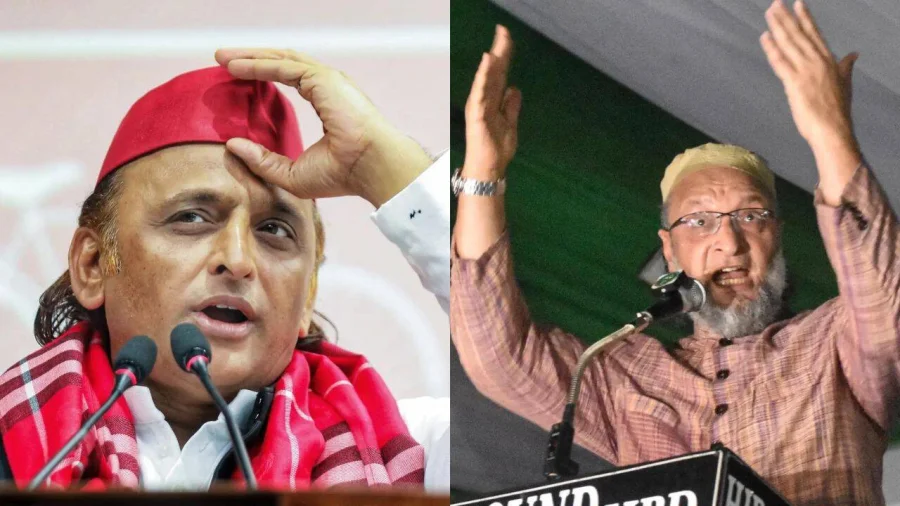
The message was blunt, the timing deliberate. Speaking at a rally in Moradabad on Thursday, AIMIM chief Asaduddin Owaisi threw a direct political lifeline to Samajwadi Party chief Akhilesh Yadav: join hands or risk watching the BJP sweep Uttar Pradesh again in 2027. "Don't come crying later," Owaisi warned, as he urged the SP leadership to set aside past suspicions and form a united opposition front.
Owaisi’s offer: alliance or vote split warning
The Hyderabad MP made it clear he was not seeking a merger but a "tactical understanding" to avoid splitting the non-BJP vote. "I am ready to join hands, to form an alliance. But if you don’t, don’t blame me when the BJP wins a third term," he said, addressing Akhilesh directly from the stage. Owaisi brushed off the BJP's long-running narrative that AIMIM acts as a "B-team" for the ruling party by fragmenting the opposition. Instead, he framed his offer as the only practical way to defeat the saffron juggernaut in India's most politically crucial state.
Why Samajwadi Party may tread cautiously
For Akhilesh Yadav, the offer is both an opportunity and a minefield. The Samajwadi Party has historically relied on a coalition of Yadavs, Muslims, and other backward classes. AIMIM’s growing footprint in western UP directly eats into that Muslim vote bank. In the 2022 assembly elections, AIMIM contested 100 seats and won none, but its candidates polled enough votes in several constituencies to tip the scales in favour of BJP candidates. SP insiders recall that in seats like Bijnor and Seohara, AIMIM’s presence hurt SP’s chances. A formal alliance could consolidate the minority vote, but it also risks alienating OBC supporters who view Owaisi’s party as too communally polarising.
The vote arithmetic behind the appeal
Uttar Pradesh sends 80 MPs to the Lok Sabha and elects 403 MLAs. The BJP won 255 seats in 2022, while SP managed 111. The gap is wide, but the opposition believes that if every anti-BJP vote unites, the arithmetic changes. Owaisi’s calculation is simple: AIMIM has a dedicated Muslim base in pockets of western and central UP, and aligning with SP could turn those pockets into winning margins. However, the SP leadership is acutely aware of the risk—if the alliance is seen as a Muslim-Yadav pact, it may push non-Yadav OBCs and Dalits closer to the BJP.
How SP and AIMIM have co-existed: a history of distrust
The relationship between the two parties has been rocky. In 2017, Akhilesh said SP would never ally with AIMIM, calling it a "vote-cutter". In 2022, Owaisi attacked SP for "appeasing only one community" and fielded candidates against SP. The bitterness turned personal at times. Yet electoral compulsion often forces strange bedfellows. Owaisi’s Moradabad rally signals a strategic shift—he is now willing to play second fiddle in a larger coalition, provided SP reciprocates. "I will stand with akhilesh if he fights the BJP. But I will not be his doormat," he said, attempting a blend of strength and humility.
BJP response and the ‘B-team’ label
The Bharatiya Janata Party has consistently accused Owaisi of being a "B-team" that helps BJP by splitting secular votes. In Moradabad, Owaisi dismissed this as "the language of those who are scared of unity." BJP state leaders responded within hours, with Deputy CM Keshav Prasad Maurya tweeting: "The opposition is panicking. They know they are losing and are trying every trick. But the people of UP have decided—only BJP can deliver development." Political analysts note that the BJP’s real worry is a consolidation of Muslims, who form nearly 20% of UP’s electorate, with a resurgent SP.
Confirmed Facts vs What Remains Unclear
Confirmed: Owaisi made the alliance offer at a public rally in Moradabad. He said he does not want BJP to return for a third term and is willing to join hands with SP. He rejected the B-team label. Unclear: Whether SP has responded officially or internally. No timeline for any formal talks has been announced. The exact terms of the proposed alliance (seat-sharing, poll symbol issues, etc.) have not been discussed.
What’s at stake: the 2027 UP assembly election
The election is still two years away, but political positioning has begun early. For Akhilesh Yadav, the decision may define his political legacy. A successful alliance with AIMIM could be the first step toward a broader opposition front—including the Congress, which has a base among Dalits and upper castes. A refusal could push Owaisi to go solo, which may fragment the anti-BJP vote further. For the BJP, any unity among opposition parties complicates its strategy of turning elections into a Modi vs the rest contest.
Practical implications for voters
For the ordinary voter in Moradabad, Rampur, or Bijnor, the debate over alliances may seem distant, but the outcome will affect local governance, development funds, and communal harmony. Muslim voters, in particular, face a dilemma: a divided opposition could hand the BJP easy wins, but an AIMIM-SP pact may reduce their choices within the coalition. Voters should watch for clarity on seat-sharing and whether the alliance extends to local body elections, which are due next year.
Future Outlook: what happens next
In the coming weeks, SP is likely to test the waters through backchannel talks. If a broad opposition front including Congress emerges, Owaisi’s offer may become one piece of a larger puzzle. If not, a direct SP-AIMIM pact remains possible only if Akhilesh sees electoral advantage. Either way, the BJP will use the specter of a "Muslim-Yadav" alliance to consolidate its Hindu vote base. The next few months will reveal whether this alliance offer is a genuine step toward unity or a pre-election bargaining chip.
Our Take
Owaisi’s offer is politically shrewd—it puts the onus on Akhilesh to either accept or be branded as unwilling to defeat the BJP. But SP’s caution is justified: a hasty alliance could alienate its non-Yadav OBC base. The bigger picture is that the opposition in India’s largest state remains fractured. Until parties can agree on a common minimum program and seat-sharing formula that respects each other's strengths, the BJP will continue to benefit from a divided opposition. The ball is now in Akhilesh’s court. How he plays it will shape UP politics for the rest of the decade.
Frequently Asked Questions
Why did Owaisi offer an alliance to Akhilesh Yadav?
Owaisi aims to unite opposition parties in Uttar Pradesh to prevent the BJP from winning a third consecutive term. He believes a split in non-BJP votes helps BJP, and an AIMIM-SP pact can consolidate Muslim and backward-class support.
Has Samajwadi Party responded to Owaisi’s offer?
As of now, SP has given no official response. Party sources indicate caution due to overlapping voter bases and past electoral conflicts. Internal discussions are expected before any decision.
What is the ‘B-team’ label that Owaisi rejected?
The BJP has often called AIMIM a ‘B-team’ of the Congress or a vote-cutter that indirectly helps the BJP by splitting secular votes. Owaisi dismissed this as BJP’s fear of opposition unity.
How would an AIMIM-SP alliance affect the 2027 UP election?
If implemented, it could consolidate Muslim votes and strengthen SP’s position in western UP, potentially reducing BJP’s seat tally. However, it may also polarize voters along communal lines and push non-Yadav OBCs toward BJP.



