
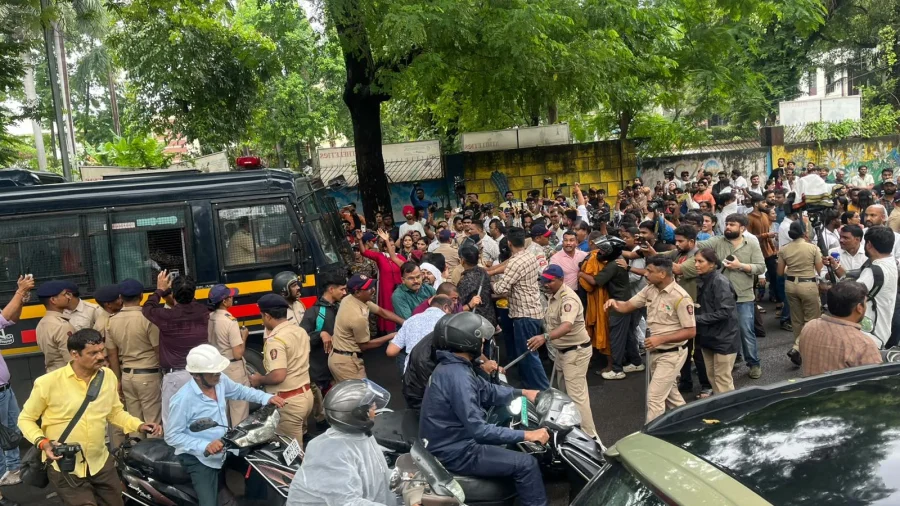
A significant law enforcement operation unfolded in Nagpur on [Date of event, if known, otherwise use "recently"], with authorities detaining over 150 individuals in connection with a protest linked to the Criminal Justice Project (CJP). The action, described as a coordinated crackdown, was not isolated to Nagpur, with reports of a parallel operation in Delhi, signaling a multi-city response to the protest movement.
Coordinated Action Across Cities
The detentions in Nagpur were part of a larger, synchronized effort that also targeted protesters in the national capital. This dual-city approach suggests a pre-planned strategy by law enforcement agencies to address what they perceive as a coordinated challenge to public order. The exact nature of the coordination between Nagpur and Delhi police forces remains a key point of investigation.
Why the CJP Protest Matters
The CJP, or Criminal Justice Project, has been a subject of debate and, in some circles, protest. While the specific demands of the protesters in Nagpur and Delhi are still being clarified, the movement generally raises questions about legal reforms and their implementation. The scale of the detentions—over 150 in Nagpur alone—indicates that authorities view this as a significant disruption requiring a firm response.
Timeline of the Crackdown
Reports indicate that the crackdown began simultaneously in both cities. In Nagpur, police moved in to disperse the protest and detain participants, while in Delhi, similar actions were taken. The speed and coordination of the operation suggest that intelligence was gathered in advance, pointing to a planned protest that authorities sought to preempt or contain.
Human Impact on Detainees and Families
For the families of the over 150 detained in Nagpur, the sudden arrests have created a climate of uncertainty. Many are seeking information about the charges, the legal process, and the whereabouts of their loved ones. The emotional toll on those affected, including potential legal costs and social stigma, is a significant but often overlooked aspect of such large-scale operations.
Official Response and Legal Framework
As of now, official statements from Nagpur and Delhi police have been limited. The legal basis for the detentions is expected to be clarified in the coming days, with charges likely ranging from unlawful assembly to more specific offenses under the Indian Penal Code. The use of preventive detention laws is also a possibility, which would allow authorities to hold individuals without immediate trial.
Analysis: A Signal of Zero Tolerance
The coordinated crackdown in Nagpur and Delhi sends a clear signal from law enforcement: organized protests, particularly those linked to sensitive legal projects, will be met with a swift and unified response. This approach reflects a broader trend of authorities using multi-city operations to prevent the spread of protest movements. The long-term effectiveness of this strategy, however, remains to be seen.
Confirmed Facts vs What Remains Unclear
Confirmed: Over 150 individuals have been detained in Nagpur in connection with a CJP protest. A parallel crackdown has occurred in Delhi. The operation was coordinated between the two cities. Unclear: The specific charges against the detainees. The exact demands of the protest. The full number of those detained in Delhi. The long-term legal strategy of the authorities.
Risks and Balanced View
While authorities argue that the crackdown is necessary to maintain public order and prevent potential violence, critics may view it as a heavy-handed response that curtails the right to peaceful protest. The balance between national security and civil liberties is a central tension in this story. The lack of immediate, detailed official statements also raises questions about transparency.
Wider Trend of Coordinated Law Enforcement
This operation is part of a wider pattern where Indian law enforcement agencies are increasingly using coordinated, multi-city actions to address perceived threats. This approach, while effective in disrupting networks, also raises concerns about the centralization of police power and the potential for overreach.
Practical Guidance for Affected Individuals
For families of those detained, the immediate step is to seek legal counsel. Contacting local legal aid organizations or human rights groups can provide guidance on the next steps. It is also important to document all interactions with authorities and to maintain a record of the detainee's location and charges.
Future Outlook
The coming days will be critical. Legal proceedings will determine the fate of the over 150 detainees in Nagpur. The authorities are expected to release more detailed statements, which will clarify the charges and the government's position. The protest movement, meanwhile, may regroup or shift its strategy in response to the crackdown.
Our Take
The coordinated detentions in Nagpur and Delhi represent a significant moment in the ongoing debate over protest and public order in India. While the state has a duty to maintain law and order, the scale of the operation—over 150 detained in a single city—demands a high level of transparency. The public deserves a clear explanation of the charges and the legal basis for such a sweeping action. This story is not just about a protest; it is about the balance of power between the citizen and the state.
Frequently Asked Questions
Why were over 150 people detained in Nagpur?
The detentions are linked to a protest related to the Criminal Justice Project (CJP). Authorities conducted a coordinated crackdown, viewing the protest as a potential threat to public order.
Was the Nagpur crackdown connected to the one in Delhi?
Yes, reports indicate that the operations in Nagpur and Delhi were coordinated, suggesting a pre-planned, multi-city law enforcement strategy.
What charges are the detained individuals facing?
Specific charges have not yet been officially detailed by authorities. They are expected to range from unlawful assembly to other relevant sections of the Indian Penal Code.
What is the Criminal Justice Project (CJP) that sparked the protest?
The CJP refers to a set of legal reforms. The exact nature of the protest's demands is still being clarified, but it generally relates to concerns over the implementation of these reforms.



