Summary
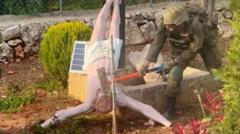
A video showing an Israeli soldier damaging a statue of Jesus in Lebanon has sparked widespread anger. The Israeli military has responded by saying they view the incident as a very serious matter. At the same time, the United States government has stepped in, with its ambassador calling for the soldier to face quick and clear punishment. This event has added new tension to the ongoing conflict in the region, as religious symbols are highly respected by all sides.
Main Impact
The main impact of this event is the damage it does to the image of the military and the risk of increasing religious anger. In a region where religion is a central part of daily life, the destruction of a sacred statue is not seen as a simple act of property damage. Instead, it is viewed as a direct insult to the faith of millions. This act has made it harder for diplomatic leaders to talk about peace, as it gives critics more reasons to question the behavior of troops on the ground. The quick response from the United States shows that even close allies are worried about how such actions look to the rest of the world.
Key Details
What Happened
The incident came to light after a video began moving across social media platforms. In the footage, a soldier wearing an Israeli military uniform is seen using force to break or deface a statue representing Jesus Christ. The event took place in a village in southern Lebanon during a period of active military operations. It did not take long for the video to be seen by millions of people, leading to a fast and loud outcry from religious leaders and government officials in Lebanon and beyond.
Important Numbers and Facts
The Israeli Defense Forces (IDF) issued an official statement shortly after the video went viral. They confirmed that the behavior shown does not follow their official rules or values. The US Ambassador to Lebanon, representing the strongest ally of Israel, made a public demand for "swift consequences." While the exact location of the village has not been named for security reasons, it is known to be in an area where Christian communities have lived for centuries. This is one of several recent reports involving the treatment of religious sites during the current conflict, leading to calls for better training for soldiers.
Background and Context
To understand why this matters so much, one must look at the history of Lebanon. Lebanon is a country with a very diverse population that includes Christians, Muslims, and other groups. For a long time, these groups have worked hard to live together in peace, even during times of war. Religious statues and buildings are often seen as neutral ground that should never be touched by soldiers. When a soldier from a foreign army damages a religious figure, it is often used by local groups to show that the army does not respect the local people or their culture. This makes the military's job much harder, as it turns the local population against them.
Public or Industry Reaction
The reaction was immediate and strong. In Lebanon, church leaders called the act a "crime against faith" and asked the international community to protect holy sites. Many people on social media expressed their shock, pointing out that such actions only lead to more hate. In Israel, some military experts expressed concern that the actions of one soldier could hurt the reputation of the entire army. The US government’s involvement is particularly important. By demanding fast action, the US is sending a message that it will not ignore behavior that could make the war even worse or turn it into a religious battle.
What This Means Going Forward
Moving forward, the soldier involved is likely to face a military court or other disciplinary actions. The Israeli military will probably have to show proof of this punishment to satisfy international critics. There may also be new orders given to troops to stay away from religious buildings and symbols to prevent this from happening again. If the military does not handle this correctly, it could lead to more protests and make it more difficult for Israel to maintain support from its Western partners. For the people in Lebanon, the focus will be on repairing the damage and ensuring that their places of worship remain safe during the fighting.
Final Take
War is always a time of great stress, but there are rules that soldiers are expected to follow. Respecting religious symbols is one of the most basic rules of human conduct during a conflict. When these rules are broken, the damage goes far beyond a broken statue; it breaks the trust needed for any future peace. The world is now watching to see how the military handles this mistake and whether they can prevent it from happening again.
Frequently Asked Questions
Why is the vandalism of a statue such a big deal?
In many cultures, especially in the Middle East, religious statues are sacred. Damaging them is seen as a deep personal and community insult, which can cause more violence and anger than regular combat actions.
What did the Israeli military say about the incident?
The military stated that they view the soldier's actions with "great severity." They made it clear that this behavior is against their rules and that they are looking into the matter to take action.
What is the role of the United States in this situation?
The US is a major ally of Israel but also works to keep balance in Lebanon. The US Ambassador demanded that the soldier be punished quickly to show that such behavior is not acceptable and to help calm the public anger.