Summary
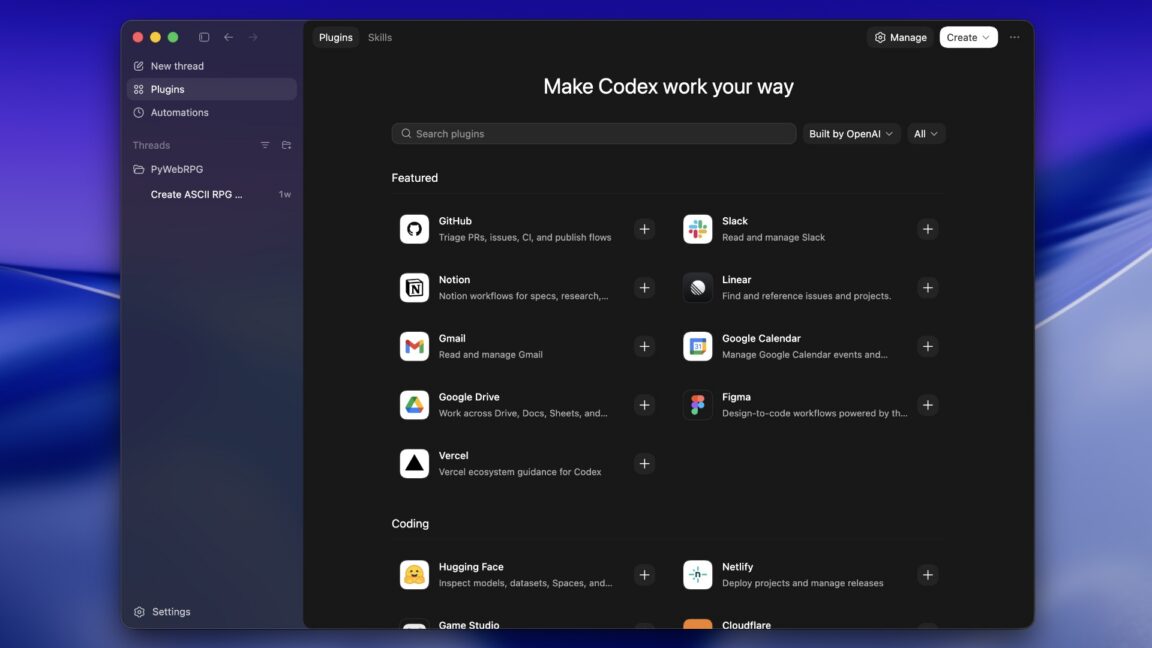
OpenAI has introduced a new plugin feature for its coding tool, Codex. This update allows the AI to use specific skills, connect with other apps, and follow complex workflows. By adding these features, OpenAI aims to keep up with competitors like Anthropic and Google, who have already launched similar tools for developers. These plugins make it easier for teams to set up the AI for their specific needs and share those settings across an entire company.
Main Impact
The addition of plugins changes Codex from a simple coding assistant into a more capable "agent." An agent is a type of AI that can take actions on its own rather than just suggesting text. This update means that developers can now give Codex a set of tools and instructions to handle repetitive tasks automatically. It also helps OpenAI stay competitive in a market where developers are looking for tools that can do more than just write code snippets.
Key Details
What Happened
OpenAI officially launched plugin support for Codex to help users customize how the AI works. These plugins are not just simple buttons; they are bundles of different features. They include "skills," which are basically detailed instructions that tell the AI how to handle a specific job. For example, a skill might tell the AI exactly how to check a piece of software for errors using a company's specific rules.
The plugins also include app integrations. This allows Codex to talk to other software programs that developers use every day. Finally, the plugins support something called the Model Context Protocol, or MCP. This is a technical standard that helps different AI systems share information and work together more smoothly.
Important Numbers and Facts
The new feature is designed to close the gap between OpenAI and its main rivals. Anthropic recently released a tool called Claude Code, and Google has been improving its Gemini command line interface. Both of those tools already offered ways for the AI to interact with a developer's local files and tools. By adding these three components—skills, integrations, and MCP servers—OpenAI is giving Codex the same level of power and flexibility.
Background and Context
In the past, AI coding tools were mostly used to help programmers write lines of code faster. You would start typing, and the AI would guess what came next. However, the industry is moving toward "agentic" AI. These are tools that can understand a whole project, find bugs, run tests, and even fix problems without a human watching every single step.
To do this well, the AI needs to know about the specific environment it is working in. Every company uses different tools and has different ways of writing software. Without plugins, an AI is like a generic worker who does not know where the tools are kept. With plugins, the AI gets a map and a set of instructions tailored to that specific workplace. This makes the AI much more useful for professional software engineers who work on large, complex systems.
Public or Industry Reaction
The tech community has been waiting for OpenAI to make this move. Many developers have already started using Claude Code because of its ability to handle complex tasks. Industry experts see this update as a sign that the "AI wars" are moving away from who has the smartest chatbot and toward who has the most useful tools. The inclusion of the Model Context Protocol is also being praised. Because MCP is an open standard, it means developers do not have to rewrite their tools every time they want to try a new AI model. This makes it easier for businesses to adopt AI without getting locked into using only one company's software.
What This Means Going Forward
Looking ahead, we can expect to see a wide variety of plugins created by the developer community. Large companies will likely build their own private plugins that contain their secret coding methods and internal rules. This will allow new employees to get up to speed faster, as the AI will already know the company's specific way of doing things.
There is also a high chance that a marketplace for these plugins will emerge. Just as people download apps for their phones, developers might soon download "skills" for their AI coding agents. This could lead to a future where software is built much faster, as the AI takes over the boring and repetitive parts of the job, leaving humans to focus on the big ideas and creative problem-solving.
Final Take
OpenAI is making a smart move by giving Codex more flexibility. By allowing users to bundle skills and integrations, they are turning Codex into a professional-grade tool that can fit into any workflow. As AI continues to change how we work, the ability to customize these tools will be the key to staying ahead in the software industry.
Frequently Asked Questions
What are OpenAI Codex plugins?
Plugins are sets of instructions and tools that help the Codex AI perform specific tasks. They include workflows, connections to other apps, and data-sharing protocols that make the AI more helpful for professional coding.
Why did OpenAI add this feature now?
OpenAI added plugins to compete with other AI tools like Claude Code and Gemini. These competitors already offered ways for developers to connect the AI to their local tools and specific workflows.
What is the Model Context Protocol (MCP)?
MCP is a standard way for AI models to connect with data and tools. By using this protocol, OpenAI makes it easier for Codex to work with many different types of software and information sources without needing custom code for each one.