
Summary
The Indian government is moving closer to passing the "One Nation, One Election" (ONOE) Bill, with a deadline set for April 2026. At the same time, a new report by the Justice Kurian Joseph Committee warns that the central government is taking too much power from the states. This report suggests major changes to protect the rights of states in areas like taxes, education, and how elections are run. The tension between central control and state independence is now at the center of a major national debate.
Main Impact
The push for ONOE represents a major shift toward a more centralized government. Critics and the Joseph Committee argue that this move, along with the rising control over state finances, weakens the federal system where power is shared. If the ONOE Bill passes without needing the approval of the states, it could change how democracy works in India. This might reduce the independence of state governments and make them more dependent on decisions made in New Delhi.
Key Details
What Happened
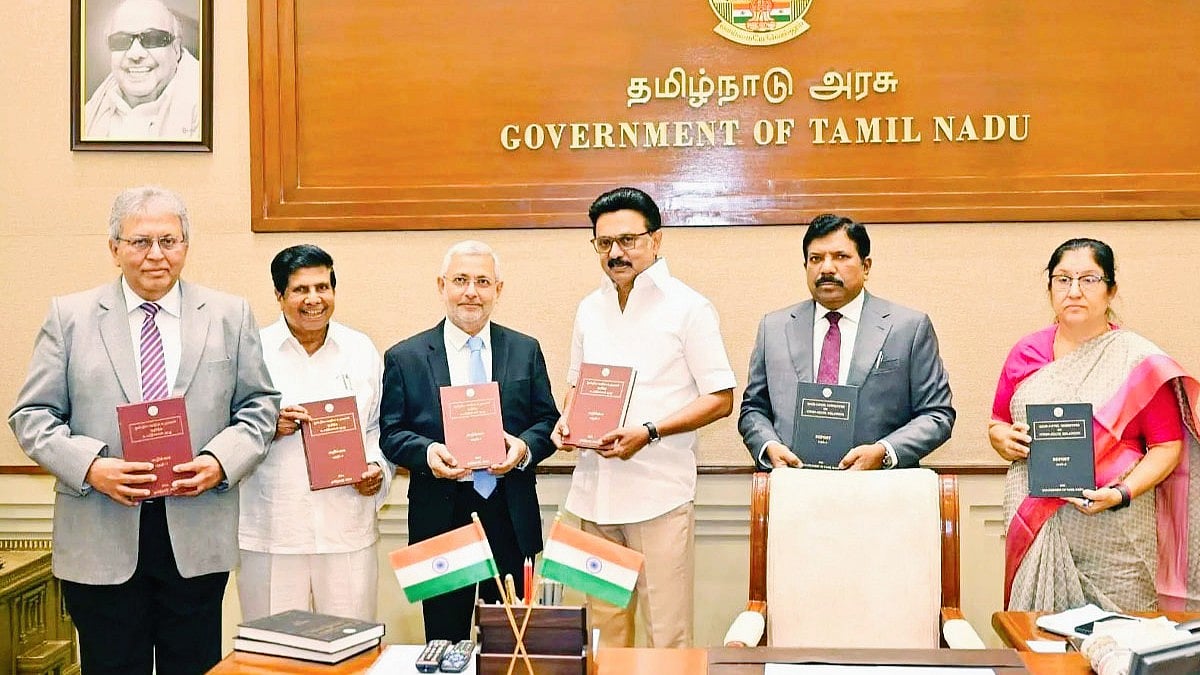
In late 2025, the Lok Sabha extended the time for a joint parliamentary committee to study the ONOE Bill. The government plans to pass this law before the Budget session ends on April 2, 2026. Interestingly, it has been decided that the Bill does not need the support of half of India's states to become law. Meanwhile, the Tamil Nadu government released a report from a committee led by Justice Kurian Joseph, a former Supreme Court judge. This report argues that the ONOE plan could harm the basic structure of the Constitution and should be stopped.
Important Numbers and Facts
The report highlights a major change in how money is collected. The money the Centre collects through special taxes, known as cess and surcharges, has grown from Rs 1.99 lakh crore in 2016-17 to an estimated Rs 5.82 lakh crore by 2026-27. Because this money is not shared with the states, the pool of funds available for state governments has shrunk. The committee also recommended freezing the number of seats in Parliament based on the 1971 Census until the year 2126 to ensure that states with lower population growth are not punished with fewer representatives.
Background and Context
When India became independent, the Constitution was designed to give the central government a lot of power to keep the country united. However, many state leaders now feel this balance has shifted too far. They argue that the Centre is interfering in local issues like health, education, and even language. The Justice Joseph Committee was formed to look at these issues and suggest ways to give power back to the states. The committee believes that a strong Union does not mean a weak state system. Instead, the Union should focus on national issues while states handle local governance.
Public or Industry Reaction
Tamil Nadu Chief Minister M.K. Stalin has been a strong critic of the central government’s recent actions. He claims that large ministries in New Delhi are trying to manage small details of state policies, which he calls "micromanagement." Justice Kurian Joseph also shared his views, stating that leaders should put the "Constitution first." He argued that the relationship between the Centre and the states must be tested and updated regularly to make sure it is fair. Many state leaders are also unhappy with how Governors are appointed, seeing them as political tools of the central government rather than neutral figures.
What This Means Going Forward
The Joseph Committee has proposed several big changes to fix the balance of power. They suggest that Governors should be chosen from a list approved by the state assembly and should only serve one term. They also want to move education back to the "State List," which would give states control over medical exams and universities. On the financial side, the committee wants to reduce the central government's power in the GST Council so that states have more say in tax decisions. Furthermore, they suggest that any change to the Constitution should require the support of two-thirds of the states, making it harder for the Centre to act alone.
Final Take
The debate over "One Nation, One Election" is about more than just the timing of votes. It is a struggle over the identity of India as a union of states. While the central government argues that simultaneous elections will save money and time, the Joseph Committee warns that it could damage the rights of local voters. For India to remain a healthy democracy, the government must find a way to balance national goals with the need for states to remain independent and financially stable.
Frequently Asked Questions
What is the "One Nation, One Election" Bill?
It is a proposal to hold elections for the Lok Sabha and all state assemblies at the same time across the country. The goal is to reduce the frequency of elections and lower costs.
Why are states worried about their finances?
States are concerned because the central government is collecting more money through special taxes (cess and surcharges) that do not have to be shared with the states. This leaves states with less money for their own projects.
What did the Justice Joseph Committee recommend for Governors?
The committee suggested that states should have a say in who becomes their Governor. They proposed that the state assembly should approve a list of names and have the power to remove a Governor if necessary.

