
Summary
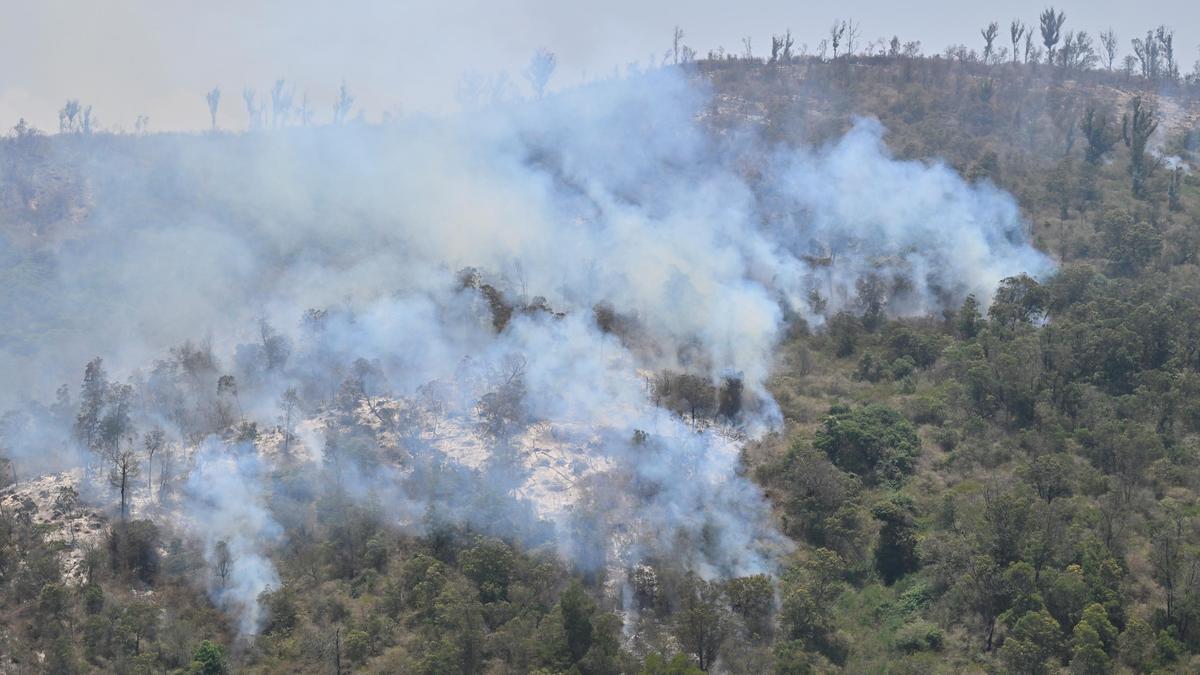
Forest fires are currently spreading through several parts of the Nilgiris district, causing significant damage to the local environment. To combat the growing flames, the Forest Department has deployed helicopters to drop water on areas that are difficult for ground teams to reach. Officials believe these fires were not natural but were started by local residents. This suspected arson is thought to be a form of protest against the Forest Department following a series of fatal tiger attacks in the region over the last year.
Main Impact
The immediate impact of these fires is the destruction of vast areas of forest land, which serves as a home to many rare animals and plants. The thick smoke from the blaze is also affecting the air quality in nearby villages and towns. Beyond the environmental damage, the situation has created a serious safety crisis. The use of helicopters highlights the difficulty of the terrain, as the steep hills make it almost impossible for traditional fire trucks to get close to the flames. This event has also brought the ongoing tension between the government and local communities to a breaking point.
Key Details
What Happened
The fires broke out in multiple locations across the Nilgiris mountain range. Because the weather has been dry and windy, the flames spread quickly through the grass and trees. When the Forest Department realized that ground crews could not keep up with the speed of the fire, they requested help from the air. Helicopters are now flying to nearby lakes and reservoirs to fill large buckets with water, which they then release over the most active fire zones. This aerial support is vital for cooling down the fire so that workers on the ground can move in to finish the job.
Important Numbers and Facts
Over the past 12 months, three people in the Nilgiris region were killed by tigers. These tragic events have left the local community feeling unsafe and neglected. Officials noted that the fires started in several different places at almost the same time. This pattern suggests that the fires were set on purpose by people who know the area well. Hundreds of forest staff and volunteers are currently working on the ground, while multiple helicopter sorties are being carried out daily to bring the situation under control.
Background and Context
The Nilgiris is a very important ecological area in southern India. It is part of a protected zone where tigers, elephants, and leopards live. However, many people also live and work in this area, often running tea gardens or small farms. When wild animals come out of the forest and attack humans or livestock, it creates a major problem known as human-wildlife conflict. In simple terms, the people living there feel that the government cares more about protecting the tigers than protecting human lives. When the Forest Department does not capture or move a dangerous animal quickly enough, the community’s frustration can turn into anger. In this case, officials believe that anger led some individuals to set fire to the forest as a way to strike back at the department.
Public or Industry Reaction
The reaction to the fires has been mixed. Many local residents are terrified, not just of the fire, but of the tigers that remain in the area. They argue that they have been asking for better protection for months and that their pleas have been ignored. On the other hand, environmental groups and wildlife experts are shocked by the destruction. They point out that burning the forest does not solve the tiger problem. In fact, it makes it worse. When the forest burns, the natural prey of the tigers—like deer and wild boar—flee the area. This leaves the tigers with nothing to eat, making them even more likely to enter human settlements in search of food.
What This Means Going Forward
The first priority is to fully put out the fires and ensure no new ones are started. Once the smoke clears, the Forest Department will need to work hard to rebuild its relationship with the local people. This might include setting up better warning systems for when tigers are near villages or providing faster help when an attack occurs. There is also a need for more modern firefighting tools, as relying on helicopters is very expensive and can only be done during daylight hours. If the underlying anger of the community is not addressed, the risk of more man-made fires will remain high every time the weather gets dry.
Final Take
Stopping a forest fire is a difficult task, but stopping the anger that causes such fires is even harder. The situation in the Nilgiris shows that forest conservation cannot succeed without the support of the people who live nearby. Protecting wildlife and protecting human lives must go hand in hand to prevent such disasters from happening again.
Frequently Asked Questions
Why are helicopters being used to fight the fires?
Helicopters are used because the Nilgiris have very steep and rocky hills. It is too dangerous and slow for fire trucks to reach these high areas, so dropping water from the air is the most effective way to stop the spread.
Why do officials think the fires were started on purpose?
The fires started in several different locations at the same time during a period of high tension. Officials believe this was an act of retaliation by locals who are angry about recent tiger attacks in the area.
How many people have been affected by tiger attacks recently?
In the last year, three people have lost their lives due to tiger attacks in the Nilgiris. These deaths have caused a lot of fear and led to the current conflict between the residents and the Forest Department.



