For India's pharmaceutical industry, the warning shot has been fired. US President Donald Trump has announced a sweeping tariff plan on imported generic drugs — a move that directly targets the backbone of India's $30 billion pharma export economy. The policy, set to take effect from 2026, could fundamentally reshape one of India's most successful global trade relationships.
What the new US tariff plan means for generic drugs
Under the proposed policy, generic drugs entering the US will face zero tariffs for two years beginning 1 August 2026. After this grace period, a 100 per cent tariff will be imposed for one year, escalating to a steep 200 per cent thereafter. The phased approach gives foreign manufacturers — including India's leading pharma firms — a window to relocate production to the US.
Why India's pharma sector is most vulnerable
India supplies nearly 40 per cent of the generic drugs consumed in the United States, making it the largest foreign supplier of affordable medicines. Companies like Sun Pharmaceutical Industries, Dr Reddy's Laboratories, Cipla, Aurobindo Pharma, and Lupin derive a significant portion of their revenue from the US market. A 200 per cent tariff would effectively make Indian generics uncompetitive on price, threatening billions in annual exports.
How the tariff plan will unfold: a timeline
The policy begins with a two-year zero-tariff window starting August 2026 — a deliberate buffer designed to encourage companies to set up US manufacturing. In year three, the tariff jumps to 100 per cent. From year four onward, it reaches 200 per cent. This escalating structure pressures foreign firms to make long-term investment decisions in American soil.
Who will be affected most: patients, companies, and healthcare costs
For American patients, the immediate consequence could be higher drug prices. Generic drugs from India have kept US healthcare costs lower for decades. If tariffs push prices up, patients — especially those on chronic medications for diabetes, hypertension, and heart disease — may face higher out-of-pocket expenses. For Indian pharma companies, the hit to margins could force layoffs, reduced R&D spending, and a strategic pivot away from the US market.
Trump administration's stated rationale for the tariff
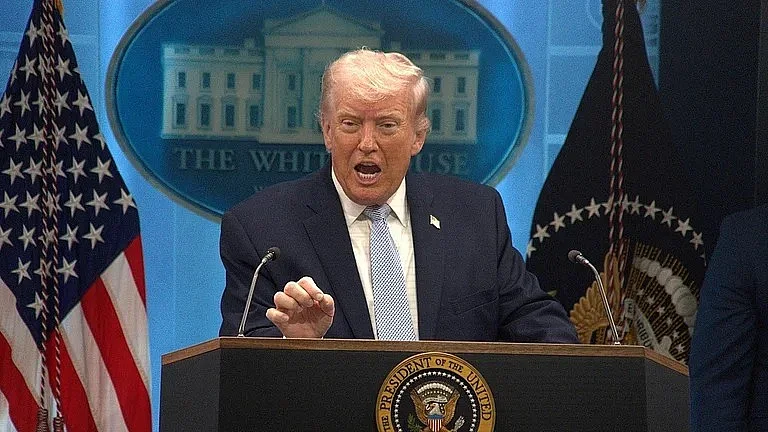
President Trump has framed the tariff as a national security and economic priority. "These measures will protect American citizens and support unprecedented growth in US-based pharma manufacturing," he said. The administration argues that domestic production reduces dependence on foreign supply chains — a vulnerability exposed during the COVID-19 pandemic when drug shortages became acute.
What the tariff means for India's pharma business model
India's generic drug industry has thrived on a cost-arbitrage model: lower manufacturing costs in India, high-volume exports to regulated markets like the US. A 200 per cent tariff destroys that equation. Indian companies now face a stark choice: invest billions in US manufacturing facilities, or lose access to their most profitable market. The transition period offers time, but the financial burden of setting up US plants is enormous.
Confirmed facts vs what remains unclear
What is confirmed: the tariff plan is announced, with a phased timeline starting August 2026. Patented, branded, and innovative drugs are exempt. What remains unclear: whether the policy will face legal challenges, whether Congress will approve the full escalation, and whether Indian companies can realistically build US manufacturing capacity within the two-year window. It is also unclear if the tariff will apply to drugs already under long-term supply contracts.
Why Indian pharma companies have a competitive moat
India's pharma sector has built a formidable moat over decades: world-class manufacturing facilities approved by the US FDA, a skilled workforce of chemists and engineers, low production costs, and deep expertise in complex generic formulations. This moat is not easily replicated. Even if tariffs force some production to the US, Indian companies retain advantages in R&D efficiency, regulatory expertise, and supply chain integration that US-based startups lack.
Risks and balanced view: benefits vs consequences
Supporters of the tariff argue it will create American jobs, reduce reliance on foreign supply chains, and strengthen national security. Critics warn it will raise drug prices for millions of Americans, hurt Indian workers, and potentially trigger retaliatory trade measures from India. There is also a risk that Indian companies simply exit the US market, reducing competition and allowing US firms to raise prices further. The policy is a gamble on reshoring — with uncertain outcomes for both countries.
Wider trend: the weaponisation of trade policy in pharma
This tariff is part of a broader pattern of the US using trade policy to force manufacturing relocation. Similar measures have been applied to semiconductors, electronics, and automotive components. The pharmaceutical sector, long considered too sensitive for aggressive tariffs, is now in the crosshairs. The move signals that no industry is immune from the push for domestic production.
What Indian pharma companies and investors should do now
Indian pharma firms should immediately begin feasibility studies for US manufacturing plants, explore joint ventures with American contract manufacturers, and diversify export markets to reduce US dependency. Investors should watch for companies with strong balance sheets that can fund US expansion — Sun Pharma and Dr Reddy's are better positioned than smaller players. Diversification into biosimilars and complex generics, which face lower tariff risk, is also critical.
Future outlook: what could happen next
If the tariff is fully implemented, expect a wave of Indian pharma companies announcing US manufacturing investments over the next 18 months. Some may exit the US market entirely, focusing on emerging markets. The US may face short-term drug shortages as supply chains adjust. India's government may retaliate with tariffs on US pharmaceutical imports or seek a bilateral trade exemption. The two-year zero-tariff window is a diplomatic opportunity — but time is running out.
Our Take
This tariff is not just a trade policy — it is an existential challenge for India's pharma sector. The industry has long relied on the US as its most profitable market, and losing that access would be devastating. But Indian companies have survived regulatory shocks before. The smart ones will use the transition period to build US capacity, diversify portfolios, and strengthen their moat in complex generics. For patients, the real cost may be higher drug prices — a bitter irony for a policy that claims to protect American citizens.
Frequently Asked Questions
When will the US tariff on generic drugs take effect?
The policy begins with a two-year zero-tariff period starting 1 August 2026. After that, tariffs escalate to 100% for one year, then 200% thereafter.
Which Indian pharma companies will be most affected?
Sun Pharma, Dr Reddy's, Cipla, Aurobindo Pharma, and Lupin are among the most exposed, as they derive significant revenue from US generic drug sales.
Are branded or patented drugs affected by the tariff?
No. The tariff applies only to generic drugs. Patented, branded, and innovative drugs are exempt under current policy.
Can Indian pharma companies avoid the tariff by manufacturing in the US?
Yes. The policy is designed to encourage foreign companies to set up US manufacturing. Indian firms that build US plants within the two-year window can avoid the tariffs entirely.