
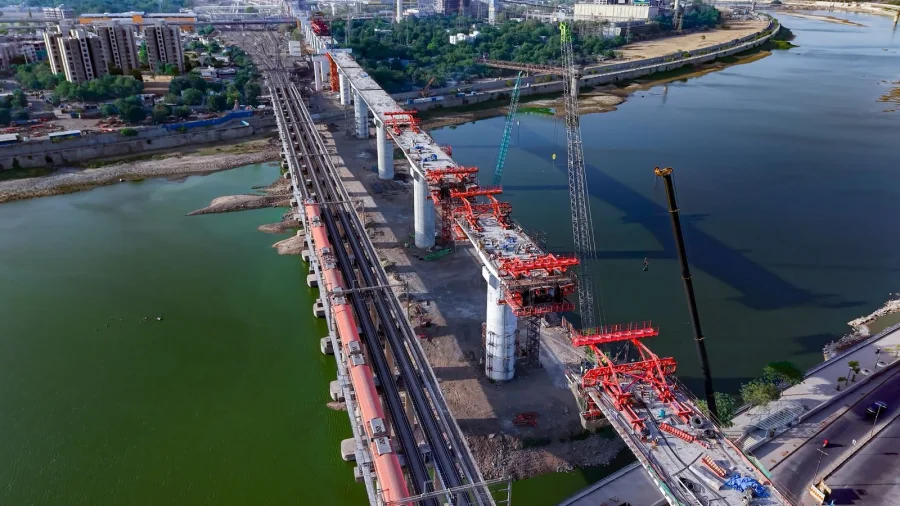
For millions of Mumbaikars, the daily grind on the Eastern Express Highway is a test of patience. But a new Rs 350 crore cable-stayed bridge in Ghatkopar promises to rewrite that story. This isn’t just another infrastructure project—it’s a lifeline for a city choking on its own traffic.
What the Ghatkopar Cable-Stayed Bridge Means for Commuters
The proposed bridge, a cable-stayed structure, is designed to bypass one of the most congested junctions on the Eastern Express Highway. By creating a direct elevated corridor, it aims to shave off precious minutes from daily commutes, especially during peak hours. For residents of Ghatkopar, Vikhroli, and beyond, this could mean reaching work, school, or home faster and with less stress.
Why This Bridge Matters Right Now
Mumbai’s traffic isn’t just an inconvenience—it’s an economic drain. Hours lost in gridlock cost the city billions in productivity. The Ghatkopar bridge is part of a larger municipal plan to modernize arterial roads. For the average commuter, it’s about reclaiming time. For the city, it’s about keeping Mumbai moving.
How the Project Will Unfold
The cable-stayed design—with its single tower and cables supporting the deck—is chosen for its aesthetic appeal and structural efficiency. It requires less ground space than traditional bridges, a critical advantage in dense urban Ghatkopar. The Rs 350 crore budget covers design, land acquisition, and construction. Officials have indicated that work will begin after final approvals, though a specific deadline has not been announced.
Who Benefits Most from This Bridge
Daily commuters using the Eastern Express Highway will see the biggest impact. But the benefits ripple outward: local businesses near Ghatkopar station, school buses, auto-rickshaw drivers, and even pedestrians who navigate the chaotic junction below. Reduced congestion also means lower fuel costs and less pollution for the entire neighborhood.
What the Municipal Corporation Says
Municipal authorities have framed the bridge as a priority project. “This is a critical intervention to decongest one of Mumbai’s busiest corridors,” an official stated. The corporation is coordinating with traffic police and urban planners to minimize disruption during construction. However, detailed timelines and traffic diversion plans are yet to be made public.
Why a Cable-Stayed Bridge? The Engineering Logic
Cable-stayed bridges are increasingly popular in Indian cities because they combine strength with a smaller footprint. Unlike suspension bridges, they don’t require massive anchorages. For Ghatkopar, where space is at a premium, this design allows the bridge to rise above existing roads without demolishing nearby buildings. It’s a practical solution for a dense urban environment.
Confirmed Facts vs What Remains Unclear
Confirmed: The project is approved with a Rs 350 crore budget. The bridge will be cable-stayed and located on the Eastern Express Highway in Ghatkopar. It aims to reduce traffic congestion.
Unclear: Exact construction start date, completion deadline, detailed traffic management during construction, and the precise alignment of the bridge. These details are expected from the municipal corporation in coming weeks.
Risks and Challenges Ahead
Large infrastructure projects in Mumbai often face delays due to land acquisition, utility shifting, and monsoon interruptions. Residents near the construction site may face temporary traffic diversions and noise. There is also the question of cost overruns—a common issue in Indian urban projects. Critics argue that without parallel improvements to public transport, a single bridge may only shift the bottleneck elsewhere.
A Wider Trend: Mumbai’s Infrastructure Overhaul
The Ghatkopar bridge is part of a larger wave of infrastructure projects across Mumbai, including the Coastal Road, the Sewri-Nhava Sheva Atal Setu, and multiple flyovers. These projects collectively aim to transform Mumbai’s road network from a fragmented system into a seamless grid. The cable-stayed bridge is a small but vital piece of this puzzle.
What Commuters Should Do Now
For now, commuters should stay informed about project timelines and plan for potential diversions during construction. Follow the municipal corporation’s official updates and local news for real-time traffic advisories. If you live or work near the proposed bridge site, consider alternative routes during peak construction phases.
What Happens Next
The next few months will be crucial. The municipal corporation is expected to release a detailed project report, including a construction timeline and traffic management plan. If all goes smoothly, the bridge could be operational within 2-3 years. However, given Mumbai’s track record, a cautious outlook is warranted.
Our Take
The Ghatkopar cable-stayed bridge is a welcome step toward easing one of Mumbai’s most persistent traffic headaches. Its design is smart, its intent is clear, and its potential impact on daily life is significant. But the real test lies in execution. Mumbai has seen many promising projects stall. If this bridge is delivered on time and within budget, it will be a model for urban infrastructure across India. For now, it’s a story of hope—and a reminder that even in a chaotic city, change is possible.
Frequently Asked Questions
What is the Ghatkopar cable-stayed bridge?
It is a Rs 350 crore elevated bridge designed to decongest the Eastern Express Highway in Ghatkopar, Mumbai. It uses a cable-stayed design for structural efficiency and minimal ground footprint.
When will the bridge be completed?
No official completion date has been announced yet. Construction is expected to begin after final approvals, with a likely timeline of 2-3 years.
How will this bridge help commuters?
By creating a direct elevated bypass over a congested junction, the bridge will reduce travel time for thousands of daily commuters on the Eastern Express Highway, especially during peak hours.
Will there be traffic disruptions during construction?
Yes, temporary diversions and noise are likely. The municipal corporation is expected to release a traffic management plan to minimize inconvenience.



